Baden-Württemberg, located in southwestern Germany, is the country’s third-largest state by area and population. Established in 1952 through the merger of Baden, Württemberg-Baden, and Württemberg-Hohenzollern, it has Stuttgart as its capital and largest city.
This page features links derived from the Online Familienbücher (OFB) website (https://ofb.genealogy.net/) and Ahnen-Forscher Genealogy online
(https://ahnen-forscher.com/)To make these links more navigable and user-friendly, I have taken the liberty of reorganizing and categorizing them. For updated details and additional resources, please visit the original website directly.
| Cities, Towns, Villages, and Hamlets | Locality Descriptions | OFB Links and Additional Resources |
|---|---|---|
Affental (Bühl) | Affental, a charming hamlet in Bühl, Baden-Württemberg, Germany, is celebrated for its wine production, primarily through the Affentaler Winzer eG, a historic wine cooperative founded in 1908. The cooperative is best known for its signature “monkey bottles” (Affenflaschen), a distinctive hallmark of its wines. Nestled at the foot of the Black Forest, Affental benefits from an exceptional viticultural climate, with sun-drenched vineyards that yield high-quality wines, reflecting the region’s deep winemaking tradition. Affental also shares a strong historical and viticultural bond with Eisental, a neighboring village, further enriching its legacy as a distinguished wine-producing region.1 2 | Local heritage book of Eisental |
| Aglasterhausen | Aglasterhausen, a municipality in Neckar-Odenwald-Kreis, Baden-Württemberg, Germany, dates back to 2000 BCE, with Celtic and Roman settlements shaping its early history. First recorded in 1143, its name comes from Old High German “agilastra” (magpie). Governed by the Electorate of the Palatinate from 1416, it reverted to the Bishopric of Worms in 1632 before joining Baden in 1803. Today, it blends historical heritage with modern development.1 2 | https://www.badische-ortsfamilienbuecher.de/buecher.php (only as CD) |
| Aldingen | Aldingen, the largest district of Remseck am Neckar, has a history of settlement dating back 7,000 years, with traces left by Romans and Alemanni. First mentioned as “Almendingen” in 1100, it became a significant medieval settlement. The Knights of Kaltental, who ruled Aldingen for nearly 500 years, established St. Margaretha Church around 1500, which still houses their tombstones. In 1580, Schloss Aldingen was built by Heinrich von Kaltenthal, later receiving Baroque additions in 1726. The village expanded over centuries, integrating into Remseck am Neckar in 1975.3 4 | Local heritage book of Remseck |
| Altsteußlingen | Altsteußlingen, established in 776 AD, was historically the seat of the von Steußlingen noble family. Notable figures like Anno von Köln and Werner von Magdeburg played key roles in medieval ecclesiastical history. In 1270, Egilolf von Steußlingen ceded his estates to the Counts of Württemberg, securing perpetual feudal rights for his descendants. By the 15th century, parts of the village were controlled by the Ehinger Spital, while the Freyberg family held northern territories. After the 1581 extinction of the Freyberg male lineage, Württemberg gained full authority. In 1806, Altsteußlingen joined the Kingdom of Württemberg, later becoming part of Ehingen district in 1938. On October 1, 1972, it was officially incorporated into Ehingen (Donau), where it remains a historically rich locality.5 6 | Local heritage book of Altsteußlingen with branches Dächingen and Briel |
Aufhausen (Heidenheim)  | Aufhausen, a district of Heidenheim an der Brenz in Baden-Württemberg, Germany, lies along the Brenz River within the Schnaitheim borough. First recorded in the 14th century, it has since been integrated into Heidenheim, blending its historical charm with the city’s evolving landscape. Nestled near the Swabian Alb, Aufhausen is known for its scenic beauty, offering a mix of natural surroundings and cultural heritage.7 | Local heritage book of Schnaitheim with Aufhausen |
| Backnang | Backnang is a town near Stuttgart, historically significant for its leather industry and charming old town. | |
| Bad Bellingen | Bad Bellingen is a spa town in the Upper Rhine Valley, famous for its thermal baths and wellness facilities. | |
| Bad Buchau | Bad Buchau is a health resort in Upper Swabia, home to the Federsee lake and its archaeological museum. | |
| Baden-Baden | Baden-Baden is a luxurious spa town at the edge of the Black Forest, famous for its thermal baths, casino, and cultural landmarks. | |
| Bad Dürrheim | Bad Dürrheim is a spa town in the Black Forest known for its saltwater therapies and wellness centers. | |
| Bad Friedrichshall | Bad Friedrichshall is a historic town by the Neckar River, known for its salt mines and scenic vineyards. | |
| Bad Herrenalb | Bad Herrenalb is a town famous for its natural surroundings, thermal baths, and monastery ruins. | |
| Bad Krozingen | Bad Krozingen is a spa town near Freiburg, celebrated for its mineral-rich thermal springs and wellness offerings. | |
| Bad Mergentheim | Bad Mergentheim is a spa town in Tauber Valley, featuring a historic old town and the Deutschordensschloss castle. | |
| Bad Rappenau | Bad Rappenau is a spa town known for its salt production, health centers, and Kurpark gardens. | |
| Bad Säckingen | Bad Säckingen is a town on the Rhine River, home to the famous wooden Rhine bridge and the Trompeterschlössle museum. | |
| Bad Saulgau | Bad Saulgau is a charming town in Upper Swabia, known for its thermal baths and historic churches. | |
| Bad Schussenried | Bad Schussenried is a town in Upper Swabia, famous for its Kloster Schussenried and baroque library. | |
| Bad Teinach-Zavelstein | Bad Teinach-Zavelstein is a spa town in the Black Forest, known for its mineral springs and medieval ruins. | |
| Bad Urach | Bad Urach is a historic town at the edge of the Swabian Alps, famous for its waterfall and castle ruins. | |
| Bad Waldsee | Bad Waldsee is a spa town in Upper Swabia, surrounded by lakes and known for its wellness facilities. | |
| Bad Wimpfen | Bad Wimpfen is a historic spa town on the Neckar River, featuring medieval architecture and the Wimpfen Imperial Palace. | |
| Bad Wurzach | Bad Wurzach is a spa town in Upper Swabia, home to the oldest bog spa in Baden-Württemberg and the Wurzacher Ried nature reserve. | |
| Bamlach | Bamlach, a village in the municipality of Bad Bellingen, is located in the Lörrach district of Baden-Württemberg, Germany. First mentioned in 1130 as “Bamenanc”, it was part of the Herrschaft Bamlach und Rheinweiler and belonged to the Freiherren von Rotberg from 1417 to 1805. In 1805, Bamlach became part of the Grand Duchy of Baden, later joining the Bezirksamt Kandern in 1810 and the Bezirksamt Müllheim in 1819. Following territorial reforms, it was integrated into Bad Bellingen on January 1, 1975. Situated near the Rhine River, Bamlach is known for its vineyards, orchards, and the 18-hole golf course that attracts visitors.8 9 | Local heritage book of Bamlach-Rheinweiler |
Beimerstetten | Beimerstetten, a municipality in Alb-Donau-Kreis, Baden-Württemberg, Germany, was first mentioned in 1377. Its name is believed to derive from “boima” (fruit tree) and “stetten” (place), reflecting its early agricultural roots. With the opening of the Ulm-Stuttgart railway in 1850, Beimerstetten became known as the highest point of the Alb crossing at 587 meters, serving as the last station before Ulm. Today, it is recognized for its scenic surroundings, including nature reserves like Ägenberg-Ofenloch, and its proximity to cultural landmarks such as Ulm Minster and Wiblingen Monastery.10 11 | Local heritage book of Beimerstetten with Hagen and Eiselau |
| Bernstadt | Bernstadt, a municipality in the Alb-Donau district of Baden-Württemberg, Germany, has roots tracing back to Roman times, situated along an ancient Roman road. First mentioned in 1209, its name originates from the Lords of Berolfstat, who built a castle and church. In 1432, Bernstadt was sold to the Free Imperial City of Ulm, marking a significant shift in its governance. The 16th-century Bernstadt Palace, now serving as the town hall, features a stunning stucco ceiling, reflecting the architectural heritage of the region. The area is also rich in prehistoric finds, including artifacts from the Lonetal valley caves, showcasing its long history of human settlement.12 13 | Local heritage book of Bernstadt |
| Beutelsbach (Weinstadt) | Beutelsbach, a district of Weinstadt, Baden-Württemberg, was first mentioned in 1080 and became one of the earliest properties of the House of Württemberg. The Beutelsbach Stift, founded in the 11th century, served as the burial site for the Württemberg family until 1311, when it was relocated to Stuttgart. In 1514, Beutelsbach was the starting point of the Poor Conrad peasant rebellion, a major uprising against feudal oppression. More recently, in 1976, the Beutelsbacher Konsens was established here, defining key principles for political education in Germany. Today, Beutelsbach remains a historically significant part of Weinstadt, known for its vineyards, cultural heritage, and academic contributions.14 15 | Local heritage book of Beutelsbach |
| Biberach an der Riß | Biberach an der Riß is a town in Upper Swabia, known for its medieval architecture and mixed Catholic-Protestant heritage. | |
| Böblingen/Boeblingen | Böblingen is a town near Stuttgart, historically significant for its airfield and automotive industry. | |
Botnang (Stuttgart) | Botnang, a borough of Stuttgart, is nestled in the wooded hills west of the city. Its history dates back nearly 2,000 years, with Roman roads passing through the area. First mentioned in 1075, Botnang was under the Counts of Calw, later transferred to Bebenhausen Monastery in 1281. Botnang remained politically tied to Feuerbach until 1631, before becoming an independent municipality. On April 1, 1922, it was officially incorporated into Stuttgart. The borough is known for its natural beauty, with four streams flowing through its forests. A local legend about the cuckoo bird adds to Botnang’s charm. According to the tale, the Duke of Württemberg once asked the villagers to bring him a cuckoo. When he later requested its home, the confused villagers gifted him a section of their forest, earning them the nickname “Botnanger Kuckucks” | Families from Botnang near Stuttgart — available on the German website Ahnen-Forscher. |
| Breitingen | Breitingen, a small municipality in the Alb-Donau-Kreis district of Baden-Württemberg, Germany, is situated in the scenic Lonetal region on the Ulmer Alb, about 15 kilometers from both Ulm and Langenau. The name Breitingen originates from the Old High German “breit”, meaning “broad”, likely referring to the landscape or settlement layout. First documented in 1270, Breitingen has maintained its historical identity while integrating into the modern Alb-Donau-Kreis. Today, it is known for its natural beauty, local traditions, and community-focused lifestyle.16 | Local heritage book of Holzkirch with Breitingen |
| Bretzingen (Hardheim) | Bretzingen is a small village in Hardheim, located in the Neckar-Odenwald-Kreis district of Baden-Württemberg, Germany. It is part of the scenic Bauland region. | Local heritage book of Bretzingen |
| Briel | Briel, a hamlet in the municipality of Ehingen, is part of the Alb-Donau-Kreis district in Baden-Württemberg, Germany. Nestled in the Swabian Jura region, it lies near Altsteußlingen and Weilersteußlingen, maintaining strong historical ties with these localities. The area is notable for the Ruins of Burg Briel, also known as Brielburg or Harscherburg, which once served as a fortified stronghold for the von Steußlingen noble family. The castle, built before 1200, was abandoned in the late Middle Ages due to advancements in siege weaponry. Today, remnants of its stone walls and fortifications still stand, offering a glimpse into the region’s medieval past.17 | Local heritage book of Altsteußlingen with branches Dächingen and Briel |
| Bronnen (Achstetten) | Bronnen, a village in the municipality of Achstetten, is located in the Biberach district of Baden-Württemberg, Germany. Situated near Laupheim, Oberholzheim, and Stetten, it lies on a high plateau, with parts of the village descending into the Rot River valley. First mentioned as “Brunnon” in 1157, its name derives from the Old High German “brunno”, meaning “well”, reflecting the numerous natural springs in the area. Archaeological discoveries, including Alemannic grave fields, suggest early settlement. By the 13th century, Bronnen had its own noble family, with Knight Brun von Bronnen recorded in 1352. From the late 14th century until 1639, Bronnen was ruled by the Lords of Freyberg zu Achstetten, before passing to Wiblingen Abbey in 1710. Following the German mediatisation, it became part of Bavaria in 1805, then joined the Kingdom of Württemberg in 1806. On November 1, 1972, Bronnen was officially incorporated into Achstetten.18 19 | Local heritage book of Bronnen |
| Bruchsal | Bruchsal is a city in Karlsruhe district, renowned for its Rococo palace and Europe’s largest asparagus production. | |
| Buchen (Odenwald) | Buchen (Odenwald) is a town in the Neckar-Odenwald-Kreis district of Baden-Württemberg, Germany. It is situated in the Odenwald low mountain range, near other towns like Mosbach and Walldürn. The area is known for its historical significance, including its medieval ties to Kurmainz. | Local heritage book of Buchen (Odenwald) |
| Büchenbronn (Pforzheim) | Büchenbronn is a district of Pforzheim, located in Baden-Württemberg, Germany. It lies on the northern edge of the Black Forest, between the Enz and Nagold rivers. It became part of Pforzheim in 1974 during a municipal reform. | Local heritage book of Büchenbronn |
| Bühl | Bühl is a town in the Rastatt district of Baden-Württemberg, Germany. Located about 10 kilometers southwest of Baden-Baden, it lies between the Rhine Valley and the Black Forest. Bühl has a history dating back to the 12th century and was once known for its agricultural significance, particularly its famous plums. Today, it is a vibrant town with a mix of industrial development and cultural charm. | Local heritage book of Eisental |
| Buggingen | Buggingen is a municipality in the Breisgau-Hochschwarzwald district of Baden-Württemberg, Germany. Located between the Rhine Valley and the Black Forest, it lies on the northern edge of the Markgräflerland region, known for its vineyards and agricultural heritage. First mentioned in 778, Buggingen has a long history tied to wine production and features landmarks like the Betberg Protestant retreat center.20 21 | Local heritage book of Buggingen |
| Buoch (Remshalden) | Buoch is a village in the municipality of Remshalden, located in the Rems-Murr-Kreis district of Baden-Württemberg, Germany. Perched at an elevation of 519 meters, it is the highest settlement in the Remstal region. Buoch was first mentioned in 1270 when the Herren von Neuffen donated the village to the Kloster Lorch. | Local heritage book of Buoch |
| Calw | Calw is a town in the district of Calw in Baden-Württemberg, Germany. It is situated in the Nagold Valley in the Northern Black Forest, near other towns like Bad Liebenzell and Wildberg. The area is known for its picturesque half-timbered houses, its connection to Nobel Prize-winning author Hermann Hesse, and historical landmarks such as the ruins of Hirsau Abbey. | |
| Dächingen | Dächingen, a historic village in Baden-Württemberg, Germany, is part of Ehingen (Donau) and lies 25 km southwest of Ulm on the Swabian Alb. First mentioned in the 12th-century Zwiefalter Chronicles, its name reflects Alemannic origins from the 3rd century CE. Historically linked to noble families like the Grafen von Wartstein and institutions such as the Heilig-Geist-Spital in Ehingen, Dächingen was once governed from Altsteußlingen. Its Catholic parish also connected to Altsteußlingen, with the Riedkapelle serving as a filial church since 1465. In 1973, Dächingen merged with Ehingen during administrative reforms, shaping its modern identity.22 23 | Local heritage book of Altsteußlingen with branches Dächingen and Briel |
| Dettingen unter Teck | Dettingen unter Teck is a municipality in the Esslingen district of Baden-Württemberg, Germany. Located at the foot of the Teckberg mountain, it lies about 40 kilometers southeast of Stuttgart and 4 kilometers south of Kirchheim unter Teck. The area has a rich history, with evidence of Roman settlement, including the remains of a Roman fort. Dettingen was first mentioned around 1100 and became part of Württemberg in 1381. | Local heritage book of Dettingen unter Teck |
| Donaueschingen | Donaueschingen is a town in the Schwarzwald-Baar district of Baden-Württemberg, Germany. Located at the confluence of the Brigach and Breg rivers, it is considered the source of the Danube River. | |
| Dietingen (Blaustein) | Dietingen is a village in the municipality of Blaustein in the Alb-Donau-Kreis district of Baden-Württemberg, Germany. Located near Markbronn and Tosertal, it is surrounded by the scenic Swabian Jura. The village, first mentioned in 1236, is home to the Catholic Church of St. Martin, which features a late Gothic chancel and a tower dating back to 1504. | Local heritage book of Dietingen (Blaustein) |
| Ditzingen | Ditzingen is a town in the Ludwigsburg district of Baden-Württemberg, Germany. Located approximately 10 kilometers northwest of Stuttgart, it lies near Gerlingen, Leonberg, and Weissach. | Local heritage book of Ditzingen |
| Dornberg | Dornberg is a village in the municipality of Hardheim, located in the Neckar-Odenwald-Kreis district of Baden-Württemberg, Germany. It lies near Rütschdorf and Vollmersdorf, surrounded by the scenic Hinterer Odenwald region. | Ortssippenbuch von Dornberg |
| Dornhan | Dornhan is a town in Rottweil district, located on the Dornhan Plateau, offering scenic views and historical sites. | |
| Dornstetten | Dornstetten is a historic town in the northern Black Forest, known for its well-preserved medieval architecture and cobblestone streets. | |
| Dossenbach | Dossenbach is a village in the municipality of Schwörstadt, located in the Lörrach district of Baden-Württemberg, Germany. Nestled in the Dinkelberg region near the Rhine River, it is known for its scenic landscapes and karst geological features, including caves and springs.24 | Local heritage book of Dossenbach |
| Durmersheim | Durmersheim is a town in the Rastatt district of Baden-Württemberg, Germany. Situated between Karlsruhe and Rastatt, it lies near the Rhine River and the Hardtwald forest. The town is known for its historical significance, including its ties to the Margraves of Baden since 1300, and landmarks like the pilgrimage church Maria Bickesheim, built in the 13th century. | Local heritage book of Durmersheim |
| Eberdingen | Eberdingen is a municipality in the Ludwigsburg district of Baden-Württemberg, Germany. Located near Vaihingen an der Enz, Hemmingen, and Weissach, it features scenic landscapes within the Heckengäu region. The area has medieval origins and is home to cultural sites such as the Keltenmuseum Hochdorf, which highlights an important Celtic burial site. | Local heritage book of Eberdingen (Ortsteil) |
| Ehingen (Donau) | Ehingen (Donau) is a town in the Alb-Donau-Kreis district of Baden-Württemberg, Germany. Situated on the northern bank of the Danube River, it lies near Ulm, Dettingen, and Gamerschwang. The town boasts a rich history, having been part of Vorderösterreich until 1805, and is surrounded by the picturesque landscapes of the Swabian Jura. | Local heritage book of Altsteußlingen with branches Dächingen and Briel |
| Eichholz | Eichholz is a hamlet in the village of Wieslet, part of the municipality of Kleines Wiesental in the Lörrach district of Baden-Württemberg, Germany. | Local heritage book of Wieslet |
| Eiselau (Beimerstetten) | Eiselau is a hamlet within the municipality of Beimerstetten in the Alb-Donau-Kreis district of Baden-Württemberg, Germany. Located about three kilometers northwest of Beimerstetten, it comprises a few farms and is surrounded by picturesque rural landscapes. First mentioned in 1356 as “Ysenloch,” the name derives from the personal name “Iso” and “loh,” meaning forest. Eiselau became part of Beimerstetten in 1810. | Local heritage book of Beimerstetten with Hagen and Eiselau |
| Eisental (Bühl) | Eisental is a village in the town of Bühl, located in the Rastatt district of Baden-Württemberg, Germany. Nestled in the foothills of the Northern Black Forest, it lies near Müllenbach and Affental. The area is renowned for its vineyards, producing high-quality Riesling and Pinot Noir wines. | Local heritage book of Eisental |
| Eisingen | Eisingen, located in the Enzkreis district of Baden-Württemberg, Germany, is positioned near Pforzheim and Königsbach-Stein, along the historic Bertha Benz Memorial Route. Renowned for its natural beauty, the municipality is home to the Eisinger Gäulandschaft nature reserve and has deep historical ties to the Margraviate of Baden, dating back to 1495. | Local heritage book of Eisingen |
| Ellwangen | Ellwangen is a town in eastern Baden-Württemberg, famous for Ellwangen Abbey and its charming old town. | |
| Emmendingen | Emmendingen is a town in the Upper Rhine Valley with a picturesque old town and surrounding vineyards. | |
| Endenburg (Steinen) | Endenburg, the northernmost village in the municipality of Steinen, is located in the Lörrach district of Baden-Württemberg, Germany. Nestled in the foothills of the Black Forest, it forms a natural connection between the Wiesental and Kleines Wiesental valleys. First recorded in 1275, Endenburg was historically tied to the Markgrafen von Hachberg-Sausenberg before becoming part of the Duchy of Baden. A strong link exists between Endenburg and Weitenau, as both settlements once fell under the jurisdiction of Kloster Weitenau, a Benedictine monastery central to the region’s governance. In 1344, the monastery’s influence extended over Endenburg and neighboring villages, shaping their religious and administrative history. On October 1, 1974, Endenburg was officially incorporated into Steinen as part of Baden-Württemberg’s municipal reform, making it the largest district by area within the municipality.25 26 | Local heritage book of Weitenau Local heritage book of Steinen |
| Endingen am Kaiserstuhl | Endingen am Kaiserstuhl is a small town in Baden-Württemberg, Germany, located at the northern edge of the Kaiserstuhl hills. Known for its vineyards and historic charm, it features a well-preserved old town and hosts the annual KaiserHerbst wine festival. | |
| Enkenstein | Enkenstein, a village in the town of Schopfheim, is located in the Lörrach district of Baden-Württemberg, Germany, near the Kleines Wiesental valley in the southern Black Forest. First documented in 1392, it was historically linked to Kloster St. Blasien and later to the Deutschordenskommende Beuggen. On June 1, 1974, Enkenstein was officially incorporated into Schopfheim, preserving its rural charm within the broader municipality.27 | Local heritage book of Wieslet |
| Enzweihingen | Enzweihingen is a village in the town of Vaihingen an der Enz, located in the Ludwigsburg district of Baden-Württemberg, Germany. Situated at the confluence of the Kreuzbach, Strudelbach, and Enz rivers, it lies about 3 miles southeast of Vaihingen’s center. First mentioned in 1152, Enzweihingen became part of Vaihingen an der Enz in 1971.28 | Local heritage book of Enzweihingen |
| Erfeld | Erfeld is a village in the municipality of Hardheim, located in the Neckar-Odenwald-Kreis district of Baden-Württemberg, Germany. Nestled in the Bauland region, it lies along the upper course of the Erfa River. First mentioned in 1244, Erfeld has historical ties to Kloster Amorbach and later to Kurmainz. On December 1, 1971, Erfeld officially became part of Hardheim. | Ortssippenbuch von Erfeld |
| Eschelbronn | Eschelbronn is a municipality in the Rhein-Neckar-Kreis district of Baden-Württemberg, Germany, situated near Sinsheim and Neidenstein in the picturesque Kraichgau region. First recorded in 788/789 as part of a donation to the Lorsch monastery, the village boasts a rich historical legacy. Key landmarks include the Evangelical Church and the remnants of a moated castle constructed in 1375. | Local heritage book of Eschelbronn |
| Esslingen am Neckar | Esslingen am Neckar is a town in the Stuttgart Region of Baden-Württemberg, Germany. Located about 14 kilometers southeast of Stuttgart, it lies along the Neckar River. Esslingen boasts a rich history, having been a free imperial city for centuries until its annexation by Württemberg in 1802. The town is renowned for its well-preserved medieval architecture, including timber-framed houses and the Old Town Hall. | Local heritage book of Esslingen |
| Ettlenschieß (Lonsee) | Ettlenschieß is a village in the municipality of Lonsee, located in the Alb-Donau-Kreis district of Baden-Württemberg, Germany. Situated about two kilometers north of Lonsee, it lies in the scenic Swabian Jura region. The village, likely founded between the 8th and 10th centuries, was first mentioned in 1333 in a document from the Wettenhausen Monastery. Ettlenschieß became part of Lonsee on April 1, 1972. | Local heritage book of Ettlenschieß |
| Fahrnbuck | Fahrnbuck is a hamlet in the municipality of Steinen, located in the Lörrach district of Baden-Württemberg, Germany. Nestled in the foothills of the Black Forest, it is near the village of Weitenau and the Vogelpark Steinen, a bird park featuring diverse species. | Local heritage book of Weitenau |
| Feuerbach (Stuttgart) | Feuerbach is a borough of Stuttgart in Baden-Württemberg, Germany. Its name originates from the small river Feuerbach, which flows through the area from the neighboring district of Botnang. Feuerbach is surrounded by districts such as Zuffenhausen, Bad Cannstatt, Stuttgart-North, Stuttgart-West, Botnang, and Weilimdorf. Historically, it was first mentioned in 1075 under the name “Biberbach,” meaning “beaver brook,” a reference to the beavers in the valley. | Families from Feuerbach near Stuttgart – German website |
| Freiburg im Breisgau | Freiburg im Breisgau is a lively university city in the Black Forest, known for its eco-friendly culture and Gothic cathedral. | |
| Freudenstadt | Freudenstadt is a spa town in the Black Forest, boasting Germany’s largest marketplace and stunning mountain views. | |
| Friedrichshafen | Friedrichshafen is a city on Lake Constance, famous for its Zeppelin Museum and scenic waterfront. | |
| Geradstetten (Remshalden) | Geradstetten is a village in the municipality of Remshalden, located in the Rems-Murr-Kreis district of Baden-Württemberg, Germany. Nestled in the scenic Rems Valley, it is known for its vineyards and historical charm. Notable landmarks include the Konradskirche, a church with medieval origins, and the Rathaus Remshalden, the town hall. | |
| Gerichtstetten | Gerichtstetten is a village in the municipality of Hardheim, located in the Neckar-Odenwald-Kreis district of Baden-Württemberg, Germany. Positioned in the Bauland region along the upper Erfa River, it was first mentioned in 1214 and has historical connections to Kloster Amorbach and Grafschaft Wertheim. Nearby villages include Schwarzenbrunn, Dörntal, and Kudach. | Local heritage book of Gerichtstetten – German website Death records of Gerichtstetten – German website |
| Gerlingen | Gerlingen is a town in the Ludwigsburg district of Baden-Württemberg, Germany. Located about 9 kilometers west of Stuttgart, it is known for its blend of urban convenience and natural beauty. Gerlingen is home to Bosch, a major engineering and electronics company, and offers attractions like the Gelmswald forest and the historic half-timbered houses in its town center. 29 30 | Local family database Gerlingen |
| Göppingen | Göppingen is a city in the Stuttgart region, known for its cultural heritage and proximity to Hohenstaufen Mountain. | |
| Grißheim | Grißheim is a village in the municipality of Neuenburg am Rhein, located in the Breisgau-Hochschwarzwald district of Baden-Württemberg, Germany. Nestled in the scenic Markgräflerland region, it lies near the Rhine River and is surrounded by vineyards and agricultural land. First mentioned in 805 as “villa Gresheim,” Grißheim has a rich history, including Alemannic burial sites from the 6th century. | Local heritage book of Grißheim |
| Grunbach | Grunbach is a district of Remshalden in the Rems-Murr-Kreis district of Baden-Württemberg, Germany. First mentioned in 1142 as “Conronbach,” it has a rich history tied to local nobility and religious institutions like the Stift Backnang. Grunbach is known for its picturesque setting along the Rems River, historic half-timbered houses, and the 1481 Dionysius Church, originally a fortified church.31 | Local heritage book of Grunbach |
| Hägelberg | Hägelberg, a peaceful district of Steinen in Lörrach, Baden-Württemberg, is known for its forested surroundings, historical roots as “Hegniberg,” and status as the first bioenergy village in the region. | Local heritage book of Steinen |
| Hagen (Beimerstetten) | Hagen (Beimerstetten) is a small locality in Alb-Donau-Kreis, offering tranquility and rural charm. | |
| Hardheim | Hardheim is a historic municipality in the Neckar-Odenwald-Kreis district, first mentioned in 1050. Its notable landmarks include the Catholic Church of St. Alban, known as the “Erfataldom,” and the Hardheim Castle, now serving as the town hall, while the town also celebrates its connection to astronautics pioneer Walter Hohmann. | Local heritage book of Hardheim Supplement to the local heritage book of Hardheim |
| Hasel | Hasel is a municipality in the Lörrach district of Baden-Württemberg, Germany. Nestled in the southern Black Forest, it is known for its scenic beauty and historical significance. First mentioned in 820 as “Hasalaho,” the name likely refers to a place of jurisdiction enclosed by hazel pales. A key attraction is the Erdmannshöhle, a fascinating stalactite cave linked to local legends.32 | Local heritage book of Hasel |
| Hebsack | Hebsack is a village in the municipality of Remshalden, located in the Rems-Murr-Kreis district of Baden-Württemberg, Germany. Situated on the northern slope of the middle Remstal valley, it was first mentioned in 1299 in a donation document as “vinearum in Hebsach.” Historically, Hebsack was part of the Amt Winterbach under Württemberg’s rule from 1344. On January 1, 1974, it became part of Remshalden. | Local heritage book of Hebsack |
| Hechingen | Hechingen is a town in Zollernalbkreis, celebrated for its proximity to Hohenzollern Castle and scenic landscapes. | |
Heidelberg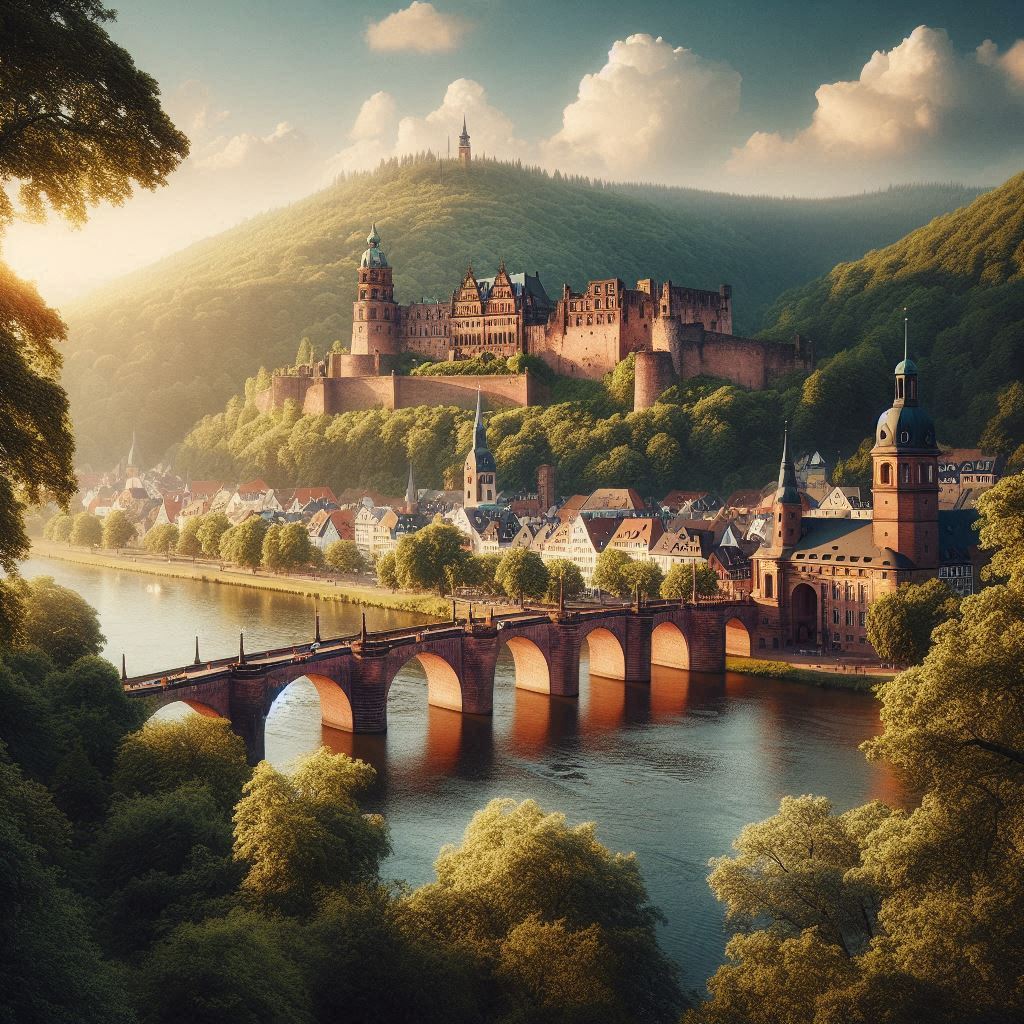 | Heidelberg, a historic city in Baden-Württemberg, Germany, is beautifully situated along the Neckar River. Known for its romantic charm, it is home to Heidelberg University, Germany’s oldest university, founded in 1386. The city boasts iconic landmarks such as Heidelberg Castle, the Old Bridge, and the scenic Philosophers’ Walk, each contributing to its rich cultural and architectural heritage. Until 1720, Heidelberg served as the capital of the Electorate of the Palatinate, shaping its political and historical significance.33 34 | |
| Heidenheim | Heidenheim an der Brenz, often called Heidenheim, is a town in Baden-Württemberg, Germany, near the Bavarian border, nestled between the Albuch and Härtsfeld regions of the Swabian Jura. First mentioned in 741, Heidenheim grew into a medieval settlement, later evolving into an industrial hub. The town’s name originates from the Frankish personal name “Heido”, meaning “Heido’s home”, rather than a reference to heathens, as sometimes assumed. The town’s most iconic landmark, Hellenstein Castle, dates back to the 12th century, offering panoramic views and housing a museum on local history. Another highlight is Brenzpark, a popular recreational area along the Brenz River, providing green spaces and walking trails.35 36 | Local heritage book of Schnaitheim with Aufhausen |
| Heilbronn | Heilbronn, a city in northern Baden-Württemberg, Germany, is situated along the Neckar River, surrounded by vineyards and the Swabian Forest. First mentioned in 741, its name originates from “Heiligbronn” (holy spring), referring to a stream beneath St. Kilian’s Church. In 1281, Heilbronn became a Free Imperial City, developing into a major trade center and later an industrial hub. Known as “Käthchenstadt”, inspired by Heinrich von Kleist’s play “Das Käthchen von Heilbronn”, the city boasts landmarks like St. Kilian’s Church, the Astronomical Clock, and the Götzenturm. Despite heavy destruction during World War II, many historic sites have been restored, preserving Heilbronn’s rich cultural heritage.37 38 | |
| Heiningen | Heiningen, a municipality in the Göppingen district of Baden-Württemberg, Germany, lies at the base of the Swabian Alps. First mentioned in 1228 as “Huningen”, it was granted city rights in 1284 by King Rudolf von Habsburg at the request of Duke Konrad von Teck. Despite gaining the same privileges as Freiburg, Heiningen’s city status was short-lived. Following the deaths of King Rudolf (1291) and Duke Konrad (1292), the Teck sovereignty weakened, and Heiningen was sold to Count Eberhard I von Württemberg in 1321. It was then absorbed into the Göppingen district, where it remained a market town rather than a full-fledged city.39 40 | Local heritage book of Heiningen |
| Henschenberg | Henschenberg, a hamlet in the municipality of Kleines Wiesental, is located in the Lörrach district of Baden-Württemberg, Germany. Nestled in the foothills of the Black Forest, it is surrounded by lush landscapes and lies near the hamlets of Eichholz and Schillighof. The name Henschenberg likely originates from “Henschen”, a regional surname, combined with “Berg”, meaning “mountain”, reflecting its elevated location. Historically, the area was home to Ruine Henschenberg, a medieval fortress built in the 12th or 13th century, which remained inhabited until around 1400. Henschenberg shares a strong historical connection with Wieslet, as both were part of the former municipality of Wies, which merged into Kleines Wiesental in 20093. The two settlements were linked through trade routes and monastic estates, with Wieslet serving as a local administrative center for surrounding hamlets, including Henschenberg.41 42 | Local heritage book of Wieslet |
| Hessigheim | Hessigheim, a municipality in the Ludwigsburg district of Baden-Württemberg, Germany, is located along the Neckar River. First mentioned in 744, Hessigheim has historical ties to the Lorsch Abbey and later the Duchy of Württemberg. Renowned for its vineyards, the area has a long tradition of winemaking.43 44 | Local heritage book of Hessigheim |
| Heuberg | Heuberg is a hamlet in the municipality of Steinen, located in the Lörrach district of Baden-Württemberg, Germany. It is part of the Weitenau area, nestled in the foothills of the Black Forest. | Local heritage book of Weitenau |
| Hochberg | Hochberg is a district of Remseck am Neckar, located in the Ludwigsburg district of Baden-Württemberg, Germany. Historically, it was an independent municipality until its incorporation into Remseck in 1975. The area has roots dating back to the 13th century, with the first mention of the Hochberg nobility in 1231. Notable landmarks include the Hochberg Castle, built in 1593 by Heinrich Schickhardt, and the neo-Gothic Schlosskirche from 1854. The district is also known for its scenic views of the Neckar River and its historical Jewish community. | Local heritage book of Remseck |
| Hochdorf (Enz) | Hochdorf an der Enz, a village in the municipality of Eberdingen in the Ludwigsburg district of Baden-Württemberg, Germany, lies approximately 18 kilometers west of Ludwigsburg. Renowned for its historical and archaeological importance, it features the Keltenmuseum Hochdorf, which displays artifacts from the renowned Hochdorf Chieftain’s Grave, a lavishly furnished Celtic burial site dating back to 530 BC. | Local heritage book of Hochdorf/Enz |
| Hochstetten | Hochstetten is a district in the municipality of Linkenheim-Hochstetten, located in the Karlsruhe district of Baden-Württemberg, Germany. Situated on the right bank of the Rhine River, it lies about 17 kilometers north of Karlsruhe. Hochstetten merged with Linkenheim in 1975 to form the current municipality.45 46 | Local heritage book of Hochstetten |
| Hockenheim | Hockenheim is a town known for the Hockenheimring racetrack, hosting thrilling motorsport events. | |
| Höllstein | Local heritage book of Steinen | |
| Hohenbodman | Hohenbodman is a village in the municipality of Owingen, located in the Bodenseekreis district of Baden-Württemberg, Germany. Overlooking the Aachtobel nature reserve, one of Germany’s oldest protected areas, the village is historically significant, with its first mention dating back to 1325. 47 | Local heritage book of Hohenbodman |
| Hofen | Hofen, a hamlet in the municipality of Steinen in the Lörrach district of Baden-Württemberg, Germany, is located near Weitenau in the foothills of the Black Forest. First documented in 1344 as “villa Hovun,” it is known for its historical charm.48 | Local heritage book of Weitenau |
| Holzkirch | Holzkirch is a small municipality in the Alb-Donau-Kreis district of Baden-Württemberg, Germany. Located on the southern edge of the Swabian Jura, it lies north of the Lone Valley and about 18 kilometers northeast of Ulm. First mentioned in 1362, Holzkirch became part of Württemberg in 1810 following territorial changes. | Local heritage book of Holzkirch with Breitingen |
| Horb am Neckar | A town in the northern Black Forest, offering historic sites and beautiful views of the Neckar River. | |
| Horrenbach | Horrenbach is a hamlet in the town of Krautheim, located in the Hohenlohekreis district of Baden-Württemberg, Germany. Nestled in a side valley of the Jagst River, it is surrounded by the scenic landscapes of the Jagsttal nature reserve. First mentioned in 1231 as “Horbach,” the hamlet has historical ties to the monasteries of Gnadental and Schöntal. On September 1, 1971, Horrenbach was incorporated into Krautheim. | Local heritage book of Eisental |
| Hügelheim | Local heritage book of Hügelheim | |
| Hügelsheim | Hügelsheim is a municipality in the Rastatt district of Baden-Württemberg, Germany. Located in the Upper Rhine Plain, it lies near the Rhine River, about 10 kilometers southwest of Rastatt and close to the French border. The area has been continuously inhabited since the Stone Age, with its first documented mention in 788 as “Hughilaheim.” | Local heritage book of Hügelsheim |
| Hüsingen | Hüsingen, the southernmost district of Steinen in Lörrach, Baden-Württemberg, lies on the Dinkelberg plateau. First mentioned in 1242 as “Husinchon,” it retains its rural charm while offering modern amenities like a community center and recreational areas. | Local heritage book of Steinen |
| Hummelberg | Hummelberg is a hill located in Balingen, within the Zollernalbkreis district of Baden-Württemberg, Germany. Rising to an elevation of 607 meters, it is near the villages of Endingen and Weilstetten. | Local heritage book of Weitenau |
| Huttenheim (Philippsburg) | Huttenheim is a district of Philippsburg in the Karlsruhe district of Baden-Württemberg, Germany. Situated in the Upper Rhine Plain, it lies near Neudorf and Rheinsheim. The area was first mentioned in 784 as “Hiutenheim” in the Lorsch Codex. Following a catastrophic flood in 1758, the village was relocated and renamed Huttenheim in 1760 in honor of Fürstbischof Franz Christoph von Hutten. On January 1, 1973, Huttenheim officially became part of Philippsburg. | Local heritage book of Huttenheim (Philippsburg) |
| Ihringen | Ihringen is a town in the Breisgau-Hochschwarzwald district of Baden-Württemberg, Germany. Located at the southern end of the Kaiserstuhl hills, it is known for its wine production and warm climate, often considered one of the warmest places in Germany. The town’s proximity to Freiburg and Breisach am Rhein makes it a popular destination for visitors exploring the region.49 50 | Local heritage book of Ihringen |
| Kappel-Grafenhausen | Kappel-Grafenhausen is a municipality in the Ortenaukreis district of Baden-Württemberg, Germany. Nestled between the Black Forest and the Vosges Mountains, it spans approximately 2,600 hectares, including residential areas, forests, and water bodies. The municipality consists of two main areas, Kappel and Grafenhausen. | Local heritage book of Kappel-Grafenhausen |
| Karlsruhe | Karlsruhe is a vibrant city known for its fan-shaped layout, cultural institutions, and legal significance as Germany’s “City of Justice.” | |
| Kirchhausen | Kirchhausen is a hamlet in the municipality of Steinen, located in the Lörrach district of Baden-Württemberg, Germany. It is part of the northern district of Endenburg and lies in the foothills of the Black Forest. First mentioned in 1344 as “Kilchenhusuin,” Kirchhausen is known for its historical charm. A key landmark is the Schneiderhof, a traditional Black Forest farmhouse built in 1696.51 | Local heritage book of Weitenau |
| Kleinengstingen (Engstingen) | Kleinengstingen is a village in the municipality of Engstingen, located in the Reutlingen district of Baden-Württemberg, Germany. Situated on the northern edge of the Swabian Jura, it lies near Großengstingen and Kohlstetten. The village was first mentioned in 1482 as “Clain Engstingen” and has historical ties to the Württemberg region. It became part of the municipality of Engstingen during the administrative reform on January 1, 1975. | Local heritage book of Kleinengstingen |
| Klosterhof | Klosterhof Weitenau refers to the site of a former Benedictine monastery in the Weitenau area of Steinen, Baden-Württemberg, Germany. Established around 1100, it was historically linked to the monastery of St. Blasien. The Klosterhof included a church dedicated to St. Gangolf, which later became a Protestant parish church after the Reformation. The monastery was dissolved in 1556, and its buildings were repurposed over time. Since 1971, the site has been used as a specialized clinic. | Local heritage book of Weitenau |
| Kohlstetten (Engstingen) | Kohlstetten is a village in the municipality of Engstingen, located in the Reutlingen district of Baden-Württemberg, Germany. Nestled on the edge of the Swabian Jura, it lies near Großengstingen and Kleinengstingen. First mentioned in 1161 as “Cholsteten,” the village was originally under the ownership of the Counts of Achalm before passing to the Counts of Urach in 1230 and later to Württemberg in 1265. Kohlstetten became part of Engstingen during the administrative reform on January 1, 1975. | Local heritage book of Kohlstetten |
| Konstanz | Konstanz is a lakeside city on Lake Constance, offering a charming old town and a thriving cultural scene. | |
| Kornwestheim | Kornwestheim is a town in the Ludwigsburg district of Baden-Württemberg, Germany, located about 10 kilometers north of Stuttgart. First mentioned as “Westheim” in 780 AD, it became “Kornwestheim” in 1472. Historically, it was a prosperous farming village before industrialization transformed it in the 19th century. The town is known for the iconic Salamander shoe factory, which played a significant role in its development.52 53 | Local heritage book of Kornwestheim |
| Krautheim | Krautheim is a town in the Hohenlohe district of Baden-Württemberg, Germany, situated along the Jagst River. First mentioned in 1096 as “Crutheim,” it became a town in 1307. The town is known for Burg Krautheim, a medieval castle with a 30-meter-high keep offering panoramic views of the Jagst Valley. | |
| Lahr | Lahr is a town in western Baden-Württemberg, known for its colorful old town and proximity to the Black Forest. | |
| Laiz | Laiz, a village in the municipality of Sigmaringen in Baden-Württemberg, Germany, is set within the beautiful Upper Danube Nature Park along the Donau River, just west of Sigmaringen’s center. With a history dating back to the Bronze Age and Roman times, Laiz was first documented in 1231 and officially became part of Sigmaringen on January 1, 1975. | Local heritage book of Laiz |
| Langenbrand (Forbach) | Langenbrand is a village in the municipality of Forbach, located in the Rastatt district of Baden-Württemberg, Germany. Nestled in the scenic Murgtal valley of the Northern Black Forest, it lies about two kilometers north of Forbach’s center. First mentioned in 1339/40 as “Langenbrande,” the village originated as a clearing settlement. On July 1, 1974, Langenbrand officially became part of Forbach. | Local heritage book of Langenbrand |
| Lauda-Oberlauda | Lauda-Oberlauda is a district of Lauda-Königshofen in the Main-Tauber-Kreis district of Baden-Württemberg, Germany. Situated along the Romantic Road, it is surrounded by the scenic Tauber Valley. Oberlauda was first mentioned in 788 in the Lorsch Codex and became part of Lauda on January 1, 1972. | Local heritage book of Lauda-Oberlauda |
| Laudenbach (Weikersheim) | Laudenbach is a district of Weikersheim in the Main-Tauber-Kreis district of Baden-Württemberg, Germany. Situated in the picturesque Vorbach Valley, it lies near the Romantic Road. First mentioned in the 9th century, Laudenbach has a rich history, including its association with the Lords of Finsterlohe, who built the Schloss Laudenbach and the Bergkirche in the 14th century. On January 1, 1974, Laudenbach was incorporated into Weikersheim. | Local heritage book of Laudenbach (Weikersheim) |
| Lehnacker | Lehnacker is a hamlet in the municipality of Steinen, located in the Lörrach district of Baden-Württemberg, Germany. It is part of the northern district of Endenburg and lies in the foothills of the Black Forest. Lehnacker is situated at an elevation of approximately 730 meters above sea level and is accessible via three asphalted roads. The hamlet offers stunning views of the Alps on clear days.54 | |
| Lehningen (Tiefenbronn) | Lehningen is a village in the municipality of Tiefenbronn, located in the Enzkreis district of Baden-Württemberg, Germany. Situated southeast of Pforzheim, it lies at the edge of the Black Forest. First mentioned in 1272 as “Loningen,” the village has historical ties to the Kloster Herrenalb and the Counts of Gemmingen. Lehningen became part of Tiefenbronn on January 1, 1972. | Local heritage book of Lehningen |
| Lörrach-Stetten | Lörrach-Stetten is the southernmost district of Lörrach in Baden-Württemberg, Germany, bordering the Swiss municipality of Riehen. First mentioned in 763 as “Stetiheim,” it was historically part of Vorderösterreich (Further Austria) until 1806. Stetten was incorporated into Lörrach in 1908, marking the city’s first expansion.55 56 | Local heritage book of Lörrach-Stetten |
| Ludwigsburg | Ludwigsburg is a historic city near Stuttgart, famous for its Ludwigsburg Palace and charming Baroque architecture. | |
| Luizhausen (Lonsee) | Luizhausen is a village in the municipality of Lonsee, located in the Alb-Donau-Kreis district of Baden-Württemberg, Germany. Situated about 1.5 kilometers south of Lonsee, it lies in the scenic Swabian Jura region. First mentioned in 1275, Luizhausen was historically a fief of the Counts of Helfenstein and later passed to the Herren von Westerstetten. On April 1, 1972, Luizhausen officially became part of Lonsee. | Local heritage book of Luizhausen |
| Mannheim | Mannheim is a vibrant city in Baden-Württemberg, Germany, located at the confluence of the Rhine and Neckar rivers. Known as the “Quadratestadt” (Square City) due to its unique grid layout, Mannheim is a cultural and economic hub in the Rhine-Neckar metropolitan region. Mannheim has a rich history, dating back to its founding in 1607. It played a significant role in the industrial revolution, with Karl Benz inventing the first automobile here in 1886.57 58 | |
| Markbronn | Markbronn is a village in the municipality of Blaustein, located in the Alb-Donau-Kreis district of Baden-Württemberg, Germany. Nestled in the Swabian Jura region, it lies near Dietingen and Arnegg. The village was first mentioned in 1304 and is believed to have been named after a spring dedicated to Saint Mark. Markbronn officially became part of Blaustein on July 1, 1971. | Local heritage book of Markbronn |
| Maulburg | Maulburg is a municipality in the Lörrach district of Baden-Württemberg, Germany, located in the Wiesental valley between Schopfheim and Lörrach. First mentioned in 1403, it transitioned from a farming village to an industrial hub in the 19th century. | Local heritage book of Maulburg |
| Möglingen | Möglingen is a municipality in the Ludwigsburg district of Baden-Württemberg, Germany. Located about 13 kilometers northwest of Stuttgart and 5 kilometers west of Ludwigsburg, it lies in the Stuttgart Region. First mentioned in 1275 as “Meginingen,” the village was historically tied to the County Palatine of Tübingen before becoming part of Württemberg in 1308. | Local heritage book of Möglingen |
| Müllenbach | Müllenbach is a neighborhood in the village of Eisental, which is part of the town of Bühl in the Rastatt district of Baden-Württemberg, Germany. It was first mentioned between 1070 and 1092 and was historically part of the Vogtei Müllenbach, which included Eisental and Affental. | Local heritage book of Eisental |
| Münchingen | Münchingen, situated in the Ludwigsburg district of Baden-Württemberg, Germany, is a district of Korntal-Münchingen. Located on the northwestern border of Stuttgart within the Strohgäu region, it officially joined Korntal-Münchingen on January 1, 1975, during administrative reforms. | Local heritage book of Münchingen |
| Neckargemünd | Neckargemünd is a town in the Rhein-Neckar-Kreis district of Baden-Württemberg, Germany. Located at the confluence of the Neckar and Elsenz rivers, it lies about 10 kilometers upriver from Heidelberg. The town has a rich history, with its first mention dating back to 988. Neckargemünd became a free town in 1286 and later passed to the Elector Palatine in 1395. | Local heritage book of Neckargemünd und Kleingemünd |
| Neckargröningen | Neckargröningen is a district of Remseck am Neckar in the Ludwigsburg district of Baden-Württemberg, Germany. First mentioned in 806 as “Gruonincheim,” it is the oldest documented area in Remseck. Historically part of the Neckargau, it became part of Württemberg in the 13th century.59 60 | Local heritage book of Remseck |
| Neckarrems | Neckarrems is a district of Remseck am Neckar in the Ludwigsburg district of Baden-Württemberg, Germany. Situated at the confluence of the Rems and Neckar rivers, it is the oldest documented area in Remseck, first mentioned in 1268. Historically part of Württemberg, Neckarrems features landmarks like the Michael-Sebastian Church and the remnants of Burg Rems. | |
| Neenstetten | Neenstetten is a municipality in the Alb-Donau-Kreis district of Baden-Württemberg, Germany. Located on the southern edge of the Swabian Alb, it sits on a ridge above the Lonetal valley, approximately 18 kilometers north of Ulm and 10 kilometers west of Langenau. | Local heritage book of Neenstetten |
| Neibsheim | Neibsheim is a village in the town of Bretten, located in the Karlsruhe district of Baden-Württemberg, Germany. Nestled in the Kraichgau region, it lies near the Bertha Benz Memorial Route. First mentioned in 770 in the Lorsch Codex, Neibsheim has a long history, including its association with the Speyer Cathedral Chapter until 1802. On March 1, 1972, Neibsheim was incorporated into Bretten. | Local heritage book of Neibsheim |
| Neidenstein | Neidenstein, founded in 1319 by Heinrich von Venningen, is a village in Baden-Württemberg, Germany. Its centerpiece is the 13th-century Neidenstein Castle, perched atop a hill. Historically owned by the Lords of Venningen, Neidenstein transitioned to Baden’s control in 1805.61 62 | Local heritage book of Neidenstein |
| Neuenburg am Rhein | Neuenburg am Rhein is a town in the Breisgau-Hochschwarzwald district of Baden-Württemberg, Germany. Situated on the right bank of the Rhine, it lies between Freiburg and Basel. Founded in 1175 by the Zähringer dynasty, it became a Free Imperial City in 1219.63 | Local heritage book of Neuenburg |
| Neuweier | Neuweier is a village in Baden-Württemberg, Germany, located near Baden-Baden in the foothills of the Black Forest. Known for its vineyards, it is part of the Rebland wine region and features landmarks like Schloss Neuweier, a historic castle and winery.64 65 | Local heritage book of Neuweier |
| Nussdorf (Eberdingen) | Nussdorf is a village in the municipality of Eberdingen, located in the Ludwigsburg district of Baden-Württemberg, Germany. It has historical roots dating back to Roman times and was first mentioned in records around 1100 AD. Notable landmarks include Schloss Nussdorf, a castle built in the 15th/16th century.66 | Local heritage book of Nussdorf (Municipality of Eberdingen) |
| Oberesslingen | Oberesslingen is a district of Esslingen am Neckar in Baden-Württemberg, Germany. Located southeast of the city center, it has historical roots dating back to Roman times. Notable landmarks include the Martinskirche and the historic ferry site on the Neckar River.67 | Local heritage book of Oberesslingen |
| Oberriexingen | Oberriexingen is a town in the Ludwigsburg district of Baden-Württemberg, Germany. Situated on the river Enz, it lies about 20 kilometers northwest of Stuttgart. | Local family database Oberriexingen |
| Ochsenbach (Sachsenheim) | Ochsenbach, a village in Sachsenheim, Ludwigsburg district, Baden-Württemberg, lies in the scenic Kirbachtal valley. First mentioned in 1290, it has ties to the Herren von Neuffen and Kloster Maulbronn. Known for its historic viticulture dating back to 1268, the village features 16th-century half-timbered houses and was recognized for its beauty in the 1993 “Unser Dorf soll schöner werden” competition.68 69 | Local heritage book of Ochsenbach with Spielberg (Sachsenheim) |
| Öschelbronn near Pforzheim | Öschelbronn is part of the municipality of Niefern-Öschelbronn, located in the Enzkreis district of Baden-Württemberg, Germany. It lies near Pforzheim, at the northern edge of the Black Forest. | Families from Öschelbronn near Pforzheim (German website) |
| Offenburg | Offenburg is town in Baden-Württemberg’s Ortenaukreis, known for its wine culture and historic architecture. | |
| Öllingen | Öllingen is a municipality in the Alb-Donau district of Baden-Württemberg, Germany. Located about 18 kilometers northeast of Ulm, it lies on the southern slope of the Swabian Jura, between the Lone Valley and the Danube Valley. First mentioned in 1143 as “Elingen,” Öllingen has a history of settlement dating back to 2000 BC, as evidenced by archaeological finds on the Sandberg. | |
| Öschelbronn (near Pforzheim) | Öschelbronn is part of the municipality of Niefern-Öschelbronn in the Enz district of Baden-Württemberg, Germany. Situated just a few kilometers east of Pforzheim, it enjoys close ties to this larger city. First mentioned in 1504, Öschelbronn was historically part of the Duchy of Württemberg before being ceded to Baden in 1810. In 1971, it merged with Niefern to form Niefern-Öschelbronn. Today, it is known for its picturesque setting along the Enz River. | Local heritage book of Öschelbronn |
| Pforzheim | Pforzheim is a city in the northern Black Forest, known as the “Gateway to the Black Forest” and for its jewelry industry. | |
Plochingen | Plochingen, a historic town on the Neckar River in Baden-Württemberg, dates back to Roman times and flourished as a medieval trade hub. It features the 15th-century St. Jan Church, built on a site with sacred roots from the 7th century, and the modern Hundertwasserhaus, known for its colorful architecture.70 71 | Local heritage book of Plochingen |
| Pülfringen | Pülfringen, first mentioned in 788, was ruled by various noble families before joining Baden in 1806. A fire in 1831 led to the rebuilding of St. Kilian Church in 1846. | Local heritage book of the Catholic Parish of Pülfringen |
| Ravensburg | Ravensburg is a town in Upper Swabia, celebrated for its medieval towers and charming old town. | |
| Reicholzheim | Reicholzheim, a town in Baden-Württemberg, Germany, lies in the Tauber Valley near the Odenwald and Spessart forests. First mentioned in 1178 as “Richolfsheim,” it was historically linked to Bronnbach Abbey. | Local heritage book of Reicholzheim |
| Remseck am Neckar | Remseck am Neckar, located in Baden-Württemberg, Germany, sits at the confluence of the Rems and Neckar rivers. The town was officially formed in 1975 through the merger of several villages, including Aldingen, Hochberg, Hochdorf, Neckargröningen, and Neckarrems. | Local heritage book of Remseck |
| Reutlingen | Reutlingen is a city in Baden-Württemberg, known for its narrow streets and proximity to the Swabian Alps. | Local heritage book of Remseck |
| Reutti op Urspring | Reutti op Urspring, once part of Urspring, became independent before joining Amstetten in 1973. | Local heritage book of Reutti op Urspring |
| Rheinweiler | Rheinweiler is a village in the municipality of Bad Bellingen, located in the district of Lörrach in Baden-Württemberg, Germany. It is situated along the Rhine River, near the French border, and close to other villages like Bamlach and Hertingen. The area is renowned for its historical landmarks, scenic vineyards, and its role as a former trading hub along the river. | Local heritage book of Bamlach-Rheinweiler |
| Riet (Vaihingen an der Enz) | Riet, a district of Vaihingen an der Enz, dates back to Celtic and Roman times. Mentioned as “Villa Reoth” in the Lorsch Codex, it had a recorded castle in 1188. | Local heritage book of Riet |
| Rohrbronn (Remshalden) | Rohrbronn, now part of Remshalden, was historically linked to Winterbach until becoming independent in 1809. It gained its own mayor in 1828 and officially joined Remshalden in 1974. | Local heritage book of Rohrbronn |
| Rüdental(Hardheim) | Rüdental is a locality in Hardheim, which is part of the Neckar-Odenwald-Kreis in Baden-Württemberg, Germany. It is situated near other localities like Innere Heide and Lüft. The area is known for its scenic surroundings and proximity to the European Metropolregion Rhein-Neckar | |
| Scharenstetten | Scharenstetten is a small village in Baden-Württemberg, Germany, with a rich local history documented in family databases. | Local family database Scharenstetten |
| Schillighof | Schillighof is a hamlet in the municipality of Steinen, located in the Lörrach district of Baden-Württemberg, Germany. Nestled in the foothills of the Black Forest, it lies near the hamlets of Fahrnbuck and Henschenberg.72 | Local heritage book of Wieslet |
| Schlächtenhaus | Schlächtenhaus, a hamlet in the municipality of Steinen, is located in the Lörrach district of Baden-Württemberg, Germany. Nestled in the foothills of the Black Forest, it serves as a key connection between the Wiesental and Kandertal valleys via the Scheideckpass. First mentioned in 1344, Schlächtenhaus was historically referred to as “die im Tale”, distinguishing it from nearby Hofen, which sits at a higher elevation. The name likely originates from “schlechtes Haus”, meaning “poor house”, rather than a reference to a slaughterhouse. Schlächtenhaus shares strong historical ties with Weitenau, particularly through the Kloster Weitenau, a former monastery that once belonged to Weitenau but was transferred to Schlächtenhaus in the 19th century. On January 1, 1975, Schlächtenhaus was officially incorporated into Steinen during administrative reforms.73 74 | Local heritage book of Weitenau |
| Schluttenbach | Schluttenbach is a small village and district of Ettlingen in Baden-Württemberg, Germany. It is located on the western edge of the Northern Black Forest and is surrounded by beautiful natural landscapes. The village’s name originates from the Beierbach stream, which runs through the area. Historically, Schluttenbach was first mentioned in 1346 and became part of Baden in 1528. It was officially incorporated into Ettlingen in 1974.75 76 | Local heritage book of Schluttenbach |
| Schnait (Weinstadt) | Schnait is a district of Weinstadt, located in the Rems-Murr-Kreis district of Baden-Württemberg, Germany. Nestled in the scenic Rems Valley, Schnait is renowned for its vineyards and winemaking tradition. The district is also the birthplace of Friedrich Silcher, a famous composer of German folk songs, and features the Silcher Museum dedicated to his life and work.77 | Local heritage book of Schnait |
| Schnaitheim (Heidenheim) | Schnaitheim is a district of Heidenheim an der Brenz, offering historical charm and connections to the town. | Local heritage book of Schnaitheim with Aufhausen |
| Schönaich | Schönaich, located in the Böblingen district of Baden-Württemberg, Germany, has a rich history dating back to the 7th century. It was first officially mentioned in 1274. During the Thirty Years’ War, the village suffered greatly, with its population dropping from 931 to just 50 residents. Recovery was slow, taking until the mid-19th century. Historically, agriculture, livestock farming, weaving, and fruit cultivation were the main sources of livelihood.78 79 | Local heritage book of Schönaich |
| Schriesheim | Schriesheim, in Baden-Württemberg’s Rhein-Neckar-Kreis, lies on the Bergstraße near Mannheim and Heidelberg. Known for its wine culture, it hosts the historic Mathaisemarkt wine festival. Landmarks include Strahlenburg castle and a historic silver mine.80 | Local heritage book of Schriesheim |
| Schrohmühle | Schrohmühle is a building located in the Weitenau area of Steinen, in the Lörrach district of Baden-Württemberg, Germany. It is situated near the Tongrube Steinen-Schlächtenhaus and the village of Hägelberg. The area around Schrohmühle is known for its scenic landscapes and proximity to landmarks like the Vogelpark Steinen, a bird park in the southern Black Forest. | Local heritage book of Weitenau |
| Schwäbisch Gmünd | Schwäbisch Gmünd is a historic town in Ostalbkreis, known for its medieval architecture and cultural events. | |
| Schwäbisch Hall | Schwäbisch Hall is a historic town in Baden-Württemberg, Germany, located in the valley of the Kocher River. Known for its medieval charm, it features landmarks like St. Michael’s Church, Comburg Castle, and the Hallian-Franconian Museum. The town was a Free Imperial City for centuries and is famous for its salt trade history. | |
| Sinzheim | Sinzheim is a municipality in the Rastatt district of Baden-Württemberg, Germany. Located about 6 kilometers west of Baden-Baden and 11 kilometers south of Rastatt, it lies at the edge of the Black Forest. | Local heritage book of Sinzheim |
| Söllingen (Rheinmünster) | Söllingen, part of Rheinmünster, was first mentioned in 1291. It endured Rhine flooding, changed hands from Schwarzach Abbey to Baden in the 15th century, and suffered during the Thirty Years’ War. | Local heritage book of Söllingen (Rheinmünster) |
Spessart/Ettlingen | Spessart is a district of Ettlingen, located in the Karlsruhe district of Baden-Württemberg, Germany. Nestled at the edge of the northern Black Forest, it is known for its scenic landscapes and historical significance. First mentioned in 1265, Spessart was historically associated with the Kloster Frauenalb until 1803. The name “Spessart” is derived from “Spechteßhard,” meaning “Spechtwald” or “woodpecker forest,” reflecting the area’s dense oak and beech forests. | Local heritage book of Spessart (Ettlingen) |
| Spielberg (Sachsenheim) | Spielberg, the smallest district of Sachsenheim, was first mentioned in 1332. Originally a forest settlement, it later came under the rule of Württemberg in 1356. The village endured hardships during the Thirty Years’ War, leaving only one surviving family. | Local heritage book of Ochsenbach with Spielberg (Sachsenheim) |
| Steinbach (Baden-Baden) | Steinbach, now part of Baden-Baden, was granted town rights in 1258. It has deep historical roots, with evidence of Roman roads and medieval fortifications. The town was once a center for millstone production, reflected in its coat of arms | |
| Steinen | Steinen is a municipality in the district of Lörrach, located in the southwest of Baden-Württemberg, Germany. Nestled in the scenic Wiesental valley of the Southern Black Forest, it is about 15 kilometers northeast of Basel and 6 kilometers northeast of Lörrach. Steinen consists of seven districts: Endenburg, Hägelberg, Höllstein, Hüsingen, Schlächtenhaus, Steinen, and Weitenau. Each district has its own unique charm and history. The municipality was formed during the administrative reforms of 1974-1975, which merged several previously independent communities. | Local heritage book of Steinen |
| Steinenbronn | Steinenbronn, first mentioned in 1303, was part of the Pfalzgrafschaft Tübingen before joining Württemberg in 1347. It suffered during the Thirty Years’ War, but its 1470 church tower remains a historical landmark. | |
| Steinfurt | Steinfurt, a small locality in Külsheim, Baden-Württemberg, lies on a sandstone plateau near the Katzenbach stream. First mentioned in 1245, its name reflects its medieval origins by a stone ford. | Family Register of Steinfurt: Click to access the PDF file. |
| Strümpfelbach | Strümpfelbach, a district of Weinstadt, was first mentioned in 1265. Known for its wine culture, it features historic half-timbered houses and a 1591 town hall. The village suffered heavy losses during the 1635–1638 plague but remains a picturesque wine-growing community. | |
| Stuttgart | Stuttgart is the capital of Baden-Württemberg, famous for its automotive industry, green spaces, and vibrant cultural scene. | |
| Tübingen | Tübingen is a university city in Baden-Württemberg, known for its medieval old town, vibrant student life, and the picturesque Neckar River. | |
| Ulm | Ulm is a historic city in Baden-Württemberg, Germany, situated on the banks of the Danube River. Known for its iconic Ulm Minster, the tallest church in the world, the city boasts a rich history dating back to 850 AD. Ulm was a free imperial city during the Middle Ages and is now a cultural and economic hub. It is also the birthplace of Albert Einstein.81 82 | |
Villingen-Schwenningen | Villingen-Schwenningen is a city in the Schwarzwald-Baar district of Baden-Württemberg, Germany. Formed in 1972 by merging Villingen and Schwenningen, it lies on the eastern edge of the Black Forest. Villingen is known for its medieval charm, including the historic city walls and the Münster, while Schwenningen has a history rooted in watchmaking and precision mechanics. | |
| Vogelbach-Marzell | Vogelbach, a charming settlement in Lörrach district, Baden-Württemberg, Germany, forms part of the Malsburg-Marzell municipality. First mentioned around 1130 as “villa Uogilbach,” it carries a notable historical legacy. Malsburg-Marzell itself, nestled in the picturesque southern Black Forest, offers stunning natural beauty and abundant opportunities for outdoor recreation. It was established in 1974 through the merger of the former municipalities of Malsburg and Marzell. | Local heritage book of Vogelbach-Marzell |
| Weil im Schönbuch | Weil im Schönbuch is a municipality in the Böblingen district of Baden-Württemberg, Germany. It is located on the northern edge of the Schönbuch Nature Park, a forested area known for its scenic beauty, hiking trails, and protected wildlife. The town’s name is derived from a Roman villa (“villa rustica”) that once existed in the area. Historically, the region has traces of human activity dating back to the Neolithic and Bronze Ages. It was first mentioned in records in 1188 as “Weyl im Schaienbuch.” Over time, it became part of the Bebenhausen Abbey’s holdings and later developed into a charming village. | Local heritage book of Weil in Schönbuch |
| Weilersteußlingen | Weilersteußlingen is a small village in the Alb-Donau district of Baden-Württemberg, Germany. It is part of the municipality of Allmendingen and is situated in a picturesque area known as the “Lutherische Berge.” The village has historical roots dating back to 1192 when it was referred to as “Wiler” and was part of the Herrschaft Steußlingen. The evangelical parish of Weilersteußlingen was established in 1582, and the St. Pankraz Church, built in 1755, remains a notable landmark.83 | Local heritage book of Weilersteußlingen |
Weinstadt | Weinstadt, meaning “Wine City,” is a town in the Rems-Murr-Kreis district of Baden-Württemberg, Germany. Located in the scenic Rems Valley, about 15 kilometers east of Stuttgart, it is composed of five districts: Beutelsbach, Endersbach, Großheppach, Strümpfelbach, and Schnait. These districts were formerly independent towns and villages until they merged in 1975 to form Weinstadt. | Local heritage book of Beutelsbach |
| Weitenau | Weitenau is a village in the municipality of Steinen, located in the Lörrach district of Baden-Württemberg, Germany. Nestled in the foothills of the Black Forest, it connects the Wiesental and Kleines Wiesental valleys. First mentioned in 1100, Weitenau was historically associated with the Benedictine monastery of St. Blasien. On January 1, 1974, it became part of Steinen. | Local heritage book of Weitenau |
| Weitenung (Bühl) | Weitenung is a district of Bühl in Baden-Württemberg, Germany. It was first mentioned in 884 AD as “Widendunc” and became part of Bühl in 1973. Historically, it was an agricultural community, but it has since evolved into a residential area.84 85 | Local heritage book of Weitenung (Bühl) |
| Wieslet | Wieslet is a village in the municipality of Kleines Wiesental, located in the Lörrach district of Baden-Württemberg, Germany. As the southernmost part of Kleines Wiesental, it lies in the foothills of the Black Forest. Wieslet was first mentioned in historical records in 1275 and became part of Kleines Wiesental on January 1, 2009. | Local heritage book of Wieslet |
| Zienken | Local heritage book of Hügelheim |
Sources:
- https://www.alltrails.com/trail/germany/baden-wurttemberg/in-die-weinberge-uber-affental ↩︎
- https://de.wikipedia.org/wiki/B%C3%BChl ↩︎
- https://en.wikipedia.org/wiki/Aglasterhausen ↩︎
- https://www.aglasterhausen.de/unsere-gemeinde/die-gemeinde-im-portraet/aglasterhausen ↩︎
- https://de.wikipedia.org/wiki/Aldingen_%28Remseck%29 ↩︎
- https://www.stadt-remseck.de/unser-remseck-am-neckar/stadtportrait/unsere-stadtteile/aldingen ↩︎
- https://de.wikipedia.org/wiki/Altsteu%C3%9Flingen ↩︎
- https://ancestors.familysearch.org/en/KH3D-Q1S/walter-von-steusslingen-1025-1080 ↩︎
- https://de.wikipedia.org/wiki/Burg_Aufhausen_%28Heidenheim%29 ↩︎
- https://de.wikipedia.org/wiki/Bamlach ↩︎
- https://www.gemeinde-bad-bellingen.de/de/Wir/Ortsteile/Bamlach/ ↩︎
- https://en.wikipedia.org/wiki/Beimerstetten ↩︎
- https://en.wikipedia.org/wiki/Beimerstetten ↩︎
- https://www.bernstadt-wuertt.de/ ↩︎
- https://en.wikipedia.org/wiki/Bernstadt_%28Alb%29 ↩︎
- https://en.wikipedia.org/wiki/Beutelsbach_%28Weinstadt%29 ↩︎
- https://www.weinstadt.de/de/Freizeit-Kultur/Stadtfuehrungen/Weinstadt-zu-Fuss/Weinstadt-zu-Fuss-Beutelsbach ↩︎
- https://en.wikipedia.org/wiki/Breitingen ↩︎
- https://de.wikipedia.org/wiki/Ruine_Briel ↩︎
- https://en.wikipedia.org/wiki/Bronnen_%28Achstetten%29 ↩︎
- https://www.achstetten.de/gemeinde-wirtschaft/ortsteile/bronnen/geschichte ↩︎
- https://en.wikipedia.org/wiki/Buggingen ↩︎
- https://buggingen.de/ ↩︎
- https://www.ehingen.de/stadt-buerger/leben-wohnen/unsere-stadt/ortsverwaltungen/ortsteile/daechingen ↩︎
- https://de.wikipedia.org/wiki/D%C3%A4chingen ↩︎
- https://de.wikipedia.org/wiki/Schw%C3%B6rstadt ↩︎
- https://de.wikipedia.org/wiki/Weitenau_%28Steinen%29 ↩︎
- https://data.matricula-online.eu/de/deutschland/baden_wuerttemberg/bw-15060/ ↩︎
- https://enkenstein.schopfheim.de/de/Lebenswertes-Enkenstein/Geschichte ↩︎
- https://en.wikipedia.org/wiki/Enzweihingen ↩︎
- https://en.wikipedia.org/wiki/Gerlingen ↩︎
- https://www.gerlingen.de/Welcome ↩︎
- https://de.wikipedia.org/wiki/Grunbach_%28Remshalden%29 ↩︎
- https://en.wikipedia.org/wiki/Hasel,_Germany ↩︎
- https://en.wikipedia.org/wiki/Heidelberg ↩︎
- https://www.britannica.com/place/Heidelberg ↩︎
- https://en.wikipedia.org/wiki/Heidenheim_an_der_Brenz ↩︎
- https://artefax.de/geschichte/heidenheim/heidenheimsiebz.html ↩︎
- https://en.wikipedia.org/wiki/Heilbronn ↩︎
- https://www.britannica.com/place/Heilbronn ↩︎
- https://en.wikipedia.org/wiki/Heiningen ↩︎
- https://www.heiningen-online.de/unsere-gemeinde-gewerbe/historisches-wappen/geschichte ↩︎
- https://de.wikipedia.org/wiki/Ruine_Henschenberg ↩︎
- https://www.leo-bw.de/detail-gis/-/Detail/details/ORT/labw_ortslexikon/15197/Kleines+Wiesental ↩︎
- https://en.wikipedia.org/wiki/Hessigheim ↩︎
- https://www.hessigheim.de/ ↩︎
- https://en.wikipedia.org/wiki/Linkenheim-Hochstetten ↩︎
- https://linkenheim-hochstetten.de/ ↩︎
- https://en.wikipedia.org/wiki/Hohenbodman ↩︎
- https://de.wikipedia.org/wiki/Weitenau_%28Steinen%29 ↩︎
- https://en.wikipedia.org/wiki/Ihringen ↩︎
- https://www.ihringen.de/startseite ↩︎
- https://de.wikipedia.org/wiki/Kirchhausen_%28Steinen%29 ↩︎
- https://en.wikipedia.org/wiki/Kornwestheim ↩︎
- https://www.kornwestheim.de/ ↩︎
- https://www.online-ofb.de/weitenau/ ↩︎
- https://de.wikipedia.org/wiki/Stetten_%28L%C3%B6rrach%29 ↩︎
- https://www.loerrach.de/de/Stadt-Buergerschaft/Loerrach-im-ueberblick/Stadt-und-Ortsteile/Stadtteil-Stetten ↩︎
- https://en.wikipedia.org/wiki/Mannheim ↩︎
- https://www.germany.travel/en/cities-culture/mannheim.html ↩︎
- https://de.wikipedia.org/wiki/Neckargr%C3%B6ningen ↩︎
- https://de.wikipedia.org/wiki/Remseck_am_Neckar ↩︎
- https://www.neidenstein.de/de/unser-ort/geschichtliches/heimatgeschichte ↩︎
- https://en.wikipedia.org/wiki/Neidenstein ↩︎
- https://en.wikipedia.org/wiki/Neuenburg_am_Rhein ↩︎
- https://en.wikipedia.org/wiki/Neuweier ↩︎
- https://schloss-neuweier.de/ ↩︎
- https://www.eberdingen.de/website/de/gemeinde/geschichte/ortsteil-nussdorf ↩︎
- https://de.wikipedia.org/wiki/Oberesslingen ↩︎
- https://de.wikipedia.org/wiki/Ochsenbach_%28Sachsenheim%29 ↩︎
- https://www.sachsenheim.de/website/de/stadt-politik/stadtinformation/stadtteile/ochsenbach
↩︎ - https://en.wikipedia.org/wiki/Plochingen ↩︎
- https://www.mygermancity.com/plochingen ↩︎
- https://www.viamichelin.com/maps/germany/baden_wurttemberg/lorrach/schillighof-79585 ↩︎
- https://de.wikipedia.org/wiki/Schl%C3%A4chtenhaus ↩︎
- https://www.steinen.de/gemeinde-steinen/unsere-ortsteile/schlaechtenhaus ↩︎
- https://de.wikipedia.org/wiki/Schluttenbach ↩︎
- https://www.ettlingen.de/schluttenbach ↩︎
- https://www.weinstadt.de/de/Freizeit-Kultur/Stadtfuehrungen/Weinstadt-zu-Fuss/Weinstadt-zu-Fuss-Schnait ↩︎
- https://en.wikipedia.org/wiki/Sch%C3%B6naich ↩︎
- https://www.schoenaich.de/gemeinde-wirtschaft/ein-blick-zurueck/historie ↩︎
- https://www.schriesheim.de/ ↩︎
- https://en.wikipedia.org/wiki/Ulm ↩︎
- https://www.ulm.de/ ↩︎
- https://en.wikipedia.org/wiki/Weilersteu%C3%9Flingen ↩︎
- https://de.wikipedia.org/wiki/Weitenung ↩︎
- https://www.buehl.de/de/Stadt-Buerger/Unsere-Stadt/Stadtteile/Weitenung ↩︎
 OFB index