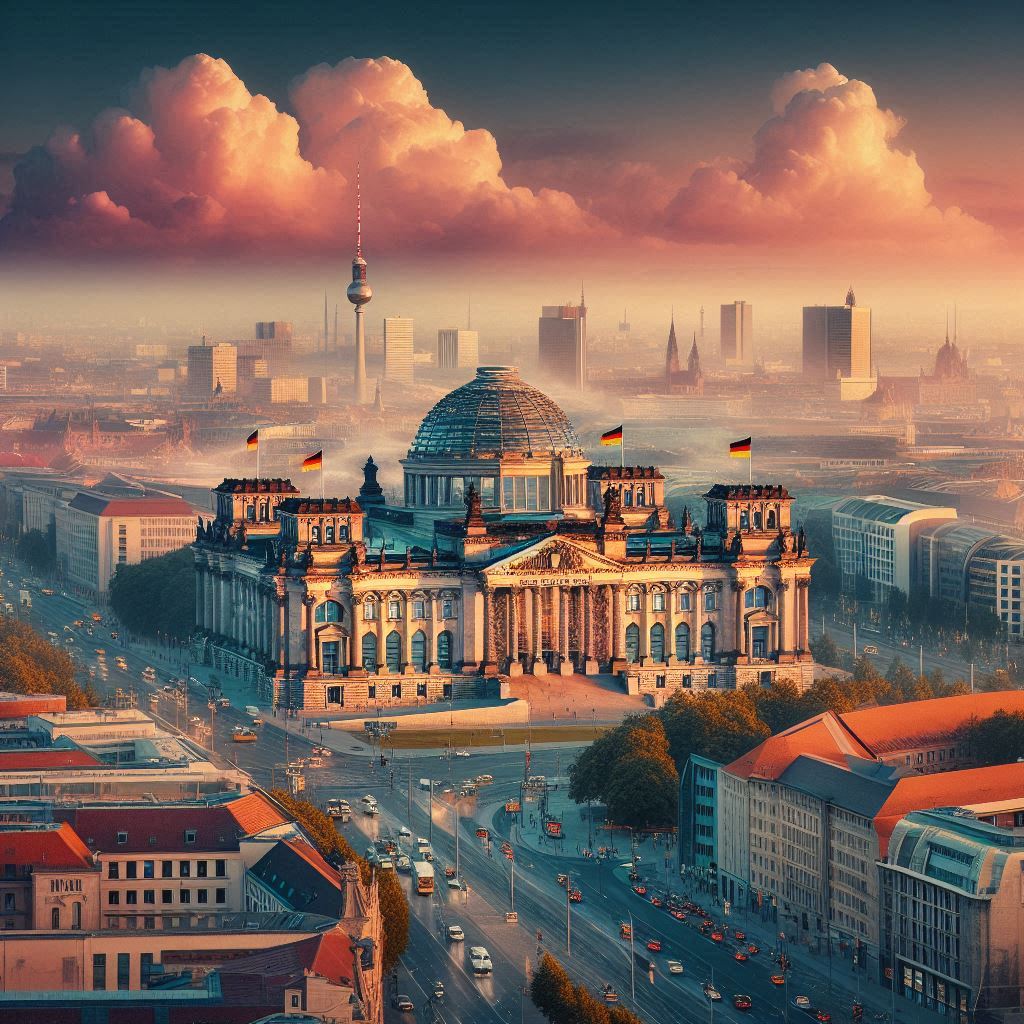
Berlin is Germany’s capital, renowned for its history, culture, and architecture. As one of the country’s 16 federal states (Bundesländer), it uniquely combines municipal and state governance as a city-state (Stadtstaat).
This page features links derived from the Online Familienbücher (OFB) website (https://ofb.genealogy.net/). To make these links more navigable and user-friendly, I have taken the liberty of reorganizing and categorizing them. For updated details and additional resources, please visit the original website directly.
| Cities, Towns, Villages, and Hamlets | Locality Descriptions | OFB Links and Additional Resources |
|---|---|---|
Berlin | Berlin, the capital of Germany, is a city celebrated for its dynamic arts, culture, and rich history. Established in the 13th century, Berlin grew from a small trading hub to become the capital of the Margraviate of Brandenburg and later the Kingdom of Prussia. It played a pivotal role in the formation of the German Empire in 1871. The city is home to iconic landmarks such as the Brandenburg Gate, a symbol of unity and peace, and the remnants of the Berlin Wall, which once divided East and West Berlin during the Cold War.1 | Local heritage book of Berlin |
Spandau | Spandau, the westernmost borough of Berlin, boasts a rich history rooted in its Slavic origins from the 7th century. Granted civic rights in 1232, it is home to the renowned Spandau Citadel, a 16th-century Renaissance fortress built atop medieval foundations. Spandau played a strategic defensive role over the centuries and later became an industrial hub, notably with Siemens establishing its operations in Siemensstadt in the 19th century. Today, Spandau blends historic landmarks like St. Nicholas Church with natural beauty, including the Spandauer Forst and Havel River, offering a unique glimpse into Berlin’s cultural and historical evolution.2 3 | Local heritage book of Spandau |
| Wartenberg | Wartenberg, a locality in Berlin’s Lichtenberg borough, has a history dating back to the German Ostsiedlung in the 12th century. First mentioned in 1270 as “Wardenberge,” it became part of the Margraviate of Brandenburg under Albert the Bear. The area developed as an agricultural hub, with estates acquired by Berlin in 1882 for urban expansion. Wartenberg’s historical landmarks include remnants of its manor and traditional farmhouses along the Dorfstraße, now protected as heritage sites. Its connection to Lichtenberg reflects the borough’s broader historical significance in Berlin’s development. Today, Wartenberg combines its rural charm with modern urban influences.4 | Local family database (Berlin-)Wartenberg |
Sources:
 OFB index
