A Region Defined by its Lakes and History
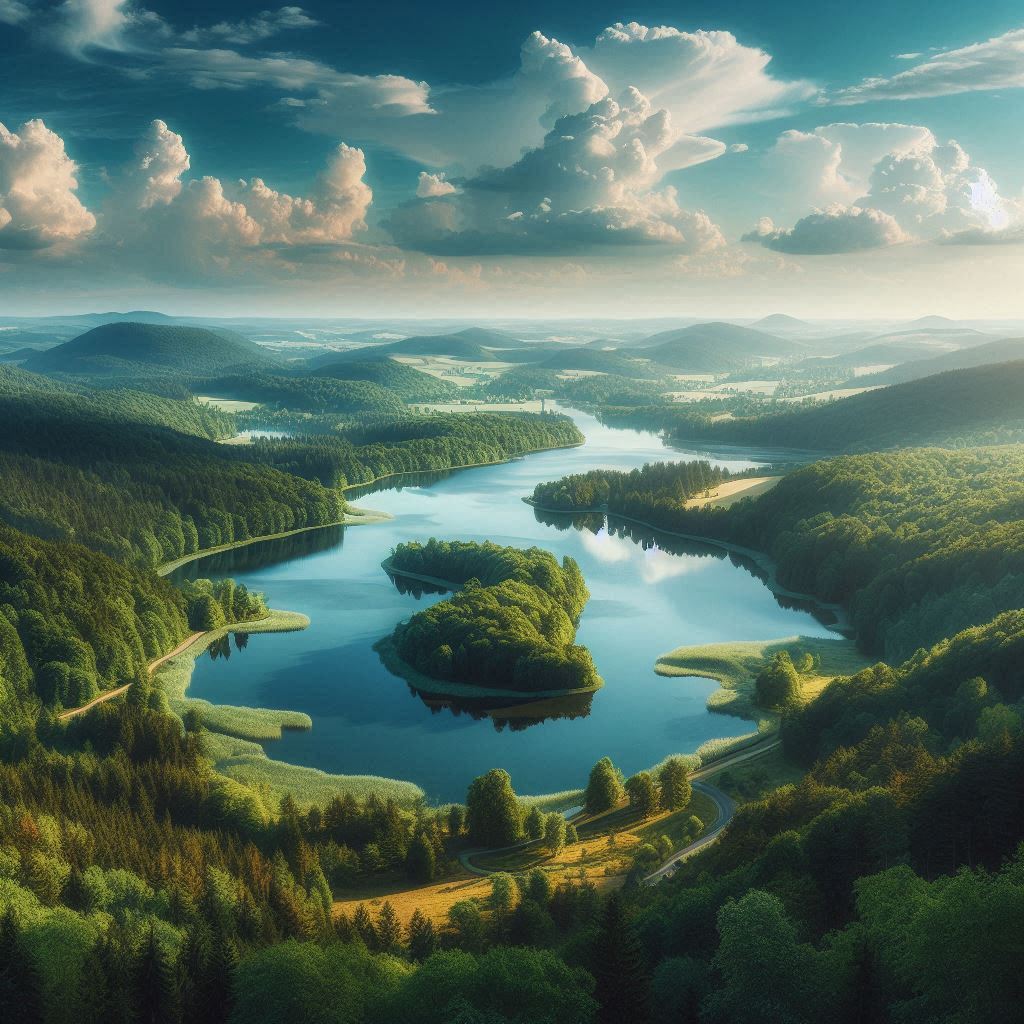
“To journey through the Mark, one must carry a love for its land and people—or at the very least, approach it without prejudice.” — Theodor Fontane
This evocative quote by Theodor Fontane encapsulates his deep affection for the Mark Brandenburg, a region rich in history and cultural significance. For those exploring their Brandenburg ancestry, understanding the region’s past offers invaluable insights into the lives and legacies of their forebears.
Between 1862 and 1889, Fontane published his seminal five-volume work, Wanderungen durch die Mark Brandenburg (“Walks through the March of Brandenburg”). This series is more than a travelogue; it’s a profound exploration of Brandenburg’s soul. Fontane intricately wove together the region’s landscapes, history, and inhabitants, capturing the essence of the land he cherished.
Fontane’s journeys through Brandenburg were not just physical traversals but intellectual and emotional explorations. He delved into local archives, engaged with residents across social strata, and immersed himself in the region’s folklore and traditions. His writings reflect a deep connection to the land, emphasizing the importance of approaching it with an open heart and without prejudice.
Exploring Brandenburg today offers a journey through time. From serene lakes and dense forests to historic towns and castles, the region invites visitors to connect with its past and present. Fontane’s work serves as a guide, encouraging a deeper appreciation of the land’s enduring legacy and cultural richness.
Early History: The Northern March
Brandenburg’s origins trace back to the 10th century when it was part of the Northern March (Nordmark), a frontier territory of the Holy Roman Empire. Established after the division of the vast Saxon Eastern March in 965, the Northern March served as a buffer zone against Slavic tribes, particularly the Wends. The region was instrumental in the empire’s efforts to Christianize and assimilate the Slavic populations during the medieval period. However, a significant Slavic uprising in 983 temporarily halted German expansion eastward, leading to a period where the area remained under Slavic control.
The Margraviate of Brandenburg
In 1134, Emperor Lothair III granted the Northern March to Albert the Bear, who reasserted German control over the region. By 1157, Albert had established the Margraviate of Brandenburg, laying the foundation for a significant principality within the Holy Roman Empire. The margraves played a pivotal role in expanding and consolidating the territory, often through military campaigns and colonization efforts.
A turning point came in 1415 when Frederick VI of Nuremberg, from the House of Hohenzollern, was granted hereditary control over Brandenburg. Under Hohenzollern rule, Brandenburg expanded its influence, notably through the acquisition of the Duchy of Prussia in 1618, leading to the formation of Brandenburg-Prussia. This union marked the beginning of Brandenburg’s rise as a European power.1
Brandenburg-Prussia and the Kingdom of Prussia
The personal union of Brandenburg and Prussia evolved into a more centralized state. In 1701, Elector Frederick III crowned himself as King in Prussia, establishing the Kingdom of Prussia. While Brandenburg remained a part of the Holy Roman Empire, it was effectively integrated into the Prussian kingdom. Under Prussian leadership, the region underwent significant administrative, military, and economic reforms, solidifying its status as a major European power. 2
Post-World War II and Territorial Changes
The aftermath of World War II brought profound changes to Brandenburg’s territorial boundaries. The eastern parts of Brandenburg, including the Neumark region, were ceded to Poland as part of the Potsdam Agreement. Towns such as Mieszkowice (formerly Bärwalde), Myślibórz (formerly Soldin), and Strzelce Krajeńskie (formerly Friedeberg) transitioned from German to Polish administration, reflecting the broader shifts in Central European borders during this period.
The GDR Era and Reunification
In the post-war period, Brandenburg became part of the Soviet occupation zone and, subsequently, the German Democratic Republic (GDR). In 1952, the GDR government dissolved the federal states, including Brandenburg, replacing them with centralized administrative districts (Bezirke). However, following the fall of the Berlin Wall and the subsequent reunification of Germany in 1990, Brandenburg was re-established as a federal state, restoring its historical identity and governance structures.
Brandenburg Today: Natural Beauty and Heritage
Today, Brandenburg is celebrated for its stunning natural landscapes, featuring expansive sandy plains, dense pine forests, and over 3,000 lakes.3 These picturesque surroundings make it a haven for nature lovers and history enthusiasts alike.
 OFB index