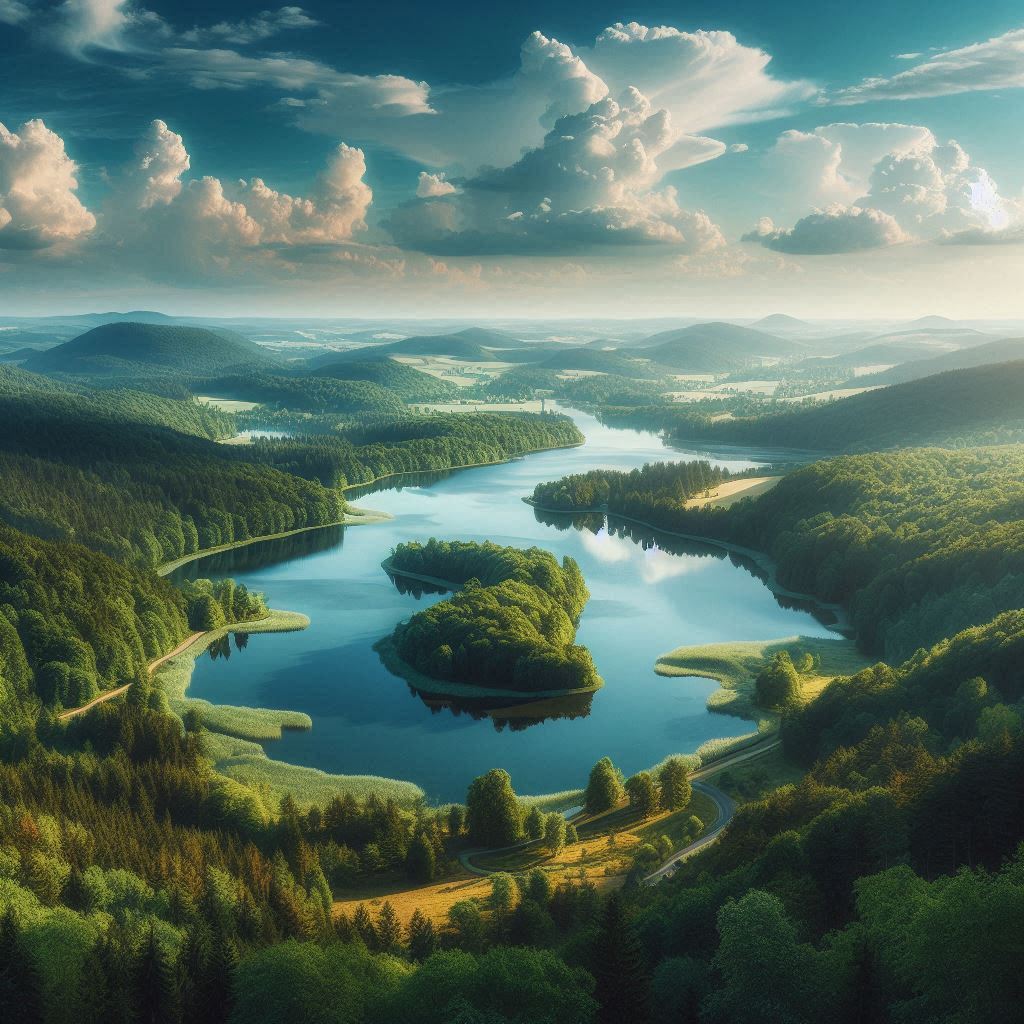
Brandenburg, a federal state in northeastern Germany, encircles Berlin and is celebrated for its deep-rooted history, diverse landscapes, and cultural significance. Re-established in 1990 following German reunification, it carries a legacy that dates back centuries. Some of the places listed below once belonged to historical Brandenburg but are now part of Poland.
This page features links derived from the Online Familienbücher (OFB) website (https://ofb.genealogy.net/). To make these links more navigable and user-friendly, I have taken the liberty of reorganizing and categorizing them. For updated details and additional resources, please visit the original website directly.
| Cities, Towns, Villages, and Hamlets | Historical administrative hierarchy | Locality Descriptions | OFB Links and Additional Resources |
|---|---|---|---|
| Aalkastenbrücke | Aalkastenbrücke or Aalkastenbruecke was a historical settlement in Kreis Landsberg/Warthe, part of Neumark, Brandenburg (now Poland). It was associated with Lotzen (Łośno) and mentioned in genealogical records related to the region. The area was historically significant for its rural estates and agricultural development before territorial shifts after 1945.1 | Local family database Landgemeinden nördlich Landsberg/Warthe | |
| Bagemühl (Brüssow) | Bagemühl or Bagemuehl is a village in the municipality of Brüssow, located in the Uckermark district of Brandenburg, Germany. It lies seven kilometers southeast of Brüssow, near the Randow River, which marks the border with Mecklenburg-Vorpommern. First mentioned in 1260, Bagemühl was historically associated with Schloss Löcknitz and later became part of the Kurfürstliches Amt Löcknitz in 1680, reflecting its ties to regional governance and noble estates. The village underwent significant transformations in the 19th and 20th centuries, including land reforms and the formation of agricultural cooperatives. Today, Bagemühl remains a quiet rural community, notable for its historical landmarks, such as the Dorfkirche Bagemühl, a medieval church that stands as a testament to the village’s enduring heritage. | Local heritage book of Brüssow-Altlutherans | |
| Bärwalde in der Neumark (Polish: Mieszkowice) | Bärwalde, Königsberg Neumark, Frankfurt, Brandenburg, Preussen2 | Bärwalde in der Neumark, now known as Mieszkowice, is a town in Gryfino County, West Pomeranian Voivodeship, Poland. It is located about 15 km east of the Oder River, near the German border. The town was originally a medieval Slavic settlement and became part of Brandenburg in the late 13th century during the Ostsiedlung. It played a role in the Thirty Years’ War, hosting the signing of a Franco-Swedish alliance in 1631. After World War II, it was renamed Mieszkowice in honor of Mieszko I, the first ruler of Poland.3 | Local heritage book of Bärwalde in der Neumark |
| Bagenz | Bagenz is a village in Brandenburg, Germany, and is part of Neuhausen/Spree in the Spree-Neiße district. It lies about 20 km southeast of Cottbus, near the Spremberg Dam, a reservoir used for flood control and recreation. First mentioned in 1389, Bagenz was historically linked to Schloss Spremberg and was part of the Herrschaft Spremberg in the 15th century. The village name originates from the Sorbic language, meaning “place by a swamp”. | Local heritage book of Spremberg (Land) – List of individuals born in Bagenz Local heritage book of Spremberg (Land)- List of individuals who died in Bagenz | |
| Bandelow (Uckermark) | Bandelow, Prenzlau, Potsdam, Brandenburg, Preussen4 | Bandelow is a locality within the municipality of Uckerland, located in Uckermark, Brandenburg, Germany. It lies three kilometers south of Trebenow and eleven kilometers north of Prenzlau. Historically, Bandelow was part of Kreis Prenzlau, an administrative district in Prussia. The Dorfkirche Bandelow, a historic village church, is one of its notable landmarks.5 | Local heritage book of Schönwerder und Bandelow |
| Battin (Brüssow) | Battin is a small village in Brandenburg, Germany, and is now part of Brüssow. It was first mentioned in 1316 under the name “Batyn”. The village lies six kilometers south-southeast of Brüssow, near the Randow River, which forms the border between Brandenburg and Mecklenburg-Vorpommern. Historically, Battin was associated with Schloss Löcknitz, a castle that once belonged to Werner von der Schulenburg, who received the land from the Brandenburgian Kurfürst Albrecht III Achilles in 1484. The village suffered during the Thirty Years’ War and later became home to French Huguenot settlers, whose descendants can still be recognized by their French surnames. Today, Battin remains a quiet rural community, with a small population. | Local heritage book of Brüssow-Stadt (Brüssow town) | |
| Baudach (Polish: Budachów) | Baudach, Crossen, Frankfurt, Brandenburg, Preussen6 | Baudach, now known as Budachów, is a village in western Poland, located 16 km north of Crossen/Oder (now Krosno Odrzańskie). Historically, it was part of Kreis Crossen, an administrative district in Brandenburg, Germany, before being integrated into Poland after 1945. The village dates back to at least 1309, when it was mentioned in a document recognizing its affiliation with the Diocese of Poznań. Over the centuries, Baudach was owned by various noble families, including the von Donyn (Dohna) family, who controlled large estates in the region.7 | Local heritage book of Baudach |
| Bergholz (near Brüssow) | Bergholz is a small village in the Uckermark district of Brandenburg, Germany, located near Brüssow and close to the Randowbruch wetlands along the Mecklenburg border. First mentioned in 1484, Bergholz was part of the Herrschaft Löcknitz until 1684, after which it became integrated into the Brüssow administrative district. In the 17th century, the village welcomed French Huguenot settlers, whose arrival shaped its cultural and religious landscape. During the 19th century, many Alt-Lutherans from Bergholz and surrounding areas emigrated to North America, seeking religious freedom and economic opportunity. In 1843, several families from Bergholz and Brüssow founded New Bergholz near Niagara Falls, New York, establishing a lasting transatlantic connection. Today, Bergholz remains a quiet rural community, with its history preserved in the Brüssow Local History Museum, housed in a former Alt-Lutheran church, featuring exhibits on emigration, religious life, and village heritage. | Local heritage book of Brüssow-Altlutherans | |
| Beveringen | Beveringen is a locality within the town of Pritzwalk, located in Prignitz, Brandenburg, Germany. It lies three kilometers east of Pritzwalk and has a population of around 289 residents. The village was first mentioned in 1368 under the name “Beveringhe”. Historically, it was part of Kreis Pritzwalk in the Province of Prignitz, later transitioning to Kreis Ostprignitz in 1816. One of its notable landmarks is the Dorfkirche Beveringen, a late 15th-century village church. The village was incorporated into Pritzwalk on December 31, 2002.8 | Local heritage book of Beveringen | |
| Bloischdorf-Kolonie | Bloischdorf-Kolonie is a small settlement in the municipality of Felixsee, located in the Spree-Neiße district of Brandenburg, Germany. It lies approximately 10 km northeast of Spremberg, near the Randowbruch wetlands, in a landscape shaped by forest edges and cultivated fields. Historically, Bloischdorf-Kolonie was part of Bloischdorf, a village first mentioned in 1296. The name derives from the Sorbic language, reflecting the region’s Slavic roots and cultural continuity. The settlement emerged as an agricultural colony, with close ties to Gut Bloischdorf, a noble estate that influenced local development and land use. Today, Bloischdorf-Kolonie remains a quiet rural community, preserving elements of its Slavic heritage and agrarian past. | Local heritage book of Spremberg (Land) – List of individuals born in Bloischdorf-Kolonie Local heritage book of Spremberg (Land) – List of individuals who died in Bloischdorf-Kolonie | |
| Bredow (Brieselang) | Bredow is a locality within the municipality of Brieselang, located in Havelland, Brandenburg, Germany. It lies about 30 km west-northwest of Berlin and was historically part of Kreis Nauen. The village was first mentioned in 1208 and was associated with the von Bredow noble family, who played a significant role in regional history. Bredow was an independent municipality until October 26, 2003, when it was incorporated into Brieselang. Notable landmarks include the Kirche Bredow, a historic church, and Bioenergie Bredow, a facility focused on renewable energy.9 | Local heritage book of Bredow Ortsfamilienbuch Bredow (in German) | |
| Brietzig | Brietzig is a small village in northeastern Germany and is now part of the municipality of Uecker-Randow-Tal in the Vorpommern-Greifswald district of Mecklenburg-Vorpommern. The village was first mentioned in 1375 and has been shaped by agricultural traditions and the legacy of noble estates. Historically, Brietzig and surrounding villages belonged to the Uckermark region. Today, only the village of Wismar remains in the Brandenburg district of Uckermark, while Brietzig and the others are part of Mecklenburg-Vorpommern | Local heritage book Pfarrsprengel Hetzdorf | |
| Brüssow (Alt-Lutheran movement) | The Alt-Lutheran movement in Brüssow emerged in response to the Prussian Union of Churches in 1817, which sought to merge Lutheran and Reformed congregations. Many Lutherans resisted this change, leading to the formation of independent Alt-Lutheran communities, including the one in Brüssow. Initially, the Prussian state persecuted these separatists, prompting waves of emigration to North America and Australia. However, by 1841, the state began tolerating the Alt-Lutherans, and in 1845, they were officially recognized. The Alt-Lutheran church in Brüssow was built in 1858/1859 and later became the Brüssow Heritage Museum in 1964. | Local heritage book of Brüssow-Altlutherans | |
| Brüssow (Surroundings) | Brüssow, located in the Uckermark district of Brandenburg, Germany, lies 16 km southeast of Pasewalk and 27 km west of Szczecin. Its surroundings feature vast agricultural landscapes, rolling hills, dense forests, and serene lakes, characteristic of the Uckermark region. The area is dotted with small villages, including Bergholz, Fahrenwalde, and Woddow, reflecting its rural charm and historical ties to traditional farming communities. | Local heritage book of Brüssow-Land (Brüssow surroundings) Local heritage book of Brüssow-Altlutherans | |
| Brüssow (Town) | Brüssow, Prenzlau, Potsdam, Brandenburg, Preussen10 | Brüssow is a town in the Uckermark district, located in Brandenburg, Germany. It lies 16 km southeast of Pasewalk and 27 km west of Szczecin. Historically, Brüssow was part of Neumark, a region of Brandenburg, and played a role in the Ostsiedlung during the medieval period. In 1685, a French Huguenot commune was founded in Battin, now part of Brüssow. The town features remnants of its 14th-century city wall, along with two preserved Wiekhäuser (fortified houses).11 | Local heritage book of Brüssow (town) |
| Buchwerder | Buchwerder was a historic settlement in Zanzetal, Neumark, Brandenburg, closely associated with Zanshausen, Zanzmühle, and Zanztal. It was part of the Neumark region, which was historically under Brandenburg-Prussia. The settlement played a role in the rural development of Neumark, contributing to the region’s network of villages and estates. Following World War II, the Neumark region was reassigned to Poland under the Potsdam Agreement of 1945, leading to the displacement of its German population and the settlement of Polish inhabitants. Today, the area is part of Lubusz Voivodeship.12 | Local family database Zanzetal | |
| Bützer | Bützer or Buetzer is a locality within the municipality of Milower Land, located in Havelland, Brandenburg, Germany. It lies on the eastern bank of the Havel River, near the state border with Saxony-Anhalt. Historically, Bützer was an independent municipality until July 20, 1950, when it was merged with Milow. It briefly regained independence in 1957, but was later incorporated into Milower Land on October 26, 2003.13 | Local heritage book of Bützer | |
| Crossen a. d. Oder (Polish: Krosno Odrzanskie) | Crossen, Frankfurt, Brandenburg, Preussen14 | Crossen an der Oder, now Krosno Odrzańskie, is a town in Lubusz Voivodeship, Poland, situated on the east bank of the Oder River, where it meets the Bóbr River. First recorded in 1005, it played a crucial role in territorial struggles between Poland and the Holy Roman Empire. In 1163, Crossen became part of the Duchy of Silesia under Bolesław I the Tall, later transitioning to the Duchy of Głogów in 1251. Following the death of Henry XI of Głogów in 1476, his widow Barbara of Brandenburg inherited the town, bringing it under Brandenburg’s influence. In 1538, King Ferdinand I of Bohemia formally relinquished claims to Crossen, integrating it into Brandenburg’s Neumark region, where it remained until becoming part of Prussia in 1815. Today, Krosno Odrzańskie is a small but vibrant town in western Poland, known for its historic architecture, cultural festivals, and scenic river views.15 16 | Local heritage book of Crossen a.d. Oder |
| Dannenberg/Mark (Falkenberg) | Dannenberg/Mark is a district within the municipality of Falkenberg, located in the Märkisch-Oderland district of Brandenburg, Germany. It sits on the highest elevation of the Barnim plateau, surrounded by lakes and mixed forests. The area has a rich history, dating back centuries, and is known for its Angerdorf structure, where houses are arranged around a central village green and pond.17 | Local family database Dannenberg/Mark | |
| Dölln, Groß | Groß Dölln is a locality within the town of Templin, located in Uckermark, Brandenburg, Germany. It lies 25 km southwest of Templin and includes Bebersee, Klein Dölln, Groß and Klein Väter. The name originates from the Döllnfließ, a watercourse flowing from the Döllnsee. Historically, Groß Dölln was known for its glassmaking industry, with the Neue Döllnsche Hütte established in 1725. The village was officially founded in 1747/48, and by 1774, settlers from the Rheinpfalz expanded the community. In 1952, the Soviet military constructed Europe’s largest military airbase in Groß Dölln, which remained operational until 1994. Today, the former airfield is used for driving and safety training, including the Michelin Driving Center Groß Dölln.18 | Local heritage book of Groß Dölln | |
| Dühringshof (Polish: Bogdaniec) | Dühringshof, Frankfurt, Brandenburg, Preussen19 | Dühringshof, now known as Bogdaniec, was a settlement in Neumark, Brandenburg, within Kreis Landsberg/Warthe. Originally named after General von Dühringshofen, it was established as part of a broader colonization effort in the 18th century. Historically, Dühringshof functioned as a rural community with strong ties to agriculture and forestry. The region featured several small villages and estates, and by 1939, its population had reached approximately 1,779 residents. Following territorial changes after World War II, the settlement became part of Poland and was renamed Bogdaniec.20 | Local heritage book of Dühringshof |
| Eichhorst (Schorfheide) | Eichhorst is a locality within the municipality of Schorfheide, located in Barnim, Brandenburg, Germany. It lies west of the Werbellinkanal, one of Germany’s oldest artificial waterways. The village was officially named Eichhorst in 1878, when the Rosenbeck and Werbelliner Kanalkolonie settlements were merged. Historically, the area was home to a medieval castle, referenced in a 1247 document issued by Margraves Johann I and Otto III. In 1709, King Friedrich I ordered the construction of a paper mill, which operated until 1866. Eichhorst later became a hub for inland shipping, benefiting from the Werbellinkanal expansion between 1761 and 1766. Today, Eichhorst is a popular tourist destination, known for its Askanierturm, a historic tower commemorating the Askanian dynasty, and the Wisentdenkmal, a monument dedicated to European bison conservation.21 22 | Local heritage book of Parochie Groß Schönebeck (Schorfheide) | |
| Fahrenholz | Fahrenholz is a small village in northeastern Germany and is now part of the municipality of Uecker-Randow-Tal in the Vorpommern-Greifswald district of Mecklenburg-Vorpommern. The village was first mentioned in 1375 and has been shaped by agricultural traditions and the legacy of noble estates. Historically, Fahrenholz and surrounding villages belonged to the Uckermark region. Today, only the village of Wismar remains in the Brandenburg district of Uckermark, while Fahrenholz and the others are part of Mecklenburg-Vorpommern. | Local heritage book Pfarrsprengel Hetzdorf | |
| Gahry (Sorbian: Garjej) | Gahry, known in Lower Sorbian as Garjej, is a village in Wiesengrund, Spree-Neiße, Brandenburg, Germany, located 8 km southwest of Forst (Lausitz). First mentioned in 1507, it was historically divided between Brandenburg and Lower Lusatia (Niederlausitz), joining Prussia in 1815. Gahry is part of Niederlausitz, home to the Sorbs, a West Slavic ethnic group preserving their language, traditions, and folklore. Sorbian customs, such as traditional dress, Easter egg decoration, and folk music, remain an integral part of the region’s culture. Notable landmarks include the Gutshaus Gahry, an 18th/19th-century manor house, and the Jether Grenzfließ, a small waterway. Today, Gahry is a quiet rural community, known for its historic architecture, natural surroundings, and Sorbian heritage.23 | Local heritage book of Gahry | |
| Garz (Plattenburg) | Garz is a locality within the municipality of Plattenburg, located in Prignitz, Brandenburg, Germany. It was first mentioned in 1343 and historically belonged to the Domkapitel (cathedral chapter). The village suffered devastation during the Thirty Years’ War, leading to a significant decline in population. By 1687, only a few farmsteads were reoccupied. Notable landmarks include the Dorfkirche Garz, a medieval fieldstone church, and remnants of historic estates once owned by the von Saldern and von Wrangel families. Today, Garz is a quiet rural settlement, known for its historical significance and scenic surroundings. | Local heritage book of Garz (Plattenburg) | |
| Goßmar | Goßmar, a village in Heideblick, Brandenburg, was first mentioned in 1368. It lies south of Luckau and features the Goßmarer Mühle, the last of eleven historic watermills in the region.24 | ||
| Grabow bei Blumenthal (Heiligengrabe) | Grabow bei Blumenthal is a locality within the municipality of Heiligengrabe, located in Ostprignitz-Ruppin, Brandenburg, Germany. It was first mentioned in 1274 and has Slavic origins, though the original settlement was not at the current site. In 1472, Elector Albrecht III granted Grabow and Rosenwinkel to Albrecht von Klitzing, whose family influenced the village for centuries. During World War II, Grabow was targeted in Operation Clarion on February 22, 1945, when over 100 bombs were dropped, causing significant destruction and loss of life. Today, Grabow retains its historic village structure, with landmarks such as the Fachwerkkirche Grabow, built in 1595, and the Gutshaus Grabow, constructed between 1912 and 1914. The Kuckucksmühle, a former watermill, dates back to 1538 and was known for potato cultivation in the early 20th century.25 26 | Local heritage book of Grabow bei Blumenthal | |
| Grambow | Grambow is a village in the Uckermark district of Brandenburg, Germany, situated near the Mecklenburg-Vorpommern border, in a region shaped by centuries of cross-cultural exchange and migration. Historically, Grambow belonged to the Herrschaft Löcknitz, a feudal domain that influenced local governance and landholding patterns. In 1720, the village became part of the Prussian Province of Pomerania, reflecting broader territorial shifts in northeastern Germany. Grambow features a medieval fieldstone church, a structure that has stood for several centuries, anchoring the village’s spiritual and architectural heritage. In the 17th century, it welcomed French Huguenot settlers, whose arrival mirrored similar migrations across the Uckermark. During the 19th century, many residents emigrated to North America, driven by the search for religious freedom and economic opportunity, contributing to the transatlantic legacy of the region. | ||
| Gramzow | Gramzow is the administrative center of the Amt Gramzow, a collective municipality in the Uckermark district of Brandenburg, Germany. It oversees several towns and villages, including Grünow, Oberuckersee, Randowtal, Uckerfelde, and Zichow, as well as smaller settlements such as Meichow and Hohengüstow. The region is defined by its rural landscape, marked by rolling fields, wooded areas, and a deep sense of historical continuity. | ||
| Granzow | Granzow is a village in Brandenburg, Germany, and is now part of Gumtow in the Prignitz region. It lies about 2 km south of Gumtow, within the Königsfließ nature reserve, an area known for its agricultural landscapes and small forests. First mentioned in historical records, Granzow was part of a larger municipal merger in 2002, joining 15 other villages to form Gumtow.27 | Local heritage book of Schönhagen (Gemeinde Gumtow) – List of individuals born in Granzow Local heritage book of Schönhagen (Gemeinde Gumtow) – List of individuals who died in Granzow | |
| Grimme (Brüssow) | Grimme is a small hamlet in Brüssow, Brandenburg, located in the Uckermark region. It lies near Menkin and Caselow, surrounded by rural landscapes and historical sites. One of Grimme’s notable landmarks is the Dorfkirche Grimme, a historic Lutheran church that belongs to the Pommerschen Evangelischen Kirchenkreis. The village is also known for its lavender fields | Local heritage book of Brüssow-Stadt (Brüssow town) | |
| Grünberg (Brüssow) | Grünberg (Gruenberg) is a small village in Brandenburg, Germany, located in the Uckermark region. It was founded in the 13th century by German colonists and was first mentioned in historical records in 1272. Over the centuries, it has been home to various noble families, including the von Stülpnagel family, who owned the village for a significant period. One of Grünberg’s notable landmarks is St. Anna Church, which was built in 1792 and stands out due to its oval-shaped design. The village also has a historic manor house, constructed in the 18th century, which reflects the architectural style of the time. Today, Grünberg is part of the town of Brüssow and remains a quiet, rural area with a small population. | Local heritage book of Brüssow-Land (Brüssow surroundings) | |
| Güstebiese (Polish: Gozdowice) | Güstebiese, Königsberg Neumark, Frankfurt, Brandenburg, Preussen28 | Güstebiese or Guestebiese, now Gozdowice, was first mentioned in 1336, when Margrave Ludwig the Elder granted it to the von Güstebiese family. Located on the Oder River, it became a key trade and fishing center. After the family’s extinction in 1433, the Teutonic Order briefly controlled the village. In 1460, Elector Friedrich II of Brandenburg transferred Güstebiese to Achim von Bredow, integrating it into Brandenburg’s Neumark region. Later, in 1466, Liberius von Schlieben purchased the land for the Johanniter Order. King Frederick II of Prussia crossed the Oder here in 1758 during the Seven Years’ War, using a ponton bridge before advancing to Zorndorf. By the 19th century, Güstebiese had mills, shipyards, and a grain port, with a ferry service established in 1815. The village continued to flourish until World War II, when it suffered extensive damage. After 1945, it was transferred to Poland under the Potsdam Agreement, and its German population was displaced.29 | Local heritage book of Güstebiese |
| Güterberg | Güterberg or Gueterberg is a small village in northeastern Germany and is now part of the municipality of Uckerland in the Uckermark district of Brandenburg. The village was first mentioned in 1543, though earlier records suggest it may have been settled as early as the 13th century. Güterberg has been shaped by agricultural traditions, noble estates, and the legacy of families such as von Arnim, von Blankenburg, and von Winterfeld. Historically, Güterberg and surrounding villages belonged to the Uckermark region. Today, Güterberg remains one of the few villages still located in the Brandenburg district of Uckermark, while many neighboring villages are now part of Mecklenburg-Vorpommern. | Local heritage book Pfarrsprengel Hetzdorf | |
| Heiligengrabe (Stift) | The Kloster Stift zum Heiligengrabe is a former Cistercian monastery, founded in the late 13th century, located in Heiligengrabe, Brandenburg, Germany. It is considered one of the best-preserved monastic complexes in Brandenburg and has been designated a national heritage site since 1998. The monastery was originally inhabited by Cistercian nuns, who played a significant role in religious and cultural life in the region. Over the centuries, the site underwent architectural expansions, including the construction of the Heiliggrabkapelle (Holy Sepulchre Chapel). Today, the monastery serves as a cultural and spiritual center, hosting meditation retreats, concerts, and historical exhibitions. | Local heritage book of Grabow bei Blumenthal | |
| Heinersdorf (Polish: Chwalęcice) | Heinersdorf, Frankfurt, Brandenburg, Preussen30 | Heinersdorf, now known as Chwalęcice, is a village in Lubusz Voivodeship, Poland, located within Gorzów County. Historically, it was part of Brandenburg, Germany, and belonged to Kreis Landsberg/Warthe before being integrated into Poland after 1945. The village lies approximately 5 km northwest of Gorzów Wielkopolski and has a population of around 1,244 residents as of 2022.31 | Local family database Landgemeinden nördlich Landsberg/Warthe |
| Hetzdorf | Hetzdorf is a small village in northeastern Germany, part of the municipality of Uckerland in Brandenburg’s Uckermark district. Though modest in size, it holds historical significance, with roots tracing back to the 13th century. The village is known for its early Gothic fieldstone church, built in the 1200s, and its ties to rural traditions and noble estates. Surrounded by hamlets like Schlepkow and Lemmersdorf, Hetzdorf sits near the border with Mecklenburg-Vorpommern. While many neighboring villages have shifted into that state, Hetzdorf remains one of the few still within Brandenburg’s Uckermark region, preserving its historical and administrative identity. | Local heritage book of Pfarrsprengel Hetzdorf | |
| Himmelstädt (Polish: Mironice) | Himmelstädt, now known as Mironice, is a village in Lubusz Voivodeship, Poland, located within Gorzów County. It was historically part of Brandenburg’s Neumark region and was first mentioned in 1300, when Margrave Albrecht III established a Cistercian monastery there. The monastery was secularized in 1539, and its estate became a state domain. Today, Mironice is a small rural community, known for its historic manor house, archaeological remnants of the monastery, and natural surroundings. The former monastery site now hosts the CYSTERS Conference and Training Center, established in 2011.32 | ||
| Hoppenrade (Plattenburg) | Hoppenrade is a locality within the municipality of Plattenburg, situated in the Prignitz district of Brandenburg, Germany. The village lies approximately 8 km north-northeast of Plattenburg and 14 km east-southeast of Perleberg, surrounded by gently rolling farmland and patches of woodland. Historically, Hoppenrade belonged to the Bishopric of Havelberg until 1803, when it transitioned into private ownership, reflecting broader secularization trends of the period. A key architectural feature is the Gutshaus Hoppenrade, a classical manor house constructed around 1830, which remains a notable landmark and testament to the village’s aristocratic past. | Local heritage book of Hoppenrade (Plattenburg) | |
| Jänschwalde (Sorbian: Janšojce) | Jänschwalde (Jaenschwalde), known in Lower Sorbian as Janšojce, is a municipality in Spree-Neiße, Brandenburg, Germany, situated in Lower Lusatia, about 25 km north of Cottbus. The village is divided into Jänschwalde-Dorf, Kolonie, and Jänschwalde-Ost, each with distinct historical and cultural significance. Historically, Jänschwalde was part of Prussia’s Brandenburg Province from 1815 to 1947, later becoming part of East Germany’s Cottbus district until 1990. The village has a strong Sorbian heritage, with traditions such as Fastnacht, Maibaumaufstellen, and Hahnrupfen still celebrated today. Jänschwalde is also known for the Jänschwalde Power Station, one of Germany’s largest lignite-fired power plants, located 4 km southwest of the village. The area features historic churches, a German-Sorb museum, and a socio-cultural center offering community activities.33 | Local heritage book of Groß Lieskow und Jänschwalde | |
| Jagow | Jagow is a village in the municipality of Uckerland, located in the Uckermark district of Brandenburg, Germany. It lies in a gently undulating rural landscape, surrounded by fields and small wooded areas, typical of the northern Uckermark. First mentioned in medieval records, Jagow developed as a farming settlement and was historically part of the Uckermärkischen Kreis in the Mark Brandenburg. The village also featured a Rittergut (manor estate), reflecting its ties to feudal landholding structures and regional nobility. Today, Jagow remains a quiet rural community, integrated into Uckerland through municipal reform and valued for its historic character and landscape preservation. | Local heritage book of Schönwerder und Bandelow List of individuals | |
| Kehrberg (Groß Pankow) | Kehrberg is a locality within the municipality of Groß Pankow, located in Prignitz, Brandenburg, Germany. It was first mentioned in 1326 and historically influenced by various noble families. The village features the Dorfkirche Kehrberg, a 13th-century Gothic church, along with the Luisenlinde and Friedenseiche, two historic trees marking significant events. Kehrberg was an independent municipality until December 31, 2002, when it was incorporated into Groß Pankow.34 | Local heritage book of Schönwerder und Bandelow – List of individuals born in Jagow | |
| Kladow (Polish: Kłodawa) | Kladow, Frankfurt, Brandenburg, Preussen35 | Kladow, now known as Kłodawa, was historically located in Neumark, a former region of Brandenburg, Germany, before being integrated into Poland after 1945. It was part of the Kreis Landsberg/Warthe, an administrative district in Prussia, within the province of Brandenburg. After World War II, the region underwent territorial shifts, and Kladow became Kłodawa, now part of Lubusz Voivodeship in western Poland.36 37 | Local family database Landgemeinden nördlich Landsberg/Warthe |
| Klandorf (Schorfheide) | Klandorf is a locality within the municipality of Schorfheide, located in Barnim, Brandenburg, Germany. The area has been inhabited since ancient times, with archaeological excavations in 1908/09 uncovering Urnfield burial sites and cremation remains of early Germanic settlers. The village itself was founded in 1811, following a devastating fire in Groß Schönebeck in 1808, which led to the relocation of 16 Kossäten (small farmers). Klandorf was named after the Klanfließ stream, and early records referred to it as “auf dem Klahn” near Groß Schönebeck. In 1974, Klandorf was incorporated into Groß Schönebeck, and in 2003, it became part of Schorfheide. Notable landmarks include the neogothic Dorfkirche Klandorf, built in 1868, and the historic Mittelflurhaus, a traditional farmhouse.38 39 | Ortsfamilienbuch Parochie Groß Schönebeck (Schorfheide) | |
| Klausthal bei Grünberg (Brüssow) | Klausthal is a small hamlet in Brüssow, Brandenburg, Germany. It is located near Grünberg, in the Uckermark region, and is surrounded by other small villages like Albrechtshof and Trampe. | Local heritage book of Brüssow-Land (Brüssow surroundings) | |
| Klein Luckau | Klein Luckau is a small village in northeastern Germany and is now part of the municipality of Jatznick in the Vorpommern-Greifswald district of Mecklenburg-Vorpommern. The village was first mentioned in 1375 and has historical ties to the Uckermark region, shaped by rural life and noble estates. Historically, all villages in the area belonged to the Uckermark. Today, only the village of Wismar remains in the Brandenburg district of Uckermark, while Klein Luckau and the surrounding villages are part of Mecklenburg-Vorpommern. | Local heritage book of Klein Luckow Local heritage book of Strasburg-Land | |
| Klockow | Klockow is a small village in Brandenburg, Germany, and is now part of Schönfeld, a municipality in the Uckermark region. The village was historically mentioned in 1375 and has been shaped by agricultural traditions and noble estates. Klockow was incorporated into Schönfeld in 1958. | ||
| Königsbrücke | Königsbrücke was a historic bridge near Landsberg an der Warthe. It was part of the Marienspring area, which included several settlements. | Local family database Landgemeinden nördlich Landsberg/Warthe | |
| Krams (Gemeinde Gumtow) | Krams is a locality within the municipality of Gumtow, located in Prignitz, Brandenburg, Germany. It lies seven kilometers northwest of Gumtow, surrounded by Vettin, Friedheim, Zarenthin, Beckenthin, and Kunow. Historically, Krams developed around a manor estate, allowing for expansion in multiple directions. On December 31, 2001, Krams was incorporated into Gumtow, as part of municipal restructuring in Brandenburg. The village is known for its cultural events, including book readings, theater performances, and artist gatherings in the Künstlerscheune and Gutspark.40 41 | Local heritage book of Krams (Gemeinde Gumtow) | |
| Landsberg an der Warthe (Polish: Gorzów Wielkopolski) | Landsberg, Frankfurt, Brandenburg, Preussen42 | Landsberg an der Warthe, now known as Gorzów Wielkopolski, is a city in western Poland with a rich historical legacy. Established in 1257, it grew into a thriving trading and commercial center along the Warta River. By the 14th century, it had become a significant Hanseatic League stronghold, playing a vital role in regional trade and economic development. Following World War II, the city was incorporated into Poland, and its name was changed to Gorzów Wielkopolski. Today, it stands as a cultural, economic, and industrial hub, renowned for its historical landmarks, expansive green spaces, and strong tradition in speedway racing.43 | Local family database Landgemeinden nördlich Landsberg/Warthe |
| Lemmersdorf | Lemmersdorf is a small hamlet in northeastern Germany, part of the municipality of Uckerland in Brandenburg’s Uckermark district. First recorded in 1375 as Lambertsdorf, it has deep historical roots, including periods when it was a waste field and later a noble estate. Over time, it was shaped by families such as von Gloeden, von Arnim, von Gundlach, and von Schwerin, who played key roles in its agricultural and judicial legacy. Located just northwest of Hetzdorf, Lemmersdorf is surrounded by hamlets like Gneisenau, Schlepkow, and Kleisthöhe, and lies near the Mecklenburg-Vorpommern border. While many nearby villages have shifted into that state, Lemmersdorf remains one of the few still within Brandenburg’s Uckermark region, preserving its historic and administrative identity. | Local heritage book Pfarrsprengel Hetzdorf | |
| Liebenthal (Schorfheide) | Liebenthal is a locality within the municipality of Liebenwalde, located in Oberhavel, Brandenburg, Germany. It lies near the Schorfheide-Chorin Biosphere Reserve, a vast forested area known for its wildlife and conservation efforts. One of Liebenthal’s most notable features is the Liebenthaler Wildlinge, a herd of wild horses that roam freely in the region. These horses are part of a breeding and conservation project, aiming to preserve robust, naturally adapted horse breeds. Visitors can explore the area through hiking trails, including routes connecting Groß Schönebeck and Liebenthal.44 45 | Local heritage book of Parochie Groß Schönebeck (Schorfheide) | |
| Liebenwalde | Liebenwalde is a town in the Oberhavel district, located in Brandenburg, Germany. It lies 16 km northeast of Oranienburg and 39 km north of Berlin. Historically, it was captured by Henry II, Lord of Mecklenburg, in 1319, then briefly taken by Wartislaw IV, Duke of Pomerania, before returning to Brandenburg. From 1373 to 1415, it was part of the Lands of the Bohemian Crown. In 2003, Liebenwalde expanded to include Freienhagen, Hammer, Kreuzbruch, Liebenthal, and Neuholland, forming its current administrative structure. The town is known for its historic architecture, waterways, and cycling routes, including the Berlin-Copenhagen trail.46 47 48 | Local heritage book of Liebenwalde | |
| Lieskow, Groß (Sorbian: Liškow) | Groß Lieskow, known in Lower Sorbian as Liškow, was a village in Niederlausitz, Brandenburg, Germany, located east of Cottbus between the Tranitzer Fließ and Neuer Graben. First mentioned in 1351, its name derives from the Sorbian word “liška” (fox). Historically, Groß Lieskow had a strong Sorbian presence, with 511 Sorbs recorded in 1880 and 400 in 1956. During World War II, the village suffered significant damage, and in 1972, it was announced that Groß Lieskow would be demolished for lignite mining. The process began in 1976/77, with the last residents forced to leave by 1983/84. The village was officially incorporated into Dissenchen on August 1, 1983, and later became part of Cottbus in 1993. Today, a memorial site near Neuendorf and Heinersbrück commemorates Groß Lieskow, featuring a stone monument, information panels, and a shelter, established in 2013.49 | Local heritage book of Groß Lieskow und Jänschwalde | |
| Loitz, Klein | Klein Loitz is a village in Brandenburg, Germany, and is part of Felixsee in the Spree-Neiße district. It lies about 12 km east of Spremberg, near the Niederlausitz region. First mentioned in 1527, Klein Loitz was historically known as “Windischen Luge”, a name derived from the Sorbic language, meaning “place on talgigem (greasy) ground”. The village was home to Schloss Klein Loitz, a manor house built in 1620, later expanded in 1902 by the von Glisczinski family. Today, the castle houses the Romy Schneider Museum, dedicated to the famous German-French actress. | Local heritage book of Spremberg (Land) – List of individuals born in Klein Loitz Local heritage book of Spremberg (Land)- List of individuals who died in Klein Loitz | |
| Lotzen (Polish: Łośno) | Lotzen, Frankfurt, Brandenburg, Preussen50 | Lotzen was historically part of Brandenburg-Prussia, situated in the Neumark region within the Kreis Landsberg/Warthe. It became a Prussian territory in the 18th century, serving as a frontier region for agriculture and timber production. Integrated into the Brandenburg Province, it housed a small glassworks and remained part of Germany until 1945, when post-war territorial changes ceded it to Poland. Today, Lotzen is known as Łośno, a village in Lubusz Voivodeship, Poland.51 52 | Local family database Landgemeinden nördlich Landsberg/Warthe |
| Lübbenow | Lübbenow or Luebbenow is a village in northeastern Germany, serving as the administrative seat of the municipality of Uckerland in Brandenburg’s Uckermark district. First mentioned in 1301, it has a rich history shaped by noble families such as von Glöden, von Fahrenholz, von Normann, von Dargitz, and von Stülpnagel. Located near villages such as Trebenow, Milow, and Güterberg, Lübbenow lies close to the Mecklenburg-Vorpommern border. While many neighboring localities have shifted into that state, Lübbenow remains firmly within Brandenburg’s Uckermark region, preserving its historic and administrative identity. | Local heritage book Pfarrsprengel Hetzdorf | |
| Lübesee | Lübesee or Luebesee was a settlement in the Kreis Landsberg (Warthe), Neumark, Brandenburg, Germany, historically part of the Lotzen administrative region. The area was known for its rural estates and agricultural economy, with connections to neighboring villages and manor houses. Following World War II, the region was transferred to Poland under the Potsdam Agreement of 1945, and its German population was displaced. Today, the area is known as Lubocierz, located in Lubusz Voivodeship, Poland. | Local family database Landgemeinden nördlich Landsberg/Warthe | |
| Luja, Groß (Sorbian: Łojow) | Groß Luja, known in Lower Sorbian as Łojow, is a locality within the town of Spremberg, located in Spree-Neiße, Brandenburg, Germany. It lies 8 km northeast of Spremberg, connected via the L48 road. First mentioned in 1346, the village was founded by Sorbian settlers, making it one of the oldest settlements in the Spremberg region. The name Łojow refers to the area’s clay-rich and marshy terrain. Historically, Groß Luja had a strong Sorbian presence, with 246 Sorbs recorded in 1884. Sorbian-language church services were held alongside German services until the late 19th century. Originally an agricultural village, Groß Luja is now primarily a residential area.53 | Local heritage book of Groß Luja und Türkendorf | |
| Lindenberg (Groß Pankow) | Lindenberg is a village in northwestern Brandenburg, now part of the municipality of Groß Pankow (Prignitz) in the Prignitz district. First mentioned in 1384 as Lintberghe, the village endured periods of upheaval, including a devastating plague between 1448 and 1514, after which survivors temporarily resettled on the nearby Tüchener Berge before returning around 1540. Lindenberg is known for its 14th-century village church, with a tower added in the 15th century, and for its role in preserving local heritage through the Prignitzer Kleinbahnmuseum, founded in 1993. Since 2002, the village has been a stop on the Pollo Museum Railway, a narrow-gauge line that draws visitors from across the region. Located near Brünkendorf and Vettin, Lindenberg remains a vibrant part of Groß Pankow. | Local heritage book of Lindenberg (Groß Pankow) | |
| Marienspring (Polish: Marzęcin) | Marienspring, Frankfurt, Brandenburg, Preussen54 | Marienspring, now known as Marzęcin, was a settlement in Lubusz Voivodeship, Poland, located in Gorzów County. It was founded in 1782 as an ironworks village, producing blades, rods, and artillery shells. In 1835, the ironworks were converted into a paper mill, later becoming a grain mill in 1860. The village thrived until World War II, when it suffered extensive damage during the Soviet offensive in 1945. Following the war, Marzęcin was abandoned, and by 1983, its remaining structures were dismantled. Today, the site is marked by a memorial, including gravestones from the former cemetery and a plaque honoring fallen residents.55 | Local family database Landgemeinden nördlich Landsberg/Warthe |
| Markau (Nauen) | Markau is a historic village in the municipality of Nauen, located in the Havelland district of Brandenburg, Germany. First mentioned in 1192, it developed alongside Markee, with both villages positioned on medieval trade routes linking Brandenburg to the Elbe region. Historically tied to noble estates and ecclesiastical structures, Markau maintained a manorial system into the 18th century. Today, it remains a quiet rural community, with growing interest in its heritage and landscape due to its proximity to Berlin. | Local heritage book of Markee/Markau | |
| Markee (Nauen) | Markee is a district of the town Nauen, located in the Havelland district of Brandenburg, Germany. It lies about 1.5 kilometers south of Nauen’s center, along Landesstraße 86, which leads toward Ketzin. Historically, Markee was first mentioned in 1197 as “Markhede” and played a role in medieval trade routes. In 1244, a significant document referencing Berlin was issued in Markee, marking an early mention of the city. The area was long associated with the Bredow family, who owned the Rittergut Markee. Over time, Markee became known for agriculture, and in the 20th century, it was home to Arthur Schurig’s agricultural experiments, including early waste-based fertilization.56 | Local heritage book of Markee/Markau | |
| Maust (Sorbian: Hus) | Maust, known in Lower Sorbian as Hus, is a locality within the municipality of Teichland, located in Spree-Neiße, Brandenburg, Germany. It lies northeast of Cottbus, near the Peitzer Teiche, a vast network of fishponds dating back to the 16th century. First mentioned in 1482, Maust was historically a small rural settlement despite its proximity to the fortified town of Peitz. The village is part of the Sorbian settlement area, with its Sorbian name “Hus” recorded as early as 1761. Today, Maust is known for its blockhouse architecture, featuring one of Germany’s largest wooden house settlements, established in the 1990s. A key landmark is the Maustmühle, a historic watermill dating back to the 14th century, now serving as a restaurant and guesthouse. The Peitzer Teiche, surrounding Maust, are famous for carp farming, with the Neuendorfer Oberteich being the largest pond in Germany. | Local heritage book of Maust | |
| Menkin (Brüssow) | Menkin is a small village in Brandenburg, Germany. It is part of the town of Brüssow and has historical significance dating back to around the year 1200. The village was originally established during the German colonization on old Slavic settlement grounds. Over the centuries, Menkin has been home to various noble families and has seen significant historical events, including destruction during the Thirty Years’ War. Today, Menkin is known for its rural charm, historical sites like the Dorfkirche Menkin, and natural attractions such as the Menkiner See, a scenic lake in the area. | Local heritage book of Brüssow-Land (Brüssow surroundings) | |
| Milow | Milow is a village in northeastern Germany, part of the municipality of Uckerland in Brandenburg’s Uckermark district. First mentioned in 1321, Milow has a long and complex history, including devastation during the Thirty Years’ War, when it was completely destroyed and remained largely uninhabited for decades. Located near villages like Lübbenow, Trebenow, and Güterberg, Milow sits close to the Mecklenburg-Vorpommern border. While many neighboring localities have shifted into that state, Milow remains within Brandenburg’s Uckermark region, preserving its historic and administrative identity. | Local heritage book Pfarrsprengel Hetzdorf | |
| Mollberg | Mollberg was a settlement in the Kreis Landsberg (Warthe), located in the historical region of Neumark, Brandenburg, Germany. It belonged to the Marienspring administrative district and was one of several villages in the area, alongside Taubensee, Königsbrücke, and Zanziner Rahmhütte. Following World War II, the region was ceded to Poland under the Potsdam Agreement of 1945, resulting in the displacement of the German population and the reorganization of local settlements under Polish administration. | Local family database Landgemeinden nördlich Landsberg/Warthe | |
| Nechlin | Nechlin is a village in northeastern Germany, part of the municipality of Uckerland in Brandenburg’s Uckermark district. First mentioned in 1314, Nechlin has a long history shaped by rural life, noble estates, and its strategic location near the Mecklenburg-Vorpommern border. Uniquely, Nechlin is the only village in Uckerland with a railway station, located on the Berlin–Stralsund line, and sits directly along the Berlin–Usedom cycle route. While many neighboring villages have shifted into Mecklenburg-Vorpommern, Nechlin remains firmly within Brandenburg’s Uckermark region, preserving its historic and administrative identity. | Ortsfamilienbuch Pfarrsprengel Hetzdorf | |
| Neulewin | Neulewin is a municipality in Märkisch-Oderland, Brandenburg, Germany, located in the Oderbruch region, near the Polish border. It was historically part of Prussia’s Brandenburg Province from 1815 to 1947, later belonging to East Germany’s Frankfurt district until 1990. The village was founded in 1755 under King Frederick II, as part of efforts to drain and cultivate the Oderbruch marshlands. Settlers were granted land, livestock, and tax exemptions, leading to rapid development. Today, Neulewin is known for its historic architecture, rural landscapes, and cycling routes.57 58 | Local heritage book of Neulewin | |
| Saugarten Forsthaus | Saugarten Forsthaus was a settlement in the Kreis Landsberg (Warthe), Neumark, Brandenburg, Germany, historically part of the Lotzen administrative region. It was one of several villages in the area, alongside Lübesee, Wild Wiese, and Zanztal. Following World War II, the region was transferred to Poland under the Potsdam Agreement of 1945, and its German population was displaced. Today, genealogical records for Saugarten Forsthaus and surrounding villages are preserved in family databases and historical archives.59 | Local family database Landgemeinden nördlich Landsberg/Warthe | |
| Schönebeck, Groß | Groß Schönebeck is a village in northeastern Germany, part of the municipality of Schorfheide in Brandenburg’s Barnim district. First mentioned in 1313, it was historically significant as the site of a medieval castle built by the Askanian dynasty to secure the transition into the Uckermark region. Though destroyed during the Thirty Years’ War, the fieldstone church tower survived and remains the village’s oldest structure. In the late 17th century, Kurfürst Friedrich Wilhelm commissioned a hunting lodge on the ruins of the castle, later expanded into the Jagdschloss Schorfheide by King Friedrich Wilhelm I. Today, the lodge houses the exhibition “Jagd und Macht”, exploring the political and cultural history of hunting in Germany. | Local heritage book of Parochie Groß Schönebeck (Schorfheide) | |
| Schönwerder | Schönwerder is a village in the Uckermark district of Brandenburg, Germany, now part of the municipality of Carmzow-Wallmow. It lies near the Randowbruch wetlands, close to the Mecklenburg-Vorpommern border, in a landscape shaped by low-lying meadows and drainage channels. First mentioned in medieval records, Schönwerder was historically part of the Brüssow administrative district and developed as a rural farming community. Like neighboring villages, it experienced population shifts and land reforms in the 19th and 20th centuries, including the rise of agricultural cooperatives. Today, Schönwerder remains a quiet locality, with traces of its historic layout and regional heritage still visible in its architecture and surrounding landscape | Local heritage book of Schönwerder und Bandelow | |
| Papendorf | Papendorf is a village in northeastern Germany, located in the district of Vorpommern-Greifswald in Mecklenburg-Vorpommern. First mentioned in 1302 as Theodericus dictus Papendorp, the village has deep historical ties to both Brandenburg and Pomerania, reflecting centuries of shifting borders and political allegiances. The village has a rich folklore tradition, including tales of the mysterious “Zuppmantel”, a restless spirit said to haunt the nearby meadows. Historically part of the Uckermark region, Papendorf was reassigned to Mecklenburg-Vorpommern in 1950, following post-war territorial changes. | Local heritage book Pfarrsprengel Hetzdorf | |
| Platkow | Platkow is a locality within the municipality of Gusow-Platkow, located in Märkisch-Oderland, Brandenburg, Germany. It is one of the oldest villages in the region, first mentioned in 1229 as “decinam Platkoniensis territorii”. The name is believed to derive from a Slavic term meaning “woven fence”, possibly reflecting the traditional craft of its early inhabitants. Historically, Platkow developed as a Straßenangerdorf (street village). In 1822/23, a devastating fire destroyed much of the village, but the new buildings were reconstructed on their original foundations. After the Napoleonic Wars (1814/15), local farmers were freed from feudal obligations, leading to the redistribution of land and the incorporation of Neuhof into Platkow. Platkow was merged with Gusow on December 31, 1997, forming the municipality of Gusow-Platkow. The village features the ruins of the Evangelische Kirche Platkow, which suffered damage in World War II, and the Derfflinger-Eiche, a historic oak tree marking the boundary between Gusow and Werbig. | Local heritage book of Platkow | |
| Potzlow | Potzlow is a village in the Oberuckersee municipality of Uckermark, Brandenburg, Germany. It is located about 10 km south of Prenzlau and is surrounded by lakes, including the Potzlowsee and the Oberuckersee. Historically, Potzlow was first mentioned in 1239 as “Pozlowe” and briefly held town status in 1287, though it lost this designation in 1608. The village is known for its medieval Saalkirche, built from granite quads in the 15th century, and its Roland statue, which symbolizes its former market rights.60 | ||
| Riedebeck | Riedebeck is a village in the Niederlausitz region of Brandenburg, Germany, with Slavic origins dating back to the early medieval period. The name Rydbek, first recorded around 1200, likely stems from a Slavic root meaning “brook with reeds”, reflecting the area’s wetlands and natural water sources. The region was historically settled by West Slavic tribes, especially the Lusatian Sorbs, who founded fortified villages and agricultural communities. Archaeological evidence—including Slavic pottery, burial sites, and wooden structures—indicates a vibrant settlement in Riedebeck prior to the German eastward expansion in the 12th century. Nearby, the Slavic Rundwall of Borchelt stands as a significant archaeological site, preserving remnants of early fortifications. Artifacts from Borchelt are housed in the Niederlausitz Museum Luckau, offering valuable insights into Slavic craftsmanship, trade networks, and daily life in the region.61 62 | Local heritage book of Riedebeck | |
| Roddan | Roddan is a historic village in the Teltow-Fläming district of Brandenburg, Germany, now part of the municipality of Niedergörsdorf. It lies in a gently rolling agricultural landscape, typical of the Fläming region, with fields, meadows, and small wooded areas. First mentioned in medieval records, Roddan has Slavic origins, reflected in its name and early settlement patterns. The village was historically tied to local noble estates and ecclesiastical jurisdictions, and its development was shaped by agrarian traditions and regional trade routes. Today, Roddan remains a quiet rural community, valued for its historic character and landscape preservation. | Local heritage book of Roddan | |
| Rohrbruch | Rohrbruch was a settlement within Zanzetal, located in Neumark, Brandenburg. Historically, it was part of Kreis Landsberg/Warthe, alongside smaller villages like Prielang and Sellenthin. The area was primarily rural, with a strong focus on agriculture and forestry. Today, the region is part of Poland, following territorial changes after World War II. It is now incorporated into Lubusz Voivodeship.63 | Local family database Zanzetal | |
| Schluft | Schluft is a locality within the municipality of Schorfheide, located in Barnim, Brandenburg, Germany. It lies 18 km northwest of Finowfurt and 26 km northwest of Eberswalde, near the Schorfheide-Chorin Biosphere Reserve. Founded in 1752, Schluft was originally a spinner colony established under King Frederick II, aimed at producing silk to reduce costly imports. However, the harsh winters led to the failure of mulberry tree plantations, forcing settlers to shift to agriculture and forestry. Schluft was an independent municipality until September 14, 1973, when it was incorporated into Groß Schönebeck. Later, in 2003, it became part of Schorfheide following a municipal merger.64 65 66 | Ortsfamilienbuch Parochie Groß Schönebeck (Schorfheide) | |
| Schönhagen | Schönhagen, a hamlet in Gumtow, Brandenburg, has a history dating back to at least 1424, when its church tower was constructed. The village was first mentioned in historical records in 1337, appearing in a church chronicle. Historically, Schönhagen was part of the Domkapitel Havelberg, an ecclesiastical territory that influenced its development. Over the centuries, it remained a small rural settlement, shaped by agriculture and local craftsmanship. In 1945, during the final days of World War II, a Soviet tank damaged part of the church tower, marking a significant moment in the village’s history. On June 30, 2002, Schönhagen was incorporated into Gumtow, along with 15 other municipalities, as part of Brandenburg’s administrative restructuring.67 68 | Ortsfamilienbuch Schönhagen (Gemeinde Gumtow) | |
| Schönwerder | Schönwerder, Prenzlau, Potsdam, Brandenburg, Preussen69 | A Uckermark village in Prenzlau, Brandenburg. Renowned for its historic fieldstone church. Surrounded by picturesque landscapes. | Local heritage book of Schönwerder und Bandelow |
| Schlepkow | Schlepkow is a small village in northeastern Germany, part of the municipality of Uckerland in Brandenburg’s Uckermark district. First mentioned in 1321 as Slepecow, the name likely derives from a personal name meaning “the blind one.” The village developed as a Kirchdorf, with a fieldstone church built in the late 13th century, reflecting its medieval origins. Historically, Schlepkow was tied to noble estates, including the von Blankenburg and von Schwerin families, and was once divided into Rittergut holdings. By the 18th century, it had grown to include 27 households and around 170 residents. Surrounded by hamlets like Lemmersdorf, Augustfelde, Ottenhagen, and Gneisenau, Schlepkow sits near the border with Mecklenburg-Vorpommern, yet remains firmly within Brandenburg’s Uckermark region, preserving its historical and administrative identity. | Local heritage book Pfarrsprengel Hetzdorf | |
| Schrepkow | Schrepkow is a locality within the municipality of Gumtow, located in Prignitz, Brandenburg, Germany. It lies 9 km west of Gumtow and 20 km southeast of Perleberg, surrounded by open agricultural landscapes with small forested areas in the northeast and southeast. Historically, Schrepkow was part of the Pritzwalkischen Kreis in the Mark Brandenburg. It was incorporated into Gumtow on June 30, 2002, along with 15 other municipalities.70 | Local heritage book of Schrepkow (Gemeinde Gumtow) | |
| Taubensee | Taubensee was a settlement within Marienspring, located in Kreis Landsberg (Warthe) in the historical region of Neumark, Brandenburg, Germany. It belonged to the Lotzen administrative district, alongside neighboring localities such as Marzęcin (formerly Marienspring), and was characterized by its rural setting and agricultural function. Historically, Taubensee was part of the German eastern territories, with deep ties to the Neumark region’s administrative and cultural landscape. Following World War II, the area was ceded to Poland under the terms of the Potsdam Agreement of 1945, leading to the displacement of the German population and the restructuring of local governance and settlement patterns. Today, Taubensee exists primarily in historical records, reflecting the broader legacy of border changes, population shifts, and cultural transformation in Central Europe.71 | Local family database Landgemeinden nördlich Landsberg/Warthe | |
| Techow | Techow is a historic locality within the municipality of Heiligengrabe, situated in the Ostprignitz-Ruppin district of Brandenburg, Germany. First mentioned in 1280, Techow remained an independent village until 1928, when it was renamed Heiligengrabe following its merger with the Kloster Stift zum Heiligengrabe, a Cistercian nunnery founded in 1287. The monastery played a central role in regional life, drawing pilgrims and noble families from across Brandenburg. Over time, it evolved into a Lutheran women’s convent, home to secular canonesses of aristocratic descent, preserving both religious and cultural traditions.72 | Local heritage book of Techow | |
| Trampe (Brüssow) | Trampe is a locality within the town of Brüssow, situated in the Uckermark district of Brandenburg, Germany. It lies amid gently rolling farmland, characteristic of the region’s rural landscape. Originating in the 12th and 13th centuries as a Bauerndorf (farm village), Trampe was established during the German eastward expansion, which brought settlers and agricultural development to the area. Historically, the village also featured a Rittergut (manor estate), reflecting the feudal landholding structures common across the Uckermark. Today, Trampe remains a small rural community within Brüssow, preserving its agricultural character and historical roots.73 74 | Local heritage book of Trampe | |
| Trebenow | Trebenow is a village in the Uckerland municipality of Uckermark, Brandenburg, Germany. It has a population of around 160 people and was first mentioned in historical records in 1321. The name Trebenow is believed to originate from the personal name Treben. Trebenow was incorporated into Uckerland in 2001, along with several other villages. The village is known for its medieval church, the Dorfkirche Trebenow, which features late Gothic architecture.75 | Local heritage book of Pfarrsprengel Hetzdorf Local heritage book of Schönwerder und Bandelow – List of individuals born in Trebenow Local heritage book of Schönwerder und Bandelow – List of individuals who died in Trebenow | |
| Türkendorf (Sorbian: Zakrjow) | Türkendorf, known in Lower Sorbian as Zakrjow, is a locality within the city of Spremberg, located in Spree-Neiße, Brandenburg, Germany. It lies six kilometers east of Spremberg, connected via the B156 road. Historically, Türkendorf was an independent municipality until its incorporation into Spremberg on January 1, 2003. The village was first mentioned in 1467 as Terckendorff, later appearing as Torckendorf (1527) and Terckendorf (1576). The name does not refer to Turkish origins but may derive from Thüringerdorf, meaning a settlement of Thuringians. Türkendorf is a Straßendorf (street village) with historic farmsteads, a manor house, and a windmill.76 | Local heritage book of Groß Luja und Türkendorf | |
| Uhlenhof | Uhlenhof is a locality within Schluft, part of the municipality of Schorfheide in the Barnim district of Brandenburg, Germany. It is situated near the Schorfheide-Chorin Biosphere Reserve, surrounded by dense forests and wetland landscapes that define the region’s natural character. Historically, Uhlenhof was closely linked to Groß Schönebeck, a former parochial center that encompassed several surrounding villages, serving as a focal point for religious and administrative life in the area.77 | Local heritage book of Parochie Groß Schönebeck (Schorfheide) | |
| Vettin | Vettin is a locality within the municipality of Groß Pankow, located in Prignitz, Brandenburg, Germany. It lies northwest of Gumtow, surrounded by agricultural fields and small forests. A key landmark in Vettin is the Dorfkirche Vettin, a historic Protestant church that belongs to the Pfarrsprengel Lindenberg-Buchholz within the Evangelical Church Berlin-Brandenburg-schlesische Oberlausitz.78 | Local heritage book of Vettin (Groß Pankow) | |
| Wallmow (Brüssow) | Wallmow is a historic village in the Uckermark district of Brandenburg, Germany, now part of the municipality of Carmzow-Wallmow. It lies near the Mecklenburg-Vorpommern and Polish borders, set within a landscape of open fields and gentle hills. First recorded in 1283 as villa Walmow, the village has long-standing ties to regional trade and agriculture, and was historically part of the Brüssow administrative district. A key landmark is the Wallmow Church, built in the 13th century, with its tower added between 1841 and 1843, reflecting architectural evolution over time. In 2001, Wallmow merged with Carmzow, forming the municipality of Carmzow-Wallmow as part of a broader administrative reform in the region. | Local heritage book of Brüssow-Land (Brüssow surroundings) | |
| Wartenberg (Neumark) (Polish: Chełm Dolny) | Wartenberg was a settlement in Königsberg, Neumark, Brandenburg, Germany, historically part of the Kreis Königsberg in der Neumark. Today, it is known as Chełm Dolny, located in Gryfino County, West Pomeranian Voivodeship, Poland. The village was originally part of Brandenburg-Prussia, with its economy rooted in agriculture and estate management. It included Dorf Wartenberg, Gut Wartenberg, Gut Hohenwartenberg, and Vorwerk Johanneshof, forming a network of manors and rural communities. Following World War II, Wartenberg was reassigned to Poland under the Potsdam Agreement of 1945, leading to the displacement of its German population and the settlement of Polish residents.79 | Local family database Wartenberg (Neumark) | |
| Welle, Groß | Groß Welle is a locality in the municipality of Gumtow, situated in Prignitz, Brandenburg, Germany. It lies 12 km west of Gumtow and 17 km southeast of Perleberg, surrounded by expansive agricultural fields and small wooded areas in the northwest and east. Historically, Groß Welle was part of the Pritzwalkischen Kreis in the Mark Brandenburg, owned by the von Haldern family in 1804. In 1818, it was incorporated into the Ostprignitz district within the Province of Brandenburg. On June 30, 2002, Groß Welle became part of Gumtow, joining 15 other municipalities in a regional restructuring.80 81 82 | Local heritage book of Groß Welle (Gemeinde Gumtow) | |
| Werbelow | Werbelow is a village in the municipality of Uckerland, located in the Uckermark district of Brandenburg, Germany. It lies northeast of Lemmersdorf and west of Nechlin, surrounded by open fields and gentle hills typical of the northern Uckermark landscape. Historically, Werbelow belonged to the Uckermärkischen Kreis in the Mark Brandenburg and was associated with various noble families, including the von Arnim lineage. The village’s name appears in medieval records, and its development was shaped by agricultural traditions and estate structures. On October 26, 2003, Werbelow was incorporated into Uckerland, joining other localities in a regional administrative reform aimed at streamlining governance and preserving rural heritage. | Local heritage book Pfarrsprengel Hetzdorf | |
| Wiesenhaus | Wiesenhaus was a settlement in Zanzetal, Neumark, Brandenburg, Germany, historically part of the Kreis Landsberg (Warthe). It was one of several villages in the region, alongside Zanshausen, Buchwerder, Zanzmühle, and Zanztal. Following World War II, the area was transferred to Poland under the Potsdam Agreement of 1945, and its German population was displaced.83 | Local family database Zanzetal | |
| Wild Wiese | Wild Wiese was a settlement in the Kreis Landsberg (Warthe), Neumark, Brandenburg, Germany, historically part of the Lotzen administrative region. It was one of several villages in the area, alongside Lübesee, Saugarten, and Zanzin. Following World War II, the region was transferred to Poland under the Potsdam Agreement of 1945, and its German population was displaced.84 | Local family database Landgemeinden nördlich Landsberg/Warthe | |
| Wilsickow | Wilsickow is a village in the municipality of Uckerland, situated in the Uckermark district of Brandenburg, Germany. It lies southeast of Nechlin and north of Trebenow, nestled among gently undulating fields and small groves that characterize the region’s rural charm. Historically, Wilsickow was part of the Uckermärkischen Kreis in the Mark Brandenburg and held ties to local noble estates. On October 26, 2003, Wilsickow was incorporated into Uckerland, joining neighboring villages in a municipal restructuring aimed at strengthening regional cohesion and administrative efficiency. | Local heritage book Pfarrsprengel Hetzdorf | |
| Wismar | Wismar is a village in the municipality of Uckerland, situated in the Uckermark district of Brandenburg, Germany. It lies 4 km west of Strasburg, near the Mecklenburg-Vorpommern border, surrounded by fertile fields and traces of historic rural infrastructure. First documented in 1316 under the name Wismarowe, the village developed as a traditional farming community, characterized by large red-brick houses and spacious barns that reflect its agricultural heritage. | Local heritage book of Wismar | |
| Woddow (Brüssow) | Woddow is a village in the municipality of Brüssow, located in the Uckermark district of Brandenburg, Germany. It lies within the Randowbruch wetlands, close to the Mecklenburg-Vorpommern border, surrounded by low-lying meadows and drainage channels typical of the region. First mentioned in 1416, Woddow originated as a medieval farming settlement. In the 17th century, it became home to French Huguenot refugees, whose presence enriched the village’s cultural and religious heritage. During World War II, Woddow experienced severe destruction, especially in April 1945, when Soviet troops advanced through the area. Today, Woddow remains a quiet rural community, notable for its historic landmarks, including the Woddow Church, a 13th-century fieldstone structure that reflects the village’s enduring legacy. | Local heritage book of Brüssow-Land (Brüssow surroundings) Local heritage book of Brüssow-Altlutherans | |
| Wollschow (Brüssow) | Wollschow is a historic village in the Uckermark region of Brandenburg, Germany, now part of the municipality of Brüssow. First documented in 1260, it has Slavic origins, with its name deriving from “Woltschek”, meaning “little wolf”—a reference to early settler traditions in the region. During the medieval period, Wollschow was a small farming community, influenced by the Slavic and Germanic cultures that shaped Uckermark. By the 17th and 18th centuries, the village saw significant agricultural development, including the introduction of pasture lands and structured field systems. Today, Wollschow remains a rural settlement.85 | Local hertiage book of Wollschow Local heritage book of Brüssow-Land (Brüssow surroundings) | |
| Wustermark | Wustermark is a municipality in the Havelland district of Brandenburg, Germany. It was officially established in 2002 through the merger of five villages: Buchow-Karpzow, Elstal, Hoppenrade, Priort, and Wustermark. The area is historically significant, with Elstal being home to the Olympic Village of the 1936 Summer Olympics in Berlin. Today, Wustermark is known for its residential communities, agricultural landscapes, and proximity to Berlin.86 | Local heritage book of Wustermark | |
| Zanzetal | Zanzetal is a historical region in Neumark, Brandenburg, now part of Poland. The Zanze River (Santoczna) flows through beech forests, shaping the landscape.87 | Local family database Zanzetal | |
| Zanzin (Polish: Santocko) | Zanzin, Frankfurt, Brandenburg, Preussen | Zanzin, now known as Santocko, was historically located in Neumark, a region that was part of Brandenburg, Germany until 1945. Specifically, it was within the Kreis Landsberg/Warthe, an administrative district in the Prussian province of Brandenburg. After World War II, the area was incorporated into Poland, and Zanzin became Santocko, part of the Lubusz Voivodeship in western Poland.88 89 | Local family database Landgemeinden nördlich Landsberg/Warthe |
| Zanziner Rahmhütte | Zanzin, Frankfurt, Brandenburg, Preussen | Zanziner Rahmhütte was a forest ranger station (Försterei) located in Kreis Landsberg/Warthe, within Neumark, Brandenburg. It was historically associated with Kladow, another settlement in the region. The area was part of Marienspring, a larger administrative division that included multiple small villages and estates.90 | Local family database Landgemeinden nördlich Landsberg/Warthe |
| Zanzmühle | Zanzmühle was a mill settlement in Neumark, Brandenburg, historically part of Zanzhausen (now Santoczno, Poland). It was known for its water-powered mills, which played a crucial role in the local economy, supporting grain processing and timber production. Before 1945, Zanzmühle was part of Kreis Landsberg/Warthe, and its administrative records were linked to Zanzhausen. | Local family database Zanzetal | |
| Zanztal | Zanztal was a settlement in the Kreis Landsberg (Warthe), Neumark, Brandenburg, Germany, historically part of the Lotzen administrative region. It was one of several villages in the area, alongside Zanshausen, Buchwerder, Wiesenhaus, and Zanzmühle. Following World War II, the region was transferred to Poland under the Potsdam Agreement of 1945, and its German population was displaced.91 | Local family database Zanzetal | |
| Zeestow | Zeestow is a village in Brandenburg, Germany, and is now part of Brieselang in the Havelland district. It lies about 30 km west of Berlin, near the Nauen-Paretz Canal. First mentioned in 1346, Zeestow was originally a Slavic settlement, as indicated by its name. By 1450, it was owned by the von Broesigke noble family. In 1847, a devastating fire destroyed much of the village, including its church and school, leading to a major reconstruction effort. The current Zeestow Church was built in 1850. After World War II, Zeestow underwent land reforms, redistributing estates among local farmers. In 2003, it was officially merged into Brieselang. | Local heritage book of Markee/Markau – List of individuals born in Zeestow Local heritage book of Markee/Markau – List of individuals who died in Zeestow | |
| Ziethen | Ziethen is a village in the Barnim district of Brandenburg, Germany, with a history notably shaped by the arrival of French Huguenot settlers in 1686. Fleeing religious persecution following the Revocation of the Edict of Nantes, they found refuge in Brandenburg-Prussia under the Edict of Potsdam, issued by Elector Frederick William. The Huguenots introduced advanced agricultural practices, including crop rotation and irrigation, which significantly enhanced local productivity. They also established tobacco cultivation, which became a key regional industry. Their influence extended beyond farming, as they founded French-language schools and Protestant churches, preserving their cultural identity while gradually integrating into German society. Over time, many Huguenot families assimilated, adopting German surnames while retaining French given names. Their legacy endures in local architecture, cultural traditions, and archival records. Today, Ziethen actively commemorates this heritage through historical research and cultural preservation initiatives.92 93 | Local heritage book of Ziethen (Barnim) | |
| Zinna/Neuheim | Neuheim, formerly known as Dorf Zinna, is a locality within the city of Jüterbog, located in Teltow-Fläming, Brandenburg, Germany. The village was first mentioned in 1170 as Czinnow, closely linked to the Zisterzienserkloster Zinna (Zinna Monastery). In 1937, Neuheim was evacuated to make way for a military training ground, and in 1946, displaced families from Gablonz an der Neiße (Czech Republic) were resettled there. The village was renamed Neuheim in 1951, reflecting its role as a new home for refugees. On December 31, 1997, Neuheim was incorporated into Jüterbog.94 | Local heritage book of Dorf Zinna |
Sources:
- https://wiki.genealogy.net/Aalkastenbr%C3%BCcke ↩︎
- https://www.meyersgaz.org/place/10115007 ↩︎
- https://en.wikipedia.org/wiki/Mieszkowice ↩︎
- https://www.meyersgaz.org/place/10104071 ↩︎
- https://de.wikipedia.org/wiki/Bandelow_%28Uckerland%29 ↩︎
- https://www.meyersgaz.org/place/10117083 ↩︎
- https://www.heimatkreis-crossen-oder.de/HK_Baudach.html ↩︎
- https://de.wikipedia.org/wiki/Beveringen ↩︎
- https://de.wikipedia.org/wiki/Bredow_%28Brieselang%29 ↩︎
- https://www.meyersgaz.org/place/10255071 ↩︎
- https://en.wikipedia.org/wiki/Br%C3%BCssow ↩︎
- https://en.wikipedia.org/wiki/Neumark ↩︎
- https://de.wikipedia.org/wiki/B%C3%BCtzer ↩︎
- https://www.meyersgaz.org/place/10305006 ↩︎
- https://en.wikipedia.org/wiki/Krosno_Odrza%C5%84skie ↩︎
- https://www.uni-muenster.de/imperia/md/content/staedtegeschichte/forschung/deutschesstaedtebuch/staedtebuchhistorischesostbrandenburg/12_crossen__kr._crossen__-_krosno_odrzanskie__pow._krosnienski_.pdf ↩︎
- https://de.wikipedia.org/wiki/Dannenberg/Mark ↩︎
- https://de.wikipedia.org/wiki/Gro%C3%9F_D%C3%B6lln ↩︎
- https://www.meyersgaz.org/place/10381070 ↩︎
- https://de.wikipedia.org/wiki/Bogdaniec ↩︎
- https://de.wikipedia.org/wiki/Eichhorst_%28Schorfheide%29 ↩︎
- https://www.gemeinde-schorfheide.de/startseite/gemeinde-entdecken/ortsteile/eichhorst ↩︎
- https://de.wikipedia.org/wiki/Gahry ↩︎
- https://de.wikipedia.org/wiki/Go%C3%9Fmar_%28Heideblick%29 ↩︎
- https://de.wikipedia.org/wiki/Grabow_bei_Blumenthal ↩︎
- https://de.wikipedia.org/wiki/Grabow_bei_Blumenthal ↩︎
- https://de.wikipedia.org/wiki/Granzow_%28Gumtow%29 ↩︎
- https://www.meyersgaz.org/place/10688007 ↩︎
- https://wiki.genealogy.net/G%C3%BCstebiese ↩︎
- https://www.meyersgaz.org/place/10758072 ↩︎
- https://pl.wikipedia.org/wiki/Chwal%C4%99cice_%28wojew%C3%B3dztwo_lubuskie%29 ↩︎
- https://zamkilubuskie.pl/mironicehimmelstad/ ↩︎
- https://en.wikipedia.org/wiki/J%C3%A4nschwalde ↩︎
- https://de.wikipedia.org/wiki/Kehrberg_%28Gro%C3%9F_Pankow%29 ↩︎
- https://www.meyersgaz.org/place/10972081 ↩︎
- https://wiki.genealogy.net/Kladow_(Neumark) ↩︎
- https://gov.genealogy.net/item/show/KLADOWJO72NS ↩︎
- https://de.wikipedia.org/wiki/Klandorf ↩︎
- https://www.gemeinde-schorfheide.de/startseite/gemeinde-entdecken/ortsteile/klandorf ↩︎
- https://de.wikipedia.org/wiki/Krams_%28Gumtow%29 ↩︎
- https://www.gemeindegumtow.de/verzeichnis/visitenkarte.php?mandat=38907 ↩︎
- https://www.meyersgaz.org/place/20010067 ↩︎
- https://mypomerania.com/tag/landsberg-an-der-warthe-neumark/ ↩︎
- https://www.haustierpark-liebenthal.de/ ↩︎
- https://www.morgenpost.de/berlin/article242420756/Seltene-Wildpferde-ziehen-auf-Weide-bei-Schiffshebewerken.html ↩︎
- https://en.wikipedia.org/wiki/Liebenwalde ↩︎
- https://www.liebenwalde.de/ ↩︎
- https://www.oberhavel.de/Landkreis/St%C3%A4dte-und-Gemeinden/Liebenwalde ↩︎
- https://de.wikipedia.org/wiki/Gro%C3%9F_Lieskow ↩︎
- https://www.meyersgaz.org/place/20099055 ↩︎
- https://pl.wikipedia.org/wiki/%C5%81o%C5%9Bno ↩︎
- https://gov.genealogy.net/item/show/LOTZE1JO72PU ↩︎
- https://de.wikipedia.org/wiki/Gro%C3%9F_Luja ↩︎
- https://www.meyersgaz.org/place/20142005 ↩︎
- https://pl.wikipedia.org/wiki/Marz%C4%99cin_%28uroczysko%29 ↩︎
- https://de.wikipedia.org/wiki/Markee ↩︎
- https://en.wikipedia.org/wiki/Neulewin ↩︎
- https://www.online-ofb.de/neulewin/ ↩︎
- https://www.online-ofb.de/kladow/?lang=de ↩︎
- https://de.wikipedia.org/wiki/Potzlow ↩︎
- https://de.wikipedia.org/wiki/Riedebeck_%28Heideblick%29 ↩︎
- https://de.wikipedia.org/wiki/Riedebeck_%28Heideblick%29 ↩︎
- https://wiki-alt.genealogy.net/Zanzetal,_OFB ↩︎
- https://de.wikipedia.org/wiki/Schluft_%28Schorfheide%29 ↩︎
- https://www.gemeinde-schorfheide.de/startseite/gemeinde-entdecken/ortsteile/schluft ↩︎
- https://schluftis-villa.de/ ↩︎
- https://de.wikipedia.org/wiki/Sch%C3%B6nhagen_%28Gumtow%29 ↩︎
- https://www.politische-bildung-brandenburg.de/veranstaltungen/schoenhagen-geschichte-erzaehlt ↩︎
- https://www.meyersgaz.org/place/20755022 ↩︎
- https://de.wikipedia.org/wiki/Schrepkow ↩︎
- https://wiki-alt.genealogy.net/Taubensee ↩︎
- https://en.wikipedia.org/wiki/Heiligengrabe ↩︎
- https://www.uckermark-region.de/bruessow/trampe.htm ↩︎
- https://www.amt-bruessow.de/verzeichnis/visitenkarte.php?mandat=23695 ↩︎
- https://de.wikipedia.org/wiki/Trebenow ↩︎
- https://de.wikipedia.org/wiki/Schluft_%28Schorfheide%29 ↩︎
- https://mapcarta.com/de/18115264 ↩︎
- https://de.wikipedia.org/wiki/Che%C5%82m_Dolny ↩︎
- https://de.wikipedia.org/wiki/Gro%C3%9F_Welle ↩︎
- https://www.gemeindegumtow.de/verzeichnis/objekt.php?mandat=38904 ↩︎
- https://www.online-ofb.de/gross_welle/index.php?lang=en ↩︎
- https://wiki.genealogy.net/Zanzetal,_OFB ↩︎
- https://wiki-alt.genealogy.net/Wild_Wiese ↩︎
- https://de.wikipedia.org/wiki/Wollschow ↩︎
- https://en.wikipedia.org/wiki/Wustermark ↩︎
- https://www.deutsche-digitale-bibliothek.de/item/TYRCPRVTCV45OJC3FZZG7LQLCLKH7LVI ↩︎
- https://wiki.genealogy.net/Zanzin ↩︎
- https://gov.genealogy.net/item/show/ZANZINJO72NS ↩︎
- https://wiki-alt.genealogy.net/Zanziner_Rahmh%C3%BCtte ↩︎
- https://wiki.genealogy.net/Zanzthal ↩︎
- https://en.wikipedia.org/wiki/Ziethen,_Brandenburg ↩︎
- https://www.wikitree.com/wiki/Space:Huguenot_Migration_Project_-_Member_Interests_List_1 ↩︎
- https://de.wikipedia.org/wiki/Neuheim_%28J%C3%BCterbog%29 ↩︎
 OFB index