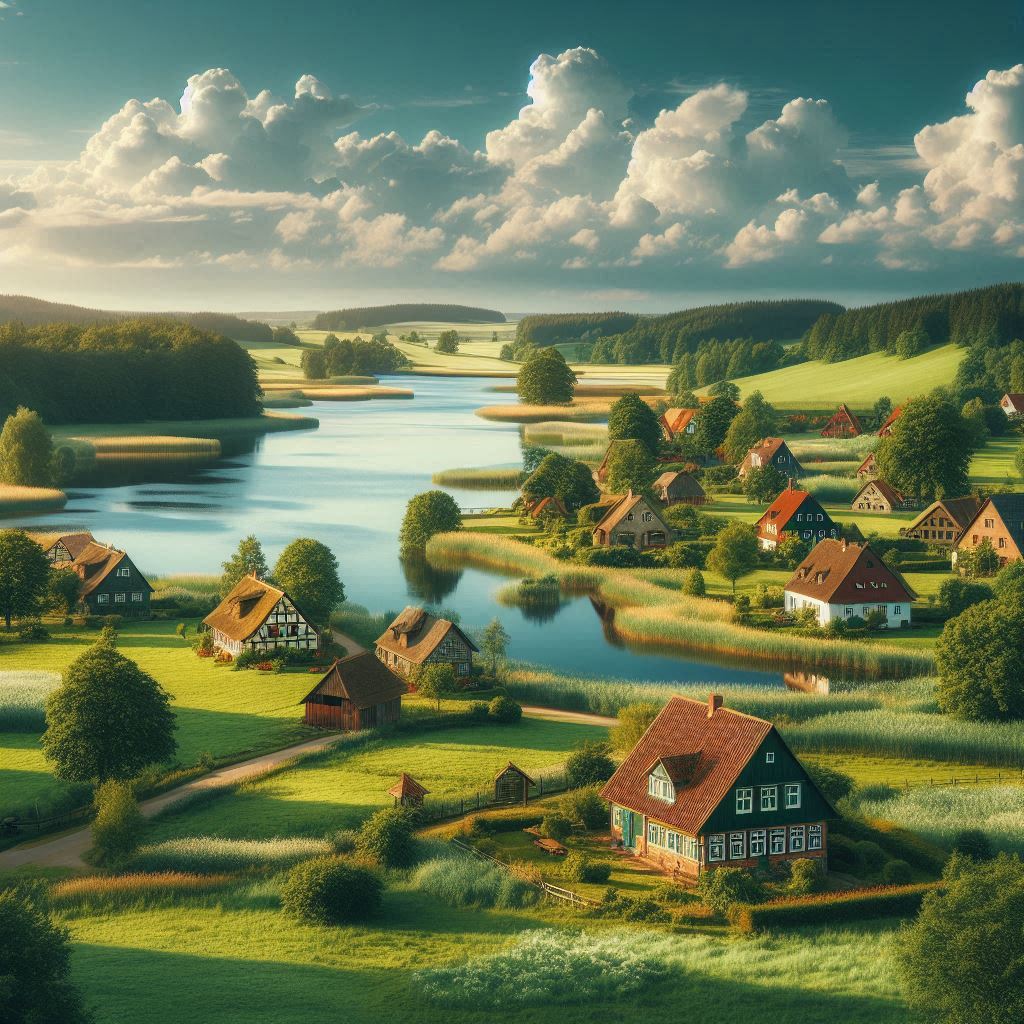
Mecklenburg-Western Pomerania or Mecklenburg-Vorpommern in German, is a state in northeastern Germany. It is known for its stunning Baltic Sea coastline, including islands like Rügen and Usedom, as well as the Mecklenburg Lake District. The state capital is Schwerin, and its largest city is Rostock. Historically, it was formed after World War II by merging the regions of Mecklenburg and Western Pomerania.
This page features links derived from the Online Familienbücher (OFB) website (https://ofb.genealogy.net/). To make these links more navigable and user-friendly, I have taken the liberty of reorganizing and categorizing them. For updated details and additional resources, please visit the original website directly.
| Cities, Towns, Villages, and Hamlets | Historical administrative hierarchy | Locality Descriptions | OFB Links and Additional Resources |
|---|---|---|---|
| Bauer | Bauer is a small village in northeastern Germany, located in the Vorpommern-Greifswald district of Mecklenburg-Vorpommern. It belongs to the municipality of Rubkow, and lies near other rural settlements such as Groß Bünzow, Klein Bünzow, and Zarnekow. Historically, Bauer was part of the Province of Pomerania, and like many villages in the region, it was shaped by agrarian life and estate structures. It fell under the jurisdiction of: Standesamt Rubkow (Civil Registry Office). | Local heritage book of Bauer | |
| Benz (Usedom) | Benz is a small village on the island of Usedom in northeastern Germany, part of the municipality of Usedom-Süd in Mecklenburg-Vorpommern’s Vorpommern-Greifswald district. First mentioned in the 13th century, it is known for its late medieval brick church and 19th-century Dutch-style windmill. Surrounded by villages such as Stoben, Neppermin, Reetzow, Dargen, and Pudagla, Benz lies in the scenic Achterland lake region, away from the island’s busy Baltic resorts. It gained cultural prominence through artist Lyonel Feininger, who frequently sketched its landscapes. Today, Benz preserves its rural character and historical charm within the Usedom Nature Park. | Local heritage book of Benz (Usedom) | |
| Blumenhagen | Blumenhagen is a village in northeastern Germany, part of the municipality of Jatznick in the Vorpommern-Greifswald district, Mecklenburg-Vorpommern. Located near Groß Luckow, Waldeshöhe, and Klein Luckow, it sits within the forested and gently rolling terrain of the Ueckermünde Heath, close to the Polish border. | Locale heritage book of Blumenhagen | |
| Brietzig | Brietzig is a small village in northeastern Germany and is now part of the municipality of Uecker-Randow-Tal in the Vorpommern-Greifswald district of Mecklenburg-Vorpommern. The village was first mentioned in 1375 and has been shaped by agricultural traditions and the legacy of noble estates. Historically, Brietzig and surrounding villages belonged to the Uckermark region. Today, only the village of Wismar remains in the Brandenburg district of Uckermark, while Brietzig and the others are part of Mecklenburg-Vorpommern | Local heritage book Pfarrsprengel Hetzdorf | |
| Buddenhagen | Buddenhagen is a village in northeastern Germany, part of the Ortsteil Hohendorf, which belongs to the town of Wolgast in the Vorpommern-Greifswald district, Mecklenburg-Vorpommern. Located just southwest of Wolgast, Buddenhagen lies near the Peenestrom estuary and is surrounded by lowland forests and meadows typical of the Lassaner Winkel region. Historically, Buddenhagen was part of the Hohendorf parish area. | Local heritage book of Hohendorf | |
| Bünzow, Groß | Groß Bünzow is a village in northeastern Germany, part of the municipality of Klein Bünzow in the Vorpommern-Greifswald district, Mecklenburg-Vorpommern. Located near Rubkow, Ziethen, and Bömitz, it sits in a gently rolling landscape of fields and meadows, just northwest of Anklam. Historically, Groß Bünzow was a Rittergut (landed estate) in the Province of Pomerania, under the jurisdiction of Standesamt Groß Bünzow–Rubkow (Civil Registration Office). | Local heritage book of Groß Bünzow | |
| Carlow | Carlow is a village in northern Germany, part of the Nordwestmecklenburg district in Mecklenburg-Vorpommern. It serves as the administrative center of the municipality of Carlow, which includes surrounding villages such as Samkow, Stove, and Pogez. Historically, Carlow belonged to the Grand Duchy of Mecklenburg-Strelitz and held regional importance as the seat of Standesamt Carlow (Civil Registration Office). | Local heritage book of Carlow | |
| Cronskamp | Cronskamp is a hamlet in northern Germany, part of the village of Rieps in the Nordwestmecklenburg district, Mecklenburg-Vorpommern. First recorded in 1377, Cronskamp entered the possession of the Bishop of Ratzeburg, later pledged to the cathedral chapter in 1401. The village developed as a Rundling—a circular settlement typical of Slavic origin—with its main entrance facing north along the old freight road from Lübeck to Stove. Today, Cronskamp remains a quiet rural locality surrounded by hamlets like Stove-Ausbau, Neschow, and Kuhlrade. | Local heritage book of Carlow | |
| Dassow | Dassow is a town in northern Germany, located in the Nordwestmecklenburg district of Mecklenburg-Vorpommern, just 20 km east of Lübeck and 2 km south of Travemünde. Nestled on the Dassower See, a side bay of the Trave Fjord, Dassow marks the westernmost point of Mecklenburg-Vorpommern and forms part of the Hamburg Metropolitan Region. First mentioned in the Ratzeburg Tithes Register of 1230, Dassow has Slavic origins, with its name evolving from Dartzowe—meaning “thorn bush.” The town developed around a German castle built in the 12th century, strategically positioned on the trade route between Lübeck and Wismar, which fostered early commercial ties with the Hanseatic city of Lübeck. | Local heritage book of Dassow | |
| Demmin | Demmin is a town in the Mecklenburgische Seenplatte district of Mecklenburg-Vorpommern, Germany, situated at the confluence of the Peene, Tollense, and Trebel rivers. Historically, its name may originate from the Slavic term “timänie” (swampy area) or “dym” (smoke), referring to land clearing through burning. Demmin was a stronghold of nationalistic organizations in the Weimar Republic, and in 1933, the Nazi Party won 53.7% of votes in the town. During World War II, it witnessed one of the largest mass suicides in Germany, as civilians, fearing the advancing Red Army, took their own lives. | Local heritage book of Demmin Local heritage book of Demmin (Militärgemeinde) | |
| Eggesin | Eggesin is a town in the Vorpommern-Greifswald district of Mecklenburg-Vorpommern, Germany, situated on the Uecker River, about 7 km southeast of Ueckermünde and 42 km northwest of Szczecin. Historically, Eggesin was part of Swedish Pomerania from 1648 to 1720, then became part of Prussia until 1945, and later belonged to East Germany until reunification in 1990. | Local heritage book of Eggesin | |
| Gingst (Rügen) | Gingst is a small town on the island of Rügen, located in the Vorpommern-Rügen district of Mecklenburg-Vorpommern, Germany. It lies about 12 km northwest of Bergen auf Rügen, near the Koselower See. Historically, Gingst was first mentioned in 1232 and became an important market town on Rügen, known for its handicrafts and damask weaving. | Local family database Gingst | |
| Gneven | Gneven is a municipality in Mecklenburg-Vorpommern, Germany, located east of Schwerin. It lies near the Warnow River and consists of the villages Gneven and Vorbeck. First mentioned in 1246, it was historically part of Mecklenburg-Schwerin. | Ortsfamilienbuch Pinnow bei Schwerin (Google Books) – German | |
| Godern | Godern is a locality in Mecklenburg-Vorpommern, Germany, near Pinnower See. First mentioned in 1376, it was historically part of Mecklenburg-Schwerin. In 2012, it was incorporated into Pinnow. | Ortsfamilienbuch Pinnow bei Schwerin (Google Books) – German | |
| Godern, Neu | Neu Godern was a settlement in Mecklenburg-Schwerin, Germany, historically part of the municipality of Godern. It was located near Pinnower See, a scenic lake, and had administrative ties to Mecklenburg-Schwerin until its incorporation into Pinnow in 2012. The area was originally a colony (Kolonie) dependent on Godern, as noted in historical records. Over time, Neu Godern remained a small rural locality, shaped by its proximity to forests, waterways, and agricultural lands. Today, it is part of Pinnow, maintaining its tranquil character while benefiting from its connection to the larger municipality. | Ortsfamilienbuch Pinnow bei Schwerin (Google Books) – German | |
| Görslow | Görslow is a small locality in Mecklenburg-Western Pomerania, Germany, situated near Schwerin. Historically, it was part of Mecklenburg-Schwerin and had administrative ties to Pinnow. The area is known for its proximity to Schweriner See, one of the largest lakes in northern Germany, and its peaceful rural character. Over the centuries, Görslow has maintained its agricultural roots, with its landscape shaped by forests, fields, and waterways. The region’s history is closely linked to the development of Schwerin, which served as the ducal residence of Mecklenburg-Schwerin. Today, Görslow offers a tranquil escape while remaining connected to the cultural and historical heritage of the surrounding area. | Ortsfamilienbuch Pinnow bei Schwerin (Google Books) – German | |
| Grebbin | Grebbin is a village in the Ludwigslust-Parchim district of Mecklenburg-Vorpommern, Germany, with roots stretching back to early settlement periods. The Warnow River, which rises in Grebbin, shaped its development by offering water and transport routes. Nearby Bronze Age burial mounds point to human activity in the region over 3,000 years ago. A key landmark is the Holländerwindmühle, a Dutch-style windmill built in 1878, reflecting the village’s agricultural heritage. Surrounded by fields and forested patches, Grebbin remains a quiet rural community with deep historical layers. | Local heritage book of Grebbin | |
| Grimmen | Grimmen is a town in the Vorpommern-Rügen district of Mecklenburg-Vorpommern, Germany. It lies on the Trebel River, about 30 km south of Stralsund and 30 km west of Greifswald. Historically, Grimmen was founded during the Ostsiedlung (Eastward Expansion) around 1250, when merchants and craftsmen from Lower Saxony, Westphalia, and the Lower Rhine settled in the area. The town was granted Lübeck law before 1287, though the exact date remains unknown. Over the centuries, Grimmen endured looting during the Thirty Years’ War, a witch trial in the late 17th century, and a devastating fire in 1797. Today, it is a peaceful town with a rich history. | Local family database of North Western Pomerania | |
| Klocksdorf | Klocksdorf is a small village in the municipality of Carlow, located in the Nordwestmecklenburg district of Mecklenburg-Vorpommern, Germany. It sits near the Röggeliner See, a scenic lake, and is surrounded by the Kuhlrader Moor nature reserve, which spans 328 hectares. Historically, Klocksdorf was first mentioned in 1230. A castle once stood by the lake but was likely destroyed in 1291, though later rebuilt. In 1397, the Carlows sold the village to the Bishop of Ratzeburg, who later pledged it to the Domkapitel in 1401. The village developed as an elliptical Angerdorf, with a school operating from 1606 to 1930, after which students were sent to Carlow. | Local heritage book of Carlow | |
| Herrnburg | Herrnburg is a village in Lüdersdorf, located in the Nordwestmecklenburg district of Mecklenburg-Western Pomerania, Germany. It lies near the Schleswig-Holstein border, close to Lübeck, making it a historically significant settlement due to its proximity to the former East-West German border. | Local heritage book of Herrnburg | |
| Hohendorf | Hohendorf is a village in northeastern Germany, part of the town of Wolgast in the Vorpommern-Greifswald district, Mecklenburg-Vorpommern. First mentioned in medieval records, Hohendorf has long served as a local administrative and ecclesiastical center, shaping the identity of surrounding villages such as Zarnitz, Pritzier, and Schalense. Uniquely, Hohendorf was the seat of the Amtsbezirk Hohendorf, overseeing civil registration, parish affairs, and manorial estates across the Lassaner Winkel region. Though incorporated into Wolgast in 2012, Hohendorf retains its distinct village character, anchored by its Protestant parish church and its legacy as a hub of rural governance in historic Pomerania. | Local heritage book of Hohendorf | |
| Hohensee | Hohensee is a village in northeastern Germany, part of the municipality of Zemitz in the Vorpommern-Greifswald district, Mecklenburg-Vorpommern. First mentioned in 1344 as Hoghense, the village has a long history shaped by noble estates, agricultural reform, and its proximity to the Hoher See, from which it takes its name. Historically, Hohensee was the ancestral seat of the von Köller family, later passing to the von Kirchbach and von Borcke families, who managed a substantial Rittergut that included the nearby settlements of Negenmark and Milchhorst. By 1939, the estate covered over 1,000 hectares, including forest and farmland. Today, Hohensee remains a quiet rural locality, situated along the L26 state road, about 7 km southwest of Wolgast, and just 4 km south of Hohendorf. | Local heritage book of Hohendorf | |
| Iven | Iven is a village in northeastern Germany, part of the municipality of Butzow in the Vorpommern-Greifswald district, Mecklenburg-Vorpommern. It lies just north of Anklam, near the Peene River, and is surrounded by flat agricultural land and small forested patches typical of the Western Pomeranian landscape. Historically, Iven was a Rittergut (manorial estate) with ties to the von Schwerin family, and later to the von Lepel and von Below lineages. Today, Iven remains a quiet rural locality, with remnants of its estate structures and a modest residential population. | Local heritage book of Iven | |
| Japenzin | Japenzin is a village in northeastern Germany, part of the municipality of Spantekow in the Vorpommern-Greifswald district, Mecklenburg-Vorpommern. First mentioned in historical records as part of Pomerania, Japenzin has long been shaped by rural estate life, ecclesiastical ties, and its location near the Peene River basin. Historically, Japenzin belonged to the Amtsbezirk Iven, with civil registration handled by the Standesamt Iven, and legal and military oversight provided by the Amtsgericht Anklam and Bezirkskommando Anklam. Though modest in size, the village was part of a network of manorial estates and Protestant parishes that defined the region’s agrarian structure. Since 2009, Japenzin has been incorporated into the municipality of Spantekow, but it continues to reflect the quiet rhythms of Western Pomeranian village life, preserving its identity within the broader landscape of Mecklenburg-Vorpommern. | Local heritage book of Japenzin | |
| Katzow | Katzow is a village in northeastern Germany, part of the municipal association of Lubmin in the Vorpommern-Greifswald district, Mecklenburg-Vorpommern. With a population of around 600 residents, Katzow lies just northwest of Wolgast, near the villages of Hohendorf, Neu Boltenhagen, and Netzeband, in a region shaped by coastal plains and quiet agricultural landscapes. Uniquely, Katzow is known for its medieval village church and the Skulpturenpark Katzow, one of the largest open-air sculpture parks in Europe, featuring monumental works by international artists across 20 hectares of meadowland2. The village also includes the hamlets of Kühlenhagen, Jägerhof, and Netzeband, forming a small but culturally vibrant community. Though modest in size, Katzow continues to reflect the artistic and rural heritage of Western Pomerania, blending historical depth with contemporary expression. You can explore more about the village on Wikipedia’s Katzow page. | Local heritage book of Katzow | |
| Kemnitz | Kemnitz is a village in northeastern Germany, part of the Amt Lubmin in the Vorpommern-Greifswald district, Mecklenburg-Vorpommern. Located just east of Greifswald, Kemnitz sits near the Baltic coast, surrounded by flat farmland and quiet woodland, with neighboring villages including Wusterhusen, Brünzow, and Freest. First documented in medieval records, Kemnitz has long been shaped by agricultural estates, Protestant parish life, and its proximity to the Greifswalder Bodden. Though modest in size, it continues to reflect the layered heritage of Western Pomerania, preserving its rural character and administrative continuity. | Local heritage book of Kemnitz | |
| Koblentz | Koblentz is a village in northeastern Germany, part of the municipality of Viereck in the Vorpommern-Greifswald district, Mecklenburg-Vorpommern. Located near the Ueckermünde Heath, Koblentz lies between Pasewalk and Eggesin, with nearby villages including Viereck, Torgelow, and Heidekrug. Historically, Koblentz belonged to the Province of Pomerania. | Local heritage book of Koblentz-Krugsdorf | |
| Koserow (island of Usedom) | Koserow is a coastal village on the island of Usedom, located in the Vorpommern-Greifswald district of Mecklenburg-Vorpommern, Germany. First mentioned in 1347 as Cuzerowe, the village has deep Wendish roots and a long history shaped by fishing, agriculture, and seaside tourism. Uniquely, Koserow is one of Usedom’s four Bernsteinbäder (Amber Spas), known for its fine sandy beaches, steep cliffs, and the Streckelsberg, the island’s highest coastal elevation at 58 meters. | Local heritage book of Koserow auf Usedom | |
| Kröpelin | Kröpelin is a town in northern Germany, located in the Rostock district of Mecklenburg-Vorpommern, about 9 km southwest of Bad Doberan and 23 km west of Rostock. First recorded in 1177 as Crapelin, the town has Wendish origins, with its name likely derived from the Slavic word crepelice, meaning “place of quail”. Kröpelin was granted Lübeck town rights in 1249 and received its official charter in 1250 from Prince Heinrich Borwin III. Known historically as a shoemakers’ town, it had a high concentration of craftsmen and apprentices in that trade. The town endured several devastating fires between the 14th and 18th centuries, shaping its architectural and civic development1. Today, Kröpelin is a gateway to the Baltic coast, with strong transport links via the A20 motorway, B105 road, and railway connections. It offers cultural amenities, including museums, a public library, and proximity to seaside resorts like Kühlungsborn and Heiligendamm. | Local heritage book of Kröpelin | |
| Kuhlrade | Kuhlrade is a village in northern Germany, part of the town of Marlow in the Vorpommern-Rügen district, Mecklenburg-Vorpommern. First mentioned in 1310, Kuhlrade lies in a typical North German lowland of fields, pastures, and woodlands, just northwest of Marlow along the Kreisstraße K5. Historically, Kuhlrade passed to the Ribnitz Monastery in 1669 and developed around its village church, completed in 1754, which remains a local landmark. | Local heritage book of Carlow | |
| Luckow, Groß | Groß Luckow or Gross Luckow is a village in northeastern Germany, located in the Vorpommern-Greifswald district of Mecklenburg-Vorpommern. It lies near the Polish border, surrounded by forested lowlands and quiet agricultural fields, with neighboring settlements including Klein Luckow, Hansfelde, and Blumenhagen. Historically, Groß Luckow was part of the Prussian Province of Pomerania from 1720 to 1945, later incorporated into the East German Bezirk Neubrandenburg, and since 1990, it has belonged to Mecklenburg-Vorpommern. The village has roots in Slavic settlement, first mentioned in 1260 as Luckowe, and was long associated with noble families such as the von Bröcker and von Muckerwitz. Today, Groß Luckow is a municipality with a population of around 190 residents, part of the Uecker-Randow-Tal municipal association. | Local heritage book of Groß Luckow | |
| Luckow, Klein | Klein Luckau is a small village in northeastern Germany and is now part of the municipality of Jatznick in the Vorpommern-Greifswald district of Mecklenburg-Vorpommern. The village was first mentioned in 1375 and has historical ties to the Uckermark region, shaped by rural life and noble estates. Historically, all villages in the area belonged to the Uckermark. Today, only the village of Wismar remains in the Brandenburg district of Uckermark, while Klein Luckau and the surrounding villages are part of Mecklenburg-Vorpommern. | Local heritage book of Klein Luckow Local heritage book of Strasburg-Land | |
| Negenmark | Negenmark is a hamlet in northeastern Germany, located within the municipality of Zemitz in the Vorpommern-Greifswald district of Mecklenburg-Vorpommern. Though small and rural, it shares deep historical and cultural ties with nearby villages such as Hohendorf, Milchhorst, and Ziemitz, forming part of a region once shaped by shifting borders between Pomerania and Brandenburg. While Hohendorf was an independent municipality until 2011, it became part of the town of Wolgast in 2012, and Negenmark remains a locality within Zemitz. Together, they reflect the rural heritage and ecclesiastical history of the Lassaner Winkel region, preserving their local identity within modern Mecklenburg-Vorpommern. | Local heritage book of Hohendorf | |
| Neschow | Neschow is a village in Mecklenburg-Vorpommern, part of the municipality of Carlow in the Nordwestmecklenburg district. First mentioned in 1230, it was historically tied to the Carlow family and later the Bishop of Ratzeburg. Once an Angerdorf along the old Lübeck freight road, Neschow hosted a school (1732–1912) and was near the Maurine Mill, which evolved from a metalworks to a paper and grain mill, and later a retirement home before its demolition in 1973. Today, Neschow remains a quiet rural locality with several listed buildings, reflecting its historic character and ecclesiastical heritage. | Local heritage book of Carlow | |
| Papendorf | Papendorf is a village in northeastern Germany, located in the district of Vorpommern-Greifswald in Mecklenburg-Vorpommern. First mentioned in 1302 as Theodericus dictus Papendorp, the village has deep historical ties to both Brandenburg and Pomerania, reflecting centuries of shifting borders and political allegiances. The village has a rich folklore tradition, including tales of the mysterious “Zuppmantel”, a restless spirit said to haunt the nearby meadows. Historically part of the Uckermark region, Papendorf was reassigned to Mecklenburg-Vorpommern in 1950, following post-war territorial changes. | Local heritage book Pfarrsprengel Hetzdorf | |
| Petersberg (Pinnow) | Petersberg is a settlement in the municipality of Pinnow, located in the district of Ludwigslust-Parchim, Mecklenburg-Vorpommern, Germany. Nestled just east of Schwerin, Petersberg lies near the Pinnower See and is surrounded by forested hills and quiet residential lanes, contributing to its scenic and semi-rural character. Historically, Petersberg was part of the Grand Duchy of Mecklenburg-Schwerin and fell under the jurisdiction of: Standesamt Pinnow (Civil Registration Office). | Ortsfamilienbuch Pinnow bei Schwerin (Google Books) – German | |
| Pinnow (Kirchspiel) | Pinnow is a municipality in Mecklenburg-Vorpommern, Germany, near Schwerin. First mentioned in 1265, its name has Slavic origins meaning “forest settlement.” Historically part of Mecklenburg-Schwerin, it is now known for its natural beauty and lakes. | Ortsfamilienbuch Pinnow bei Schwerin (Google Books) – German | |
| Pogez | Pogez is a village in the municipality of Carlow, located in the Nordwestmecklenburg district of Mecklenburg-Vorpommern, Germany. Positioned north of Carlow, Pogez lies between the Kreisstraße K8 to the east and the L02 state road to the south, with the Maurine River flowing along its southern and western edges. | Local heritage book of Carlow | |
| Pritzier | Pritzier is a village in northeastern Germany, part of Hohendorf, which belongs to the town of Wolgast in the Vorpommern-Greifswald district, Mecklenburg-Vorpommern. Historically, Pritzier was one of several small settlements—alongside Schalense, Zarnitz, and Hohendorf itself—that formed the Amtsbezirk Hohendorf, a rural administrative unit with deep ties to Pomeranian landholding traditions. Though modest in size, Pritzier shares in the region’s layered past, shaped by Protestant parish life, manorial estates, and its proximity to the Peenestrom waterway. Since the administrative reform of 2012, Pritzier has been incorporated into Wolgast, but it continues to reflect the quiet rhythms of village life in the Lassaner Winkel region. | Local heritage book of Hohendorf | |
| Raben-Steinfeld | Raben-Steinfeld is a municipality in the Ludwigslust-Parchim district of Mecklenburg-Vorpommern, Germany, located on the southeastern shore of Schweriner See. The area is known for its natural beauty, with forests and lakes creating a peaceful environment. Historically, Raben-Steinfeld was home to Schloss Raben-Steinfeld, a Neorenaissance-style castle built in the 19th century. Originally a summer residence for the Grand Dukes of Mecklenburg-Schwerin, it later served various purposes, including as a lazaret during World War II and a forestry school until 1995. | Ortsfamilienbuch Pinnow bei Schwerin (Google Books) – German | |
| Rügen | Rügen is Germany’s largest island, located in the Baltic Sea and part of the Vorpommern-Rügen district in Mecklenburg-Vorpommern. Connected to the mainland via Stralsund, it’s known for its dramatic chalk cliffs in Jasmund National Park, seaside resorts like Binz, Sellin, and Göhren, and historic towns such as Putbus and Bergen. Surrounded by peninsulas like Jasmund, Wittow, and Mönchgut, and neighboring islands such as Hiddensee and Ummanz, Rügen blends natural beauty with cultural depth, making it one of Germany’s most iconic destinations. | ||
| Samkow | Samkow is a village within the municipality of Carlow, situated in the Nordwestmecklenburg district of Mecklenburg-Vorpommern, Germany. Positioned north of Carlow along the Kreisstraße K8, the village is bordered by the Maurine River to the west and the L02 state road to the south. Historically, Samkow was part of the Grand Duchy of Mecklenburg-Strelitz. | Local heritage book of Carlow | |
| Seckeritz | Seckeritz is a hamlet in the municipality of Zemitz, located in the district of Vorpommern-Greifswald, Mecklenburg-Vorpommern, Germany. Nestled near Hohensee, Pulow, and the Hoher See, it forms part of the tranquil Lassaner Winkel region, known for its lakes, forests, and megalithic heritage. Historically, Seckeritz was classified as a Rittergut (landed estate) in the Province of Pomerania, under the jurisdiction of: Standesamt Hohendorf (Civil Registration Office). | Local heritage book of Hohendorf | |
| Spiegelberg, Groß | Groß Spiegelberg or Gross Spiegelberg is a village in the municipality of Jatznick, located in the district of Vorpommern-Greifswald, Mecklenburg-Vorpommern, Germany. It lies southwest of Jatznick, near the Brohmer Berge forest region, with neighboring localities including Waldeshöhe, Blumenhagen, and Klein Luckow. Historically, Groß Spiegelberg was a Rittergut (manorial estate) with documented origins dating back to 1331, when Nicolaus Spegelberch was mentioned in local records. The estate was likely founded by the Spiegelberg noble family, whose members served as councilors in nearby Strasburg into the 18th century. | Local heritage book of Groß Spiegelberg | |
| Stove | Stove is a village in the municipality of Carlow, located in the district of Nordwestmecklenburg, Mecklenburg-Vorpommern, Germany. It lies just south of Carlow, along the L02 state road, with nearby villages including Pogez, Samkow, and Groß Rünz. | Local heritage book of Carlow | |
| Sukow | Sukow is a municipality in the Ludwigslust-Parchim district of Mecklenburg-Vorpommern, Germany. It is part of the Crivitz municipal association and has a population of around 1,569 residents. The village is known for its rural charm, with forests, fields, and waterways shaping its landscape. | Ortsfamilienbuch Pinnow bei Schwerin (Google Books) – German | |
| Waase (Ummanz) | Waase is a village on the southwestern edge of the island of Ummanz, part of the Vorpommern-Rügen district in Mecklenburg-Vorpommern, Germany. First documented in 1322, Waase has long served as the island’s cultural and administrative center, shaped by maritime trade, ecclesiastical heritage, and its connection to the mainland. Uniquely, Waase is the only village on Ummanz with a church, the St.-Marien-Kirche, built in the 15th century and housing a rare Gothic altar from Antwerp. The village is also the gateway to Ummanz, linked to the larger island of Rügen by a concrete bridge completed in 1901. | Local family database Waase (Ummanz) | |
| Wehrland | Wehrland is a locality in Zemitz, Mecklenburg-Vorpommern, Germany. It is known for the Gutshaus Wehrland, a classical-style manor house built in the late 1830s, surrounded by a park and linden alleys. | Local heritage book of Bauer | |
| Wetzenow (Pfarrsprengel) | Wetzenow is a small village in the Vorpommern-Greifswald district of Mecklenburg-Vorpommern, Germany. It is part of the Pfarrsprengel Zerrenthin, a Protestant parish that includes several villages in the region. Historically, Wetzenow was first mentioned in 1652, but many of its older church records were lost due to war damage in 1945 | Local heritage book of Wetzenow (Pfarrsprengel) | |
| Wusterhusen | Wusterhusen is a municipality in the Vorpommern-Greifswald district of Mecklenburg-Vorpommern, Germany. It lies near Lubmin, close to the Baltic Sea, and has a population of around 1,068 residents. One of its key landmarks is the St.-Johannes-Kirche, a historic church in the village. The area is also known for its coastal proximity, offering access to beaches and nature reserves. | Local heritage book of Wusterhusen | |
| Zarnitz | Zarnitz is a hamlet in northeastern Germany, located within the district of Vorpommern-Greifswald in Mecklenburg-Vorpommern. It is part of the village of Hohendorf, which also includes Schalense and Pritzier, and has been administratively incorporated into the town of Wolgast since 20122. Historically, Zarnitz belonged to the Protestant parish of Hohendorf, with records dating back to the 17th century, preserved in local church archives. The hamlet lies near the Hoher See, a small lake surrounded by meadows and forests, and is close to other rural settlements like Hohensee, Milchhorst, and Negenmark. | Local heritage book of Hohendorf | |
| Zemitz | Zemitz is a village in northeastern Germany, located in the district of Vorpommern-Greifswald in Mecklenburg-Vorpommern. Historically part of Pomerania, Zemitz was under the jurisdiction of the Amtsbezirk Hohendorf and belonged to the Protestant parish of Hohendorf, with civil records maintained at the Standesamt Hohendorf. The village lies near Hohendorf, Zarnitz, and Negenmark, forming part of the Lassaner Winkel region—a landscape of quiet rural settlements, lakes, and forested paths. Zemitz is also connected by local bus routes and cycling roads, including the scenic L26 country road between Hohendorf and Hohensee. | Local heritage book of Hohendorf | |
| Ziethen (bei Anklam) | Ziethen is a municipality in the Vorpommern-Greifswald district of Mecklenburg-Vorpommern, Germany. It lies north of Anklam, near the Peene River, in a landscape shaped by peatlands and glacial formations. Historically, Ziethen was part of Swedish Pomerania before becoming Prussian territory in 1720. | Local heritage book of Ziethen (Barnim) | |
| Zietlitz | Zietlitz, first mentioned in 1331, originated as a Bauerndorf (farm village) linked to the nearby Gut Dobbin, which was owned by the von Lepel family in 1803. By 1825, the area expanded with the creation of Neu Zietlitz and Hof Zietlitz, which were later leased out in 1836. | Ortsfamilienbuch Pinnow bei Schwerin (Google Books) – German | |
| Zirchow auf Usedom | Zirchow is a small municipality on the island of Usedom, located in the Vorpommern-Greifswald district of Mecklenburg-Vorpommern, Germany. It lies near the Stettiner Haff and is part of the Usedom-Süd administrative region. Historically, Zirchow was first mentioned in 1256 as “Circhove” in a document from Duke Barnim I of Pomerania. The area has evidence of Neolithic and Bronze Age settlements, including graves near Kutzow. Today, Zirchow is known for its peaceful rural atmosphere, proximity to Heringsdorf Airport, and the Fischerdorf Zirchow, a newly developed reed-roofed holiday village. | Local heritage book of Zirchow auf Usedom |
 OFB index