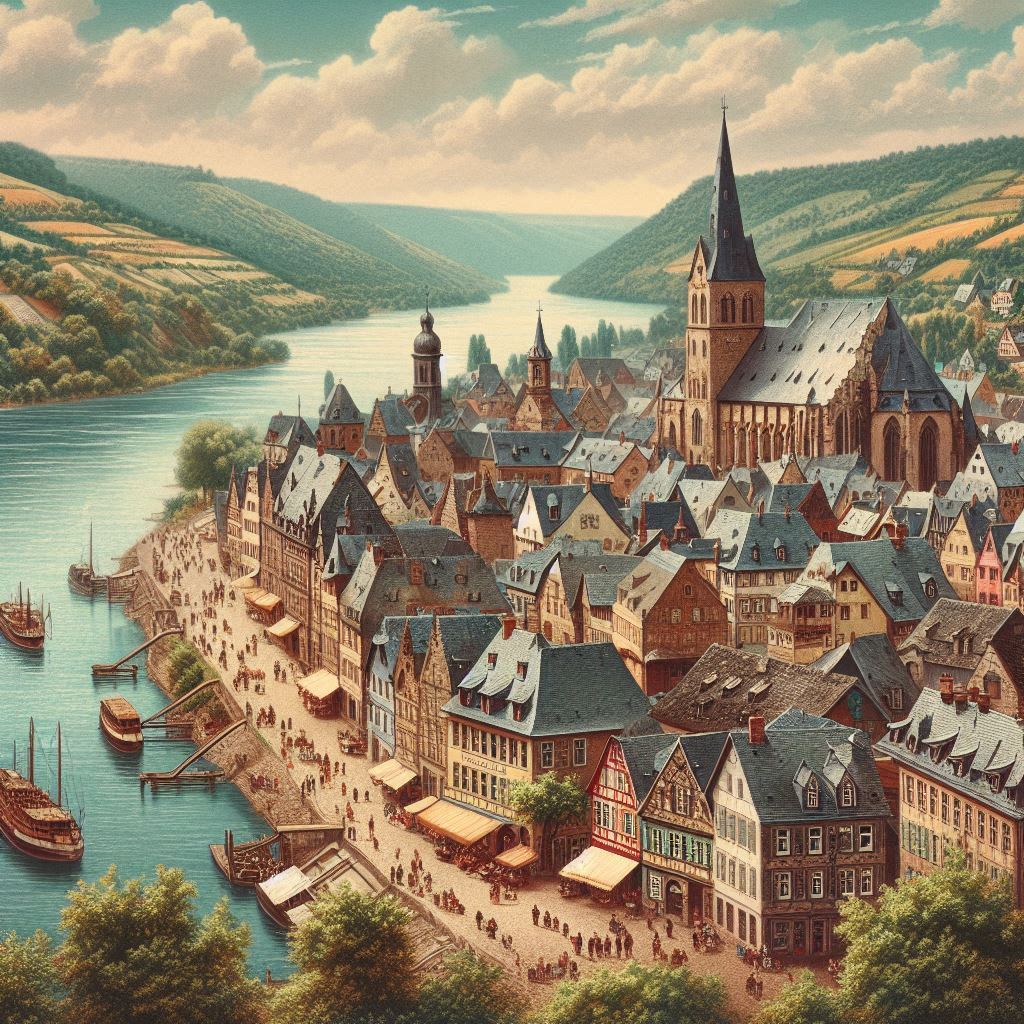
Rhineland-Palatinate (Rheinland-Pfalz in German) is a state in western Germany, known for its picturesque landscapes, including the Rhine Valley, rolling vineyards, and dense forests. The state capital is Mainz, a city famous for its historic Old Town and as the birthplace of Johannes Gutenberg, the inventor of the printing press. Other major cities include Ludwigshafen and Koblenz. Historically, Rhineland-Palatinate was established after World War II through the merger of various regions, including parts of the Rhineland and the Palatinate, shaping its unique cultural identity.
| Cities, Towns, Villages, and Hamlets | Locality Descriptions | Online OFB Links |
|---|---|---|
| Abenheim (Worms) | Abenheim is a district of Worms in Rhineland-Palatinate, Germany, located about nine kilometers from the city center. The area has been inhabited since the Neolithic period, with archaeological evidence confirming early settlements. The village was founded by the Franks, and its name derives from Abo, a noble Frankish settler. First mentioned in 774 in a donation document from the Lorscher Codex, Abenheim remained under the rule of the Dalberg family from 1390 to 1797, shaping its development. During the French occupation from 1798 to 1814, Abenheim was part of the Arrondissement Mainz in the Département Donnersberg. After the Congress of Vienna in 1815, it became part of the Grand Duchy of Hesse and later joined Rhineland-Palatinate in 1946. The village was officially incorporated into Worms on June 7, 1969. | Local heritage book of Abenheim |
| Ahlbach | Ahlbach is a small village in Rhineland-Palatinate, Germany, located near Limburg an der Lahn. Historically, it has been part of the Westerwald region, known for its rural landscapes and traditional German architecture. The village has roots dating back to medieval times, with records indicating early settlements in the area. Ahlbach has been associated with local noble families, including the Ahlbach lineage, which appears in historical records from the 17th century. The region was influenced by Prussian and Hessian rule, particularly during the 19th century, when administrative changes shaped its development. | Local heritage book of Flammersfeld |
| Alberthofen | Alberthofen, a small village in the Westerwald region, was first mentioned in 1581. Historically part of Prussia’s Province of Rhineland, it belonged to the Kreis Neuwied and was administratively linked to Coblenz. The village played a role in regional agriculture, with traditional farming shaping its economy. During the 19th century, Alberthofen was integrated into Prussian administrative structures, with its Amtsgericht (district court) in Dierdorf and civil registry in Niederwambach. The area saw gradual modernization, though it retained its rural character. In the 20th century, Alberthofen remained a small but stable community. Post-World War II, it became part of Rhineland-Palatinate, following Germany’s territorial reorganization. Today, it maintains its historical identity, with remnants of its traditional village structure still visible.1 | Local heritage book of Niederwambach |
| Almersbach | Local heritage book of Almersbach | |
| Altwied | Altwied, the smallest district of Neuwied in Rhineland-Palatinate, Germany, lies in the scenic Wied Valley. Founded around Burg Altwied, the ancestral seat of the Counts of Wied, the village was first documented in 1275. It lost prominence in 1653 when Neuwied became the main residence of the Wied family. By the 19th century, Altwied remained a rural settlement, while the castle deteriorated. During World War II, the site suffered damage from American artillery in March 1945, leading to the surrender of German troops. Today, Altwied’s castle ruins, half-timbered houses, and St. Antonius Chapel (1470) preserve its historical charm within the Rhein-Westerwald Nature Park. | Local heritage book of Altwied |
| Anhausen | Local heritage book of Anhausen | |
| Ascheid | Local heritage book of Niederwambach | |
| Barbelroth | Barbelroth, a municipality in the Südliche Weinstraße district of Rhineland-Palatinate, Germany, has a history dating back to medieval times. The village developed as an agricultural settlement and was historically influenced by regional territorial shifts. It was part of the Electorate of the Palatinate before being integrated into Bavaria in 1816 following the Congress of Vienna. In 1946, after World War II, Barbelroth became part of Rhineland-Palatinate, following Germany’s territorial reorganization. | Local heritage book of Barbelroth |
| Berg | Local heritage book of Flammersfeld | |
| Breibach | Local heritage book of Niederwambach | |
| Brubbach | Local heritage book of Niederwambach | |
| Bruch, Hof | Local heritage book of Flammersfeld | |
| Danscheid | Local heritage book of Flammersfeld | |
| Dasbach | Local heritage book of Flammersfeld | |
| Dierbach | Local heritage book of Dierbach | |
| Düsternau | Düsternau (Duesternau), a small settlement in Germany, has historical roots dating back to medieval times. It was part of various territorial shifts, including its integration into Prussia’s Province of Westphalia in the 19th century. The village remained a rural community, with agriculture shaping its economy. Following World War II, Düsternau became part of Rhineland-Palatinate in 1946, as Germany underwent territorial reorganization. | Local heritage book of Flammersfeld |
| Eichen | Eichen is a municipality in the Altenkirchen district, located in Rhineland-Palatinate, Germany. The name “Eichen” translates to “oaks” in German, reflecting the region’s forested landscape. Historically, Eichen was part of Prussia’s Rhine Province in the 19th century, following the Congress of Vienna in 1815. The village remained a small rural settlement, with agriculture and forestry shaping its economy. After World War II, Eichen became part of Rhineland-Palatinate in 1946, as Germany underwent territorial reorganization. | Local heritage book of Flammersfeld |
| Enkirch | Enkirch is a municipality in Rhineland-Palatinate, Germany, located along the Mosel River. Known for its wine production, it is part of the Mittelmosel region, famous for Riesling vineyards. Historically, Enkirch was first mentioned in 733 AD and developed as a wine-growing settlement under Frankish rule. During the Middle Ages, it was part of the Electorate of Trier, benefiting from its strategic location along the Mosel trade routes. In 1815, following the Congress of Vienna, Enkirch was integrated into Prussia’s Rhine Province. After World War II, it became part of Rhineland-Palatinate in 1946. | Local heritage book of Enkirch |
| Erlenbach near Kandel | Erlenbach near Kandel, a municipality in the Germersheim district of Rhineland-Palatinate, Germany, has a history dating back to medieval times. The village developed as an agricultural settlement and was historically influenced by regional territorial shifts. It was part of the Electorate of the Palatinate before becoming integrated into Bavaria in 1816 following the Congress of Vienna. Throughout the 19th century, Erlenbach remained a rural community, with farming and viticulture shaping its economy. The village saw modernization in the 20th century, particularly after World War II, when Rhineland-Palatinate was established in 1946. | Local heritage book of Erlenbach (Fürth) |
| Flammersfeld | Local heritage book of Flammersfeld | |
| Freckenfeld | Local heritage book of Freckenfeld | |
| Gollershoben | Local heritage book of Flammersfeld | |
| Hahn | Local heritage book of Flammersfeld | |
| Hardt | Local heritage book of Flammersfeld | |
| Heckenhahn | Local heritage book of Flammersfeld | |
| Hoben | Local heritage book of Flammersfeld | |
| Honnefeld (Kirchspiel) | Local heritage book of Oberhonnefeld (Kirchspiel Honnefeld) | |
| Kaffroth | Local heritage book of Flammersfeld | |
| Kandel | Local heritage book of Kandel | |
| Katzwinkel-Hönningen | Katzwinkel-Hönningen was formed through the historical development of its two settlements. Hönningen, first mentioned in 1436, was a cleared settlement area leased by the Hatzfeldt-Wildenburg noble family. Katzwinkel, documented in 1493, grew as a judicial and mining center, with iron ore extraction beginning in 1824. The two villages remained distinct until 1970, when administrative restructuring led to their integration into Katzwinkel (Sieg) within Rhineland-Palatinate. | Local heritage book of Katzwinkel-Hönningen (im Wissener Land) |
| Kescheid | Local heritage book of Flammersfeld | |
| Kirl (deserted farmstead in the district of Rott) | Local heritage book of Flammersfeld | |
| Klingenmünster | Local heritage book of Klingenmünster | |
| Krämgen | Krämgen (Kraemgen) is a small locality in Reiferscheid, located in the Altenkirchen district of Rhineland-Palatinate, Germany. It is separated from the main village of Reiferscheid by the Bundesstraße B256, which provides good regional connectivity. Historically, Reiferscheid, including Krämgen, was part of the Grafschaft Sayn-Hachenburg until 1806, when it became part of the Duchy of Nassau. Following the Congress of Vienna in 1815, the region was integrated into Prussia’s Rhine Province. After World War II, Krämgen became part of Rhineland-Palatinate in 1946, as Germany underwent territorial reorganization.2 | Local heritage book of Flammersfeld |
| Kroppach (Kirchspiel) | Local heritage book of Kroppach (Kirchspiel) | |
| Hohensee | Local heritage book of Hohendorf | |
| Lahrbach | Local heritage book of Niederwambach | |
| Mertenroth, Hof | Local heritage book of Flammersfeld | |
| Minfeld | Local heritage book of Minfeld | |
| Negenmark | Local heritage book of Hohendorf | |
| Neitzert | Local heritage book of Niederwambach | |
| Niederwambach | Niederwambach is a small municipality located in the district of Neuwied, within the state of Rhineland-Palatinate, Germany. It’s part of the Puderbach municipal association. | Local heritage book of Niederwambach |
| Oberdreis | Local heritage book of Oberdreis | |
| Obermoschel | Obermoschel, the smallest town in the Palatinate, is located in Rhineland-Palatinate, Germany. First mentioned in 1349, it developed around Moschellandsburg Castle, a 12th-century fortress. The town features traditional half-timbered houses and is surrounded by the North Palatinate Hills. The Moschel River flows through it, adding to its scenic charm. | Local heritage book of Obermoschel |
| Orfgen | Local heritage book of Flammersfeld | |
| Püscheid | Püscheid (Puescheid) is a small locality in the Altenkirchen district of Rhineland-Palatinate, Germany. Historically, it was part of Prussia’s Rhine Province following the Congress of Vienna in 1815. The village was associated with Kescheid, as indicated in historical records, and belonged to the Catholic Parish of Oberlahr and the Protestant Parish of Flammersfeld. | Local heritage book of Flammersfeld |
| Puderbach | Puderbach is a municipality in the Neuwied district of Rhineland-Palatinate, Germany, located in the Westerwald region, approximately 25 km north of Koblenz. It serves as the seat of the Verbandsgemeinde Puderbach, overseeing 16 local municipalities. Historically, Puderbach was part of Prussia’s Rhine Province in 1815 following the Congress of Vienna. After World War II, it became part of Rhineland-Palatinate in 1946, during Germany’s territorial reorganization. | Local heritage book of Puderbach |
| Ratzert | Ratzert is a municipality in the Neuwied district of Rhineland-Palatinate, Germany. Located north of Puderbach, Ratzert is one of the northernmost settlements in Rhineland-Palatinate. The village includes Brubbach, a small locality situated on a nearby hill, and Waldhof, a residential area along Landesstraße 267. The Wambach stream flows through the village, contributing to its scenic landscape. | Local heritage book of Niederwambach |
| Raubach | Raubach is a municipality in the Neuwied district of Rhineland-Palatinate, Germany, located within the Verbandsgemeinde Puderbach. Covering 7.83 km², it has a population of approximately 2,014 residents. Historically, Raubach was part of Prussia’s Rhine Province in 1815 following the Congress of Vienna. After World War II, it became part of Rhineland-Palatinate in 1946, during Germany’s territorial reorganization. | Local heritage book of Raubach |
| Reiferscheid | Reiferscheid is a municipality in the Altenkirchen district of Rhineland-Palatinate, Germany. First mentioned in historical records, Reiferscheid was part of the Grafschaft Sayn-Hachenburg until 1806, when it became part of the Duchy of Nassau. Following the Congress of Vienna in 1815, it was integrated into Prussia’s Rhine Province. After World War II, Reiferscheid became part of Rhineland-Palatinate in 1946, as Germany underwent territorial reorganization. | Local heritage book of Flammersfeld |
| Rengsdorf | Local heritage book of Rengsdorf | |
| Rodenbach | Rodenbach is a municipality in the Kaiserslautern district of Rhineland-Palatinate, Germany. It belongs to the Verbandsgemeinde Weilerbach and is located 9 km northwest of Kaiserslautern. The area includes settlements such as Am Tränkwald, Berghof, Forsthaus Rodenbach, Mückenhof, and Wasserhaus. Historically, Rodenbach was part of the Kurpfalz region and had a medieval toll station due to its location on a trade route. In 1874, a Celtic noble grave from the La Tène culture (400 BC) was discovered, now known as the Fürstengrab von Rodenbach. The site was restored in 2000 for the town’s 700th anniversary. | Local heritage book of Niederwambach |
| Rott | Rott is a municipality in the Altenkirchen district of Rhineland-Palatinate, Germany. Historically, Rott was integrated into Prussia’s Rhine Province in 1815 following the Congress of Vienna. After World War II, it became part of Rhineland-Palatinate in 1946, during Germany’s territorial reorganization. | Local heritage book of Flammersfeld |
| Sayn (county) | The County of Sayn, founded in the 11th century, was a state within the Holy Roman Empire, with its seat at Sayn Castle near Bendorf. Over time, it underwent several partitions, notably the creation of Sayn-Wittgenstein-Sayn in 1605. Its territories extended across the northern Westerwald and middle Sieg Valley. After the Thirty Years’ War, the county was further divided into Sayn-Wittgenstein-Sayn-Altenkirchen and Sayn-Wittgenstein-Hachenburg, shaping its regional governance. | Local family database Grafschaft Sayn |
| Schürdt | Schürdt (Schuerdt) is a municipality in the Altenkirchen district of Rhineland-Palatinate, Germany. It is part of the Verbandsgemeinde Altenkirchen-Flammersfeld, located northeast of Flammersfeld. Historically, Schürdt was part of Prussia’s Rhine Province following the Congress of Vienna in 1815. After World War II, it became part of Rhineland-Palatinate in 1946, during Germany’s territorial reorganization. | Local heritage book of Flammersfeld |
| Seelbach | Seelbach, located in the Altenkirchen district of Rhineland-Palatinate, Germany, was historically part of the Grafschaft Sayn-Hachenburg. First mentioned in 1569, it was integrated into Sayn-Hachenburg in 1652 following the division of the County of Sayn. In 1799, it became part of Nassau-Weilburg, and in 1806, it was incorporated into the Duchy of Nassau. After the Congress of Vienna in 1815, Seelbach was assigned to Prussia’s Rhine Province. Following World War II, it became part of Rhineland-Palatinate in 1946. | Local heritage book of Flammersfeld |
| Sensenbach | Sensenbach is a village in Steimel, located in the Neuwied district of Rhineland-Palatinate, Germany. It lies near Niederwambach and within the same general region as Flammersfeld, both part of the Westerwald area. Historically, Sensenbach was integrated into Prussia’s Rhine Province in 1815 following the Congress of Vienna. After World War II, it became part of Rhineland-Palatinate in 1946, during Germany’s territorial reorganization. The village remains a small rural settlement, contributing to the local community of Steimel. | Local heritage book of Niederwambach |
| Seyen | Part of the medieval Kirchspiel Niederwambach, Seyen has records dating back to the 13th century as an important settlement in the County of Wied. | Local heritage book of Niederwambach |
| Steimel | Steimel is a municipality in Rhineland-Palatinate, Germany, historically part of the County of Wied since the 12th century and shaped by the Reformation in the 16th century. | Local heritage book of Niederwambach |
| Steinweiler | Steinweiler is a municipality in the Germersheim district of Rhineland-Palatinate, Germany. It was first mentioned in 968 and officially named “Steinweiler” in 1585. The village is historically notable for Napoleon’s Column, commemorating Napoleon Bonaparte’s passage through the area. | Local heritage book of Steinweiler |
| Strickhausen | Strickhausen is a locality in Berzhausen, situated in the Altenkirchen district of Rhineland-Palatinate, Germany. Historically, it was part of the Grafschaft Sayn-Hachenburg until 1806, when it became part of Nassau-Weilburg. Following the Congress of Vienna in 1815, Strickhausen was integrated into Prussia’s Rhine Province. In 1939, Strickhausen was officially merged into Berzhausen, losing its status as an independent municipality2. The village was historically connected to Flammersfeld, as it belonged to the Kirchspiel Flammersfeld and was associated with the Ranzenmühle, a mill serving the region. | Local heritage book of Flammersfeld |
| Udert | Udert is a small locality near Niederwambach, located in the Neuwied district of Rhineland-Palatinate, Germany. It is historically linked to the Udertsmühle, a mill in Ascheid, Niederwambach. | Local heritage book of Niederwambach |
| Überlahr | Überlahr (Ueberlahr) is a municipality in the Altenkirchen district of Rhineland-Palatinate, Germany. It is part of the Verbandsgemeinde Altenkirchen-Flammersfeld, located in the Wiedbachtal valley, surrounded by forested landscapes. Historically, Überlahr was integrated into Prussia’s Rhine Province in 1815 following the Congress of Vienna. After World War II, it became part of Rhineland-Palatinate in 1946, during Germany’s territorial reorganization. | Local heritage book of Flammersfeld |
| Urbach | Urbach is a municipality in the Neuwied district of Rhineland-Palatinate, Germany. It is part of the Verbandsgemeinde Puderbach, covering 11.29 km² with a population of approximately 1,499 residents. Historically, Urbach was integrated into Prussia’s Rhine Province in 1815 following the Congress of Vienna. After World War II, it became part of Rhineland-Palatinate in 1946, during Germany’s territorial reorganization. | Local heritage book of Urbach |
| Veldenz/Mosel | Veldenz is a historic winegrowing town in the Bernkastel-Wittlich district of Rhineland-Palatinate, Germany, located in a valley near the Mosel River. Once the seat of an influential principality, it housed the imposing Schloss Veldenz, a medieval fortress. The town features Roman and Celtic influences, including the Villa Romana and the ancient Heidenmauer wall. Today, Veldenz is known for its vineyards, scenic hiking trails, and rich cultural heritage. | Local heritage book of Alte Grafschaft Veldenz/Mosel |
| Vollmersweiler | Vollmersweiler was historically under the control of the lords of Guttenberg Castle, shaping its early governance. By the 18th century, it shared a Schultheiß (local magistrate) with Niederotterbach, indicating administrative ties with neighboring communities. In 1972, the municipality became part of the Kandel municipal association, enhancing regional coordination. Today, Vollmersweiler is a small rural settlement, surrounded by vineyards and fertile farmland. | Local heritage book of Vollmersweiler |
| Walterschen | Walterschen is a municipality in the Altenkirchen district of Rhineland-Palatinate, Germany. It is part of the Verbandsgemeinde Altenkirchen-Flammersfeld, located in the northwestern part of the district. Historically, Walterschen was a typical Westerwald farming village, where nearly every household had livestock and agricultural land. Over time, it transitioned into a residential community, with farming now limited to horse breeding. | Local heritage book of Flammersfeld |
| Winden/Pfalz | Winden is a municipality in the Germersheim district of Rhineland-Palatinate, Germany, located in the southern Palatinate near Bad Bergzabern, Karlsruhe, and Landau. First mentioned in 1194 as “Wineden”, it was historically part of the Duchy of Pfalz-Zweibrücken before being annexed by France in 1793. In 1815, Winden was assigned to Austria, but a year later, it became part of Bavaria. Since 1939, it has been part of the Germersheim district, and after World War II, it was integrated into Rhineland-Palatinate. | Local heritage book of Winden/Pfalz |
| Ziegenhain (southern part) | Ziegenhain is a municipality in the Altenkirchen district of Rhineland-Palatinate, Germany. It is one of the smallest communities in the Verbandsgemeinde Altenkirchen-Flammersfeld, covering 0.71 km². First mentioned in 1556, Ziegenhain was historically part of the Grafschaft Sayn-Altenkirchen until 1806, when it became part of Nassau. Following the Congress of Vienna in 1815, it was integrated into Prussia’s Rhine Province. After World War II, Ziegenhain became part of Rhineland-Palatinate in 1946.3 4 | Local heritage book of Flammersfeld |
Sources:
 OFB index