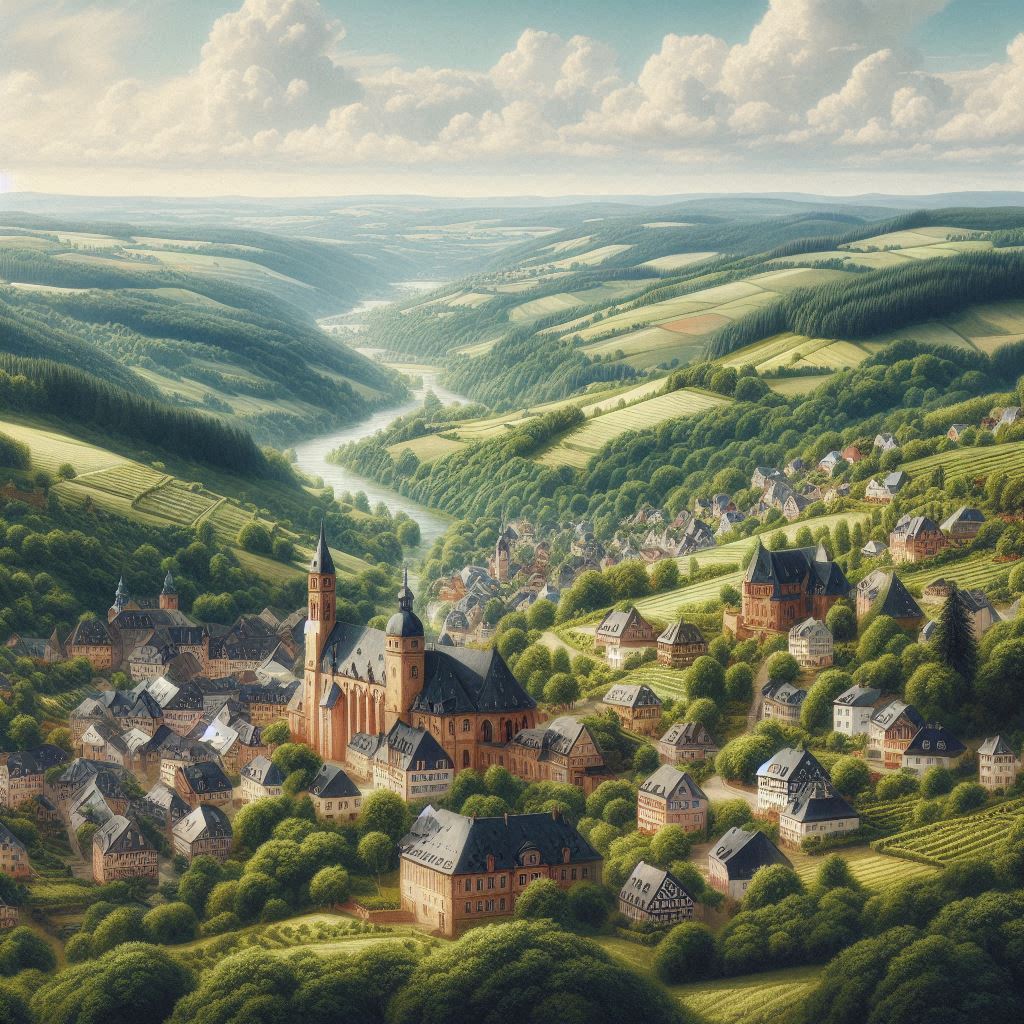
Saarland is a federal state in southwestern Germany, bordered by France, Luxembourg, and the German state of Rhineland-Palatinate. It is the smallest German state by area, apart from the city-states, and its capital is Saarbrücken. After World War I and II, it was governed by France before rejoining Germany in 1957. Today, Saarland is known for its blend of German and French cultures.
This page features links derived from the Online Familienbücher (OFB) website (https://ofb.genealogy.net/). To make these links more navigable and user-friendly, I have taken the liberty of reorganizing and categorizing them. For updated details and additional resources, please visit the original website directly.
| Cities, Towns, Villages, and Hamlets | Locality Descriptions | OFB Links and Additional Resources |
|---|---|---|
| Altland | Altland, a small rural village in Saarland, Germany, reflects the region’s rich agricultural heritage. Its origins trace back to medieval times, shaped by traditional farming and influences from the Holy Roman Empire. Over centuries, Altland saw shifts from French occupation under Louis XIV to Prussian administration after 1815. While industrialization transformed Saarland in the 19th century, Altland remained primarily agricultural, adapting through periods of war and territorial change. Today, it preserves its rural charm, offering a glimpse into Saarland’s enduring history. | Local family database Südlicher Hochwald |
| Bardenbach | Bardenbach, a village in Saarland, Germany, is part of the town of Wadern in the Merzig-Wadern district. Its origins date back to medieval times, with early mentions in monastic records from the 10th to 12th centuries. Archaeological finds, including stone tools and Celtic burial sites, suggest even earlier habitation. Historically, Bardenbach was influenced by Trier and the Grafschaft Dagstuhl, remaining under Prussian rule until World War I. After the war, it became part of the Saarland territory under League of Nations administration, though it remained connected to Prussia’s Trier district. Following World War II, France integrated the region into Saarland, which officially rejoined Germany in 1957. | Local family database Südlicher Hochwald |
| Bosen | Bosen, located near Lake Bostalsee in Saarland, Germany, has a history dating back to Roman times, around the 1st century CE, as evidenced by archaeological discoveries in the area. The village was first mentioned in records as “Busena” in 978, when Bishop Wiegfried of Verdun donated its church to St. Paul’s Monastery in Verdun. Over the centuries, Bosen was influenced by various noble families and territorial shifts, including Prussian rule in the 19th century. In 1974, it was incorporated into the municipality of Nohfelden, alongside Eckelhausen and other nearby villages.1 | Local family database Südlicher Hochwald |
| Braunshausen | Braunshausen, a village in Saarland, Germany, has historical roots dating back to the 13th century, during the feudal era of the region. First mentioned as Brunshusen in the 14th century, it was part of the Herrschaft Eberswald and later transferred to the Mohr von Sötern family in 1398 as a feudal estate under the lords of Vinstingen. By 1748, it was under Kurtrier’s control, marking its integration into broader regional governance. During the Thirty Years’ War, Braunshausen suffered significant losses, with its population dwindling from 28 households in 1536 to just 6 by 1654. Over the centuries, Braunshausen remained a small agricultural community, relying on three wells that supplied different sections of the village. In modern times, it has transitioned into a peaceful residential village, known for its scenic landscapes near the Hunsrück mountain range.2 | Local family database Südlicher Hochwald |
| Buweiler | Buweiler, a small locality in the town of Wadern, Saarland, Germany, is situated in the scenic Schwarzwälder Hochwald region, near Oberlöstern and Kostenbach. First mentioned in 1334 as a land estate, Buweiler is the oldest settlement in the Löstertal area. Historically, Buweiler was part of Lothringen’s Herrschaft Schaumburg in 1739, later transitioning to Prussian rule. After World War I, it remained under Prussian administration, while neighboring areas were integrated into the League of Nations’ Saar territory. Following World War II, France incorporated Buweiler into Saarland, which officially rejoined Germany in 1957.3 4 | Local family database Südlicher Hochwald |
| Dagstuhl | Dagstuhl, a locality in Wadern, Saarland, Germany, is best known for its historic castle ruins and Schloss Dagstuhl, a manor house built in 1760. The original Dagstuhl Castle, founded before 1290 by Knight Boemund of Saarbrücken, overlooks the valley and was strategically positioned for defense. Today, Dagstuhl is recognized for its historical significance, castle ruins, and research institute, blending medieval heritage with modern innovation.5 | Local family database Südlicher Hochwald |
| Eckelhausen | Eckelhausen, a village in Nohfelden, Saarland, Germany, is part of the Bosen-Eckelhausen district. First mentioned as Eckelnhusen over 600 years ago, its name is believed to derive from “Eiche” (German for “oak”), possibly referencing the forested landscape that once surrounded the settlement. Historically, Eckelhausen was linked to Neunkirchen for judicial and religious matters and belonged to the Oldenburg Principality of Birkenfeld from 1817 to 1937, before becoming part of Saarland in 1974. Today, Eckelhausen remains a peaceful rural community, known for its scenic beauty near Lake Bostalsee.6 7 | Local family database Südlicher Hochwald |
| Eisen | Eisen, the highest-altitude locality in Nohfelden, Saarland, Germany, was named after 14th–15th century iron ore discoveries. First mentioned in 1334, it was part of the County of Sponheim, then Zweibrücken. Abandoned during the Thirty Years’ War, it was repopulated in 1650 and later belonged to the Oldenburg Principality of Birkenfeld (1817–1937). | Local family database Südlicher Hochwald |
| Eiweiler | Eiweiler, a village in Nohfelden, Saarland, Germany, is nestled in a scenic valley of forests and farmland. First mentioned in the 14th century, it retains its rural charm and traditional character. | Local family database Südlicher Hochwald |
| Gehweiler | Gehweiler is a small village in the municipality of Wadern, located in the Saarland region of Germany. First mentioned in historical records in the 14th century, Gehweiler has a long history tied to agriculture and rural life. | Local family database Südlicher Hochwald |
| Gonnesweiler | Gonnesweiler, a village in Nohfelden, Saarland, Germany, first mentioned in 1333 as “Gondersvilre,” was part of Palatinate-Zweibrücken before French control in 1794. Near Bostalsee, it is noted for its Baroque altar and remnants of an 1800s Jewish cemetery. | Local family database Südlicher Hochwald |
| Kastel | Kastel is a small village in the municipality of Wadern, Saarland, Germany. Its name derives from the Latin word castellum, meaning “castle,” reflecting its historical significance. Kastel was first mentioned in records around the 12th century and has ties to medieval fortifications in the region. | Local family database Südlicher Hochwald |
| Kostenbach | Kostenbach is a small village in the municipality of Wadern, Saarland, Germany. First mentioned in historical records around 1450, it is part of the Löstertal area, which has a rich history tied to agriculture and rural life. | Local family database Südlicher Hochwald |
| Krettnich | Krettnich, a village in Wadern, Saarland, Germany, is one of the Hochwald region’s oldest settlements, with Celtic origins predating Germanic times. First mentioned in 1440, it was part of the Schwarzenberg and Dagstuhl lordships. In the 18th century, it became a significant manganese mining site until 1948. | Local family database Südlicher Hochwald |
| Lockweiler | Lockweiler, a village in Wadern, Saarland, Germany, was first mentioned in 973 as “Locvillare.” Rich in medieval history, it had three castles, including Schwarzenberg, now marked by the Haan Chapel (1837). Formerly part of the County of Merzig, it transitioned to French control post-WWI, rejoining Germany in 1957. | Local family database Südlicher Hochwald |
| Morscholz | Morscholz, a village in Wadern, Saarland, Germany, was first mentioned in 1098 when Emperor Henry IV granted it to the St. Simeon Monastery in Trier. Obermorscholz and Untermorscholz united in 1937. Located in the Schwarzwälder Hochwald region, it is known for its scenic landscapes. | Local family database Südlicher Hochwald |
| Niederbexbach | Niederbexbach, a village in Bexbach, Saarland, Germany, dates back to the 8th–11th centuries and was first mentioned in 1310. It was part of Wörschweiler Monastery’s administration, later joining the Duchy of Zweibrücken in 1558. Abandoned during the Thirty Years’ War, it was resettled in 1669. | Local heritage book of Niederbexbach (1733-1798) |
| Neunkirchen/Nahe | Neunkirchen/Nahe is a village in the municipality of Nohfelden, Saarland, Germany. Its history dates back to the early 14th century, with its name first appearing in records in 1333. The village was part of the Oldenburg Principality of Birkenfeld from 1817 to 1937. In 1974, Neunkirchen/Nahe was incorporated into the municipality of Nohfelden. | Local family database Südlicher Hochwald |
| Nohfelden | Nohfelden, in Sankt Wendel district, Saarland, Germany, includes 13 villages like Bosen and Eckelhausen. Rich in history, it features Celtic and Roman archaeological finds and the medieval Nohfelden Castle, first mentioned in 1286. | Local family database Südlicher Hochwald |
| Nuhweiler | Nuhweiler is a small hamlet in the municipality of Wadern, Saarland, Germany. Historically, it was part of the County of Dagstuhl and served as the residence of the Count’s game warden during the 18th century. The settlement consists of a few homes and farmsteads surrounded by farmland and woodlands. | Local family database Südlicher Hochwald |
| Oberlöstern/Oberloestern | Oberlöstern, a village in Wadern, Saarland, Germany, dates back to medieval times, first recorded in the 14th century. It was part of the County of Dagstuhl and later the Oldenburg Principality of Birkenfeld. | Local family database Südlicher Hochwald |
| Primstal (Mettnich/Mühlfeld) | Primstal is a village in the municipality of Nonnweiler, Saarland, Germany. It was formed in 1930 through the unification of two neighboring villages, Mettnich and Mühlfeld, whose histories date back to the 13th century. Historically, these villages were part of the Herrschaft Dagstuhl until 1794, when the area came under French control during the Napoleonic era. | Local family database Südlicher Hochwald |
| Rathen | Rathen is a picturesque village in Saxony, Germany, located in the Elbe Sandstone Mountains. It is divided into two parts, Oberrathen and Niederrathen, connected by a historic ferry across the Elbe River. Rathen’s history dates back to the 13th century when it was established as a site for a castle fortress. | Local family database Südlicher Hochwald |
| Selbach | Selbach is a small village in the municipality of Wadern, Saarland, Germany. Its history dates back to the medieval period, with its name first appearing in records in the 14th century. The village is surrounded by scenic landscapes and is part of the Saar-Hunsrück Nature Park. | Local family database Südlicher Hochwald |
| Schwarzenbach | Schwarzenbach, a village in Nonnweiler, Saarland, Germany, dates back to medieval times and was first mentioned in the 13th century. Historically part of the lordship of Dagstuhl, it came under French control during the Napoleonic era. | Local family database Südlicher Hochwald |
| Sötern/Soetern | Sötern, also spelled Soetern, is a village in the municipality of Nohfelden, Saarland, Germany. Its history dates back to the 12th century, with its name first appearing in records as “Shotere” around 1180. Sötern was the center of the Herrschaft Eberswald, a medieval lordship under the Electorate of Trier. | Local family database Südlicher Hochwald |
| Steinberg | Steinberg, a village in Wadern, Saarland, Germany, lies in the Schwarzwälder Hochwald region and Moselle Franconian dialect area. First mentioned around 1200, its name reflects its stony hill location. Historically part of the Electorate of Trier, it later came under French control during the Napoleonic era. | Local family database Südlicher Hochwald |
| Südlicher Hochwald/Suedlicher Hochwald | The Südlicher Hochwald, or Southern Hochwald, is a region in the Schwarzwälder Hochwald area of the Hunsrück mountains, spanning northern Saarland and parts of Rheinland-Pfalz. Known for its natural beauty, it features the Dollberge, Saarland’s highest peaks, and the Teufelskopf. Inhabited since Celtic and Roman times, its villages blend medieval and modern influences and are part of the Hunsrück-Hochwald National Park. | Local family database Südlicher Hochwald |
| Thailen | Thailen is a small village in the municipality of Wadern, located in Saarland, Germany. It is part of the scenic Schwarzwälder Hochwald region and has a history dating back to medieval times. | Local family database Südlicher Hochwald |
| Vogelsbüsch | Vogelsbüsch is a small hamlet in the municipality of Wadern, Saarland, Germany. It is located near the localities of Eserheck and Altland, within the scenic Schwarzwälder Hochwald region. | Local family database Südlicher Hochwald |
| Wadern | Wadern, in Saarland’s Merzig-Wadern district, comprises 13 urban districts and spans 111 square kilometers, making it one of the largest municipalities in the region. It lies at the foot of the Schwarzwälder Hochwald and belongs to the Moselle Franconian dialect area. | Local family database Südlicher Hochwald |
| Wedern | Wedern, a hamlet in Wadern, Saarland, Germany, lies in the scenic Schwarzwälder Hochwald region, surrounded by forests. Historically part of the County of Dagstuhl, it retains its rural charm. | Local family database Südlicher Hochwald |
| Weierweiler | Weierweiler, the smallest district in Weiskirchen, Saarland, Germany, sits at an elevation of 300–400 meters. Historically part of Herrschaft Dagstuhl, it is known for landmarks like the Hungerburg. | Local family database Südlicher Hochwald |
| Weiskirchen | Weiskirchen, in Saarland’s Merzig-Wadern district, comprises five districts: Konfeld, Rappweiler-Zwalbach, Thailen, Weierweiler, and Weiskirchen. A state-approved climatic spa town, it features health trails, hiking paths, and Nordic walking routes. | Local family database Südlicher Hochwald |
Sources:
- https://en.wikipedia.org/wiki/Nohfelden ↩︎
- https://de.wikipedia.org/wiki/Braunshausen_%28Nonnweiler%29 ↩︎
- https://de.wikipedia.org/wiki/L%C3%B6stertal ↩︎
- https://www.hunsrueck-nahereise.de/ortsliste-a-z/stadt-wadern/loestertal ↩︎
- https://en.wikipedia.org/wiki/Dagstuhl ↩︎
- https://en.wikipedia.org/wiki/Nohfelden ↩︎
- https://www.nohfelden.de/ortsteile-in-der-gemeinde/bosen-eckelhausen/ ↩︎
 OFB index