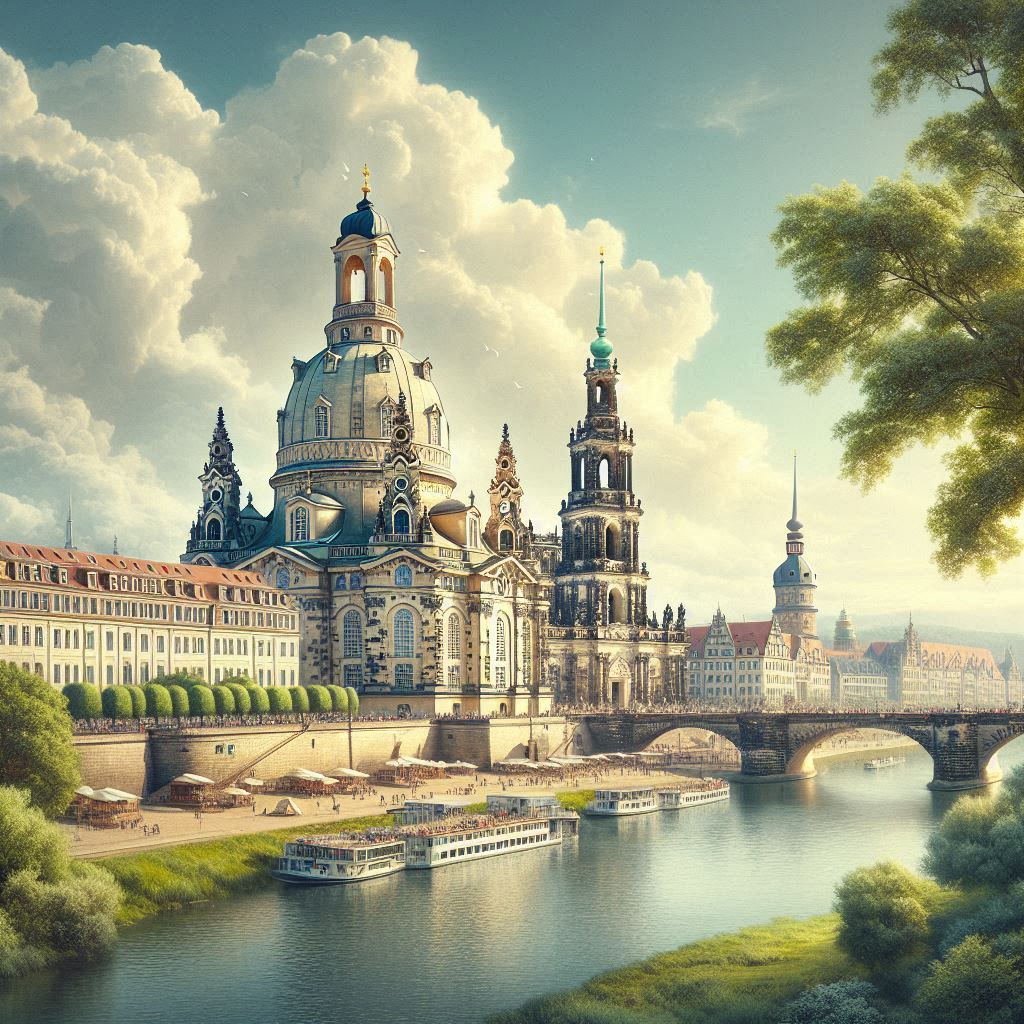
“At Dresden on the Elbe, that handsome city, where straw hats, verses, and cigars are made, they’ve built a music club and music warehouse pretty.” – Heinrich Heine
Though Heine’s poetic words speak of Dresden, his sentiment resonates across the entire region of Saxony—a land of remarkable beauty, culture, and resilience. From the bustling streets of Leipzig, where music and literature thrive, to the serene Elbe Valley and the enchanting Ore Mountains, Saxony has always been a cradle of innovation, artistry, and history. For those of us with ancestral ties to this storied region, Saxony becomes more than a geographic destination; it becomes a window into the lives and legacies of those who shaped our heritage.
Early Foundations and the Duchy of Saxony
The history of Saxony begins in the early medieval era. In the 9th century, Saxony was a duchy, inhabited by the Saxons, a Germanic tribe. Charlemagne, the Emperor of the Holy Roman Empire, sought to integrate the Saxons into his empire, which led to the Saxon Wars in the late 8th century. Following their conversion to Christianity, Saxony became an integral part of the Holy Roman Empire.
During the Middle Ages, Saxony’s strategic location allowed it to thrive as a center for trade and commerce. The region’s rulers played pivotal roles in European politics, often shaping events on the continent.
Saxony as an Electorate and the Rise of Dresden
In 1356, Saxony became an Electorate within the Holy Roman Empire. As an electorate, its rulers, the Wettin dynasty, had the power to participate in choosing the Holy Roman Emperor. This period saw the elevation of Dresden as a significant cultural and political hub.
Saxony’s transformation into a flourishing region occurred during the Renaissance. The Wettin dynasty encouraged art, architecture, and science, laying the foundations for Saxony’s cultural legacy. By the 16th century, Saxony was a leader in the Protestant Reformation, spearheaded by Martin Luther, whose influence extended throughout the region. The region also became known for its mining industry, particularly in silver and other precious metals.
Saxony as a Kingdom and its Industrial Transformation
In the early 19th century, Saxony transitioned from an electorate to a kingdom, with its ruler granted the title of King. This new status elevated Saxony’s standing within Europe and allowed it to expand its influence.
The 19th century was a time of rapid industrialization, and Saxony emerged as one of Germany’s most industrialized regions. Leipzig became a center for publishing and education, while Dresden gained fame for its porcelain industry and exquisite craftsmanship. Saxony’s contributions to music, especially through composers like Johann Sebastian Bach and Richard Wagner, solidified its place in cultural history.
Twentieth Century Challenges
The 20th century was a time of upheaval for Saxony. During World War II, Dresden was heavily bombed, resulting in significant destruction. Following the war, Saxony became part of the German Democratic Republic (East Germany), where it experienced communist rule until German reunification in 1990.
Despite these challenges, Saxony has continued to rebuild and thrive, leveraging its industrial heritage and cultural foundations to become a dynamic region in modern Germany.
Ancestry Research in Saxony
Saxony’s rich history makes it an exceptional region for ancestry research. Whether your family hails from Leipzig, Dresden, or a smaller town in the area, tracing your lineage can reveal fascinating stories about your ancestors and their lives.
Key resources for ancestry research in Saxony include:
- FamilySearch: A popular platform that offers access to digitized church records and other historical documents.
- Ancestry: Provides extensive genealogical databases and tools for tracing Saxon roots.
- Saxon State Archive: A treasure trove of historical records that can help uncover family histories.
- Leipzig Central Archive: Contains collections specifically focused on the city’s rich history and its inhabitants.
Exploring the past in Saxony allows not only a deeper appreciation of its history but also a profound understanding of your family’s journey through time. Uncovering your Saxon ancestry can connect you to a world of tradition, resilience, and culture that continues to shape the region today. So take the step to dive into the archives, visit the historic cities, and perhaps even walk the same paths as your ancestors once did. The rich tapestry of Saxony awaits!
 OFB index