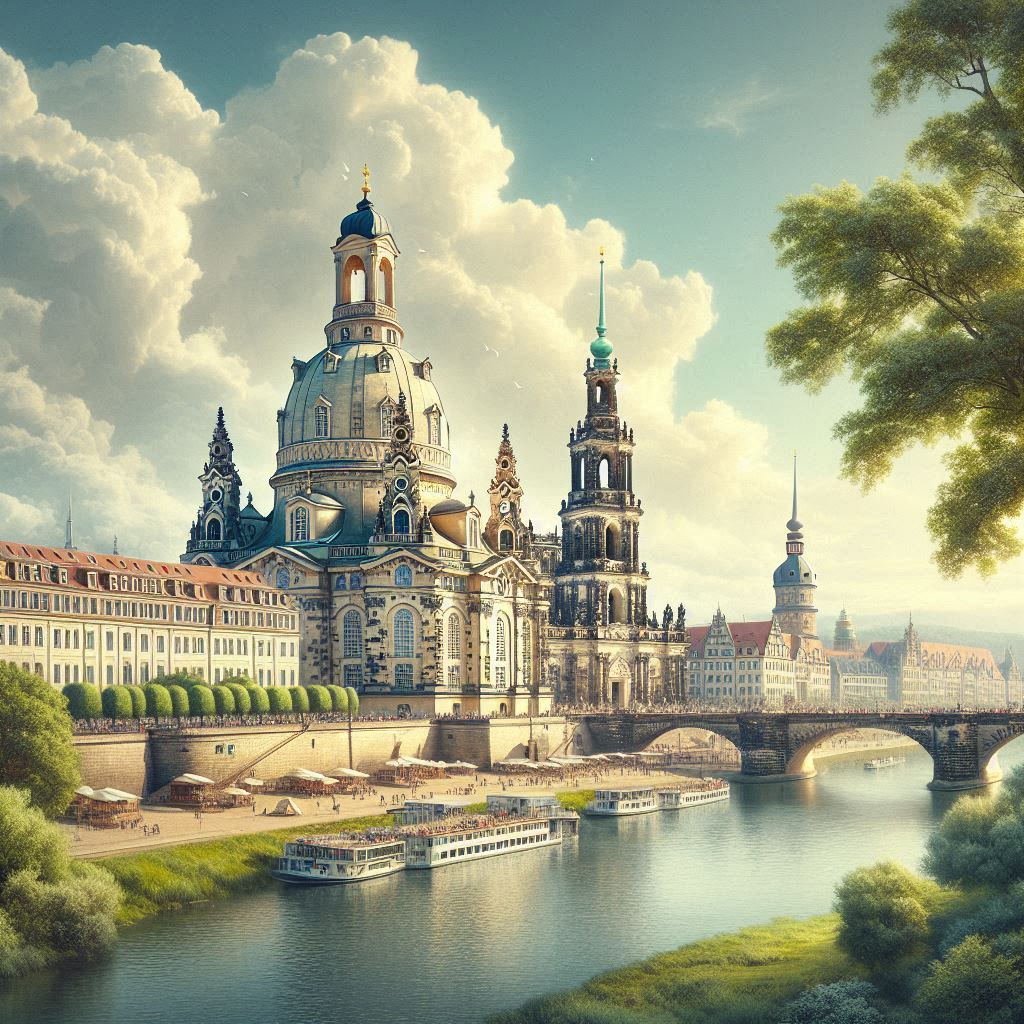
Saxony, or Sachsen, is a federal state in eastern Germany, officially known as the Free State of Saxony (Freistaat Sachsen). It is bordered by Brandenburg, Saxony-Anhalt, Thuringia, Bavaria, Poland, and the Czech Republic. The capital city is Dresden, and Leipzig is its largest city. Historically, Saxony has been a duchy, an electorate of the Holy Roman Empire, and a kingdom. 👑
This page features links derived from the Online Familienbücher (OFB) website (https://ofb.genealogy.net/). To make these links more navigable and user-friendly, I have taken the liberty of reorganizing and categorizing them. For updated details and additional resources, please visit the original website directly.
| Cities, Towns, Villages, and Hamlets | Locality Descriptions | OFB Links and Additional Resources |
|---|---|---|
| Babisnau (Kreischa) | Babisnau is a village in the municipality of Kreischa, located in the Sächsische Schweiz-Osterzgebirge district of Saxony, Germany. It lies south of Dresden, near the Babisnauer Pappel, a famous landmark tree planted in 1808. Historically, Babisnau was first mentioned in 1288 as “Pabznowe” and was part of Castrum Dresden in 1378. Over the centuries, its administrative ties shifted between Dresden and Pirna, and in 1957, it was incorporated into Bärenklause-Kautzsch before becoming part of Kreischa in 1994. | Local heritage book of Kreischa |
| Bärenklause-Kautzsch (Kreischa) | Bärenklause-Kautzsch was a municipality in Saxony, Germany, from 1935 to 1994. It was located south of Dresden and north of Kreischa, before being incorporated into Kreischa in 1994. Historically, Bärenklause was first mentioned in 1288 as “Kolchowe,” a Slavic settlement. By the 16th century, it was renamed Bernklause after Hans Christoph von Bernstein, who owned the local Rittergut (manor estate). The village suffered devastation during the Thirty Years’ War, with Swedish troops destroying most of the settlement in 1632, though the manor estate survived. Kautzsch, originally a separate village, merged with Bärenklause in 1935 to form Bärenklause-Kautzsch.1 | Local heritage book of Kreischa |
| Bergen | Bergen is a village in the municipality of Elsterheide, located in the Bautzen district of Saxony, Germany. It is part of the Neuwiese/Bergen locality, which consists of two separate settlements: Neuwiese and Bergen. Historically, Bergen was first mentioned in 1744 under the name Ober-Neuwiese. The name Bergen (Sorb: Hory) means “place on the hills”, as it is situated higher than the neighboring Neuwiese. The village was originally part of Prussia and remained an independent municipality until 1936, when it was incorporated into Neuwiese. After German reunification, Neuwiese/Bergen became part of Elsterheide in 1995.2 | Local heritage book of Hoyerswerda region |
| Brösgen (Kreischa) | Brösgen is a small village in the municipality of Kreischa, located in the Sächsische Schweiz-Osterzgebirge district of Saxony, Germany. It lies northwest of Kreischa, in a secluded valley. Historically, Brösgen was first mentioned in 1362, with its name derived from the Old Slavic term “brezno,” meaning “birch”. Over the centuries, it changed ownership multiple times, including being part of Burggraf Otto von Dohna’s estate in 1398, before being transferred to the Altzella Monastery due to unpaid debts. During the Dohna Feud, Brösgen, along with nearby villages, was destroyed and later rebuilt. By the 15th and 16th centuries, Brösgen was under the jurisdiction of Rittergut Kleincarsdorf, and records from 1610 and 1730 document peasant uprisings against excessive labor demands. In 1936, Brösgen merged with Theisewitz and Kleba to form a single municipality, before being incorporated into Kreischa in 1973. | Local heritage book of Kreischa |
| Bröthen (Hoyerswerda) | Bröthen is a village in the municipality of Hoyerswerda, located in the Bautzen district of Saxony, Germany. It is part of the Bröthen/Michalken locality, which was formed in 1950 when Bröthen merged with the neighboring village of Michalken. Historically, Bröthen was first mentioned in 1401 and was originally inhabited by Sorb farmers and beekeepers. The name Bröthen derives from the Old Sorbian word “brt,” meaning “forest beehive”, reflecting the village’s early connection to beekeeping. Over time, Bröthen transitioned from an agricultural settlement to an area influenced by industrial development, particularly brick production, due to its rich clay deposits. Today, Bröthen/Michalken is the largest locality in Hoyerswerda, with around 1,400 residents. The area is known for its Sorb heritage, with traditional Sorb costumes and customs still preserved.3 | Local heritage book of Hoyerswerda region |
| Dreiweibern (Lohsa) | Dreiweibern, or Tři Žony in Upper Sorbian, is a small village in the Bautzen district of Saxony, Germany, and part of the municipality of Lohsa. First mentioned in 1509, its name originates from a local legend about three women who bravely defended a nobleman’s daughter from a raider. Over time, the village became part of Weißkollm due to mining activities, and today, it remains a quiet, rural settlement with only a handful of residents. | Local heritage book of Lohsa |
| Driewitz (Lohsa) | Driewitz is a village in the municipality of Lohsa, located in the Bautzen district of Saxony, Germany. Historically, Driewitz was first mentioned around 1500, when woodworkers settled in the area. By 1538, it was recorded as “Drewick,” later evolving into “Tribitz” in 1746, before adopting its current name around 1800. The village was home to a Rittergut (manor estate), documented in 1604, with its oak-lined entrance and historic buildings still visible today. In 1831, the settlement of Neudriewitz was founded south of Driewitz but was abandoned by 1900. After World War II, Driewitz was an independent municipality until 1957, when it was incorporated into Litschen, and later merged with Lohsa in 1994. | Local heritage book of Lohsa |
| Elsterberg | Elsterberg is a town in the Vogtlandkreis district of Saxony, Germany, located on the White Elster River, approximately 6 km southwest of Greiz and 13 km north of Plauen, placing it close to the Thuringian border. Nestled in a deep, forested valley, the town is surrounded by natural landscapes that extend into the Elstertal nature reserve. First mentioned in 1198, Elsterberg grew around Elsterburg Castle, constructed in 1225 by the Lords of Lobdeburg. During the 19th century, the town became a center of textile production, earning the nickname “spinnable-fiber town” due to its industrial output and regional importance. | Local family database Greiz region |
| Friedersdorf (Lohsa) (Sorbian: Bjedrichecy) | Friedersdorf, known in Upper Sorbian as Bjedric hecy, is a village in the municipality of Lohsa, located in the Bautzen district of Saxony, Germany. It lies directly on the Silbersee, a lake that plays a key role in the local economy, with camping sites, bungalows, and holiday rentals. Historically, Friedersdorf was first mentioned in 1471 as “Friederßdorff” and later underwent several name variations, including Fridersdorff (1529) and Friedersdorf bey Lohßa (1768). A Rittergut (manor estate) was documented in 1614, and by 1777, the village was under the jurisdiction of the Landvogtei Bautzen. Following the Congress of Vienna in 1815, Friedersdorf became part of Prussia, later transitioning to Silesia in 1825, before returning to Saxony after World War II. The village is part of the official Sorbian settlement area in Upper Lusatia, and in the 19th century, it was exclusively Sorbian-speaking. | Local heritage book of Lohsa |
| Gebersbach (Waldheim) | Gebersbach is a historic village in Saxony, Germany, now part of Waldheim. First mentioned in 1350, it developed as a Waldhufendorf (forest village) and was historically linked to Knobelsdorf and Rudelsdorf. The village was home to a Rittergut (manor estate), first recorded in 1445. Over the centuries, it changed ownership multiple times, including the Augustinian monastery of Waldheim until 1539. Later, noble families such as von Reinsberg, von Birckholtz, and Nehrhoff von Holdenberg controlled the estate. Administratively, Gebersbach belonged to Amt Rochlitz in the 18th century, later becoming part of Gerichtsamt Waldheim and Amtshauptmannschaft Döbeln. In 1970, it merged with Knobelsdorf, forming Gebersbach-Knobelsdorf, and was later incorporated into Waldheim in 2013.4 | Local heritage book of Gebersbach |
| Geißlitz (Lohsa) | Geißlitz (Geisslitz), also known as Kisylk in Sorbian, was a small settlement in the Bautzen district of Saxony, Germany. It was historically part of Ratzen and was first documented in 1538. The village was located in the Ratzener Flur, but in 1960, it was completely devastated due to the expansion of the Glückauf III open-pit mine. Before its destruction, Geißlitz had around 150 residents, many of whom were relocated to Lohsa. Today, the former site of Geißlitz lies within the Lohsasee (Speicherbecken Lohsa II) and is classified as a geotechnical restricted area. Since 2000, a memorial stone has stood in remembrance of Geißlitz and other villages lost to mining.5 | Local heritage book of Lohsa |
| Gombsen (Kreischa) | Gombsen is a village in the municipality of Kreischa, located in the Sächsische Schweiz-Osterzgebirge district of Saxony, Germany. It lies south of Dresden, near the Lockwitztal, and is characterized by orchards and rolling hills. The village has a distinctive layout, known as a Doppelzeilendorf (double-row village), with two ponds in the center fed by the Gombsener Wasser stream. Historically, Gombsen was first mentioned in 1445 and was originally a Slavic settlement, with its name derived from the Old Sorbian term “Komašin,” meaning “village of Komaš”. Over the centuries, it was part of various administrative regions, including the Dohna district in 1445, the Dresden district in 1526, and later the Pirna district in 1843. In 1973, Gombsen was incorporated into Kreischa, along with the neighboring villages of Saida and Wittgensdorf. | Local heritage book of Kreischa |
| Hermsdorf am Wilisch | Hermsdorf am Wilisch is a village in the municipality of Glashütte, located in the Sächsische Schweiz-Osterzgebirge district of Saxony, Germany. It lies north of Glashütte, near the Wilisch mountain, which gives the village its name. Historically, Hermsdorf was first mentioned in 1350 as a Straßenangerdorf (street village) on Waldhufenflur. Over the centuries, it was part of various administrative regions, including the Pirna district in 1548, the Dresden district in 1550, and later the Pirna district again in 1696. The Rittergut Lungkwitz held landlord rights over the village in 1551. In 1968, Hermsdorf was incorporated into Hirschbach, and later became part of Reinhardtsgrimma in 1995. Since 2008, it has been a district of Glashütte. The village is known for its Basalt columns in the Wilisch crater, remnants of an ancient volcanic formation. | Local heritage book of Kreischa |
| Hirschfeld/Wolfersgrün | Wolfersgrün was first mentioned in 1359, though settlements likely existed earlier. It developed as a rural community, with mills and ironworks shaping its economy in the 19th century. By 1996, Wolfersgrün was incorporated into Kirchberg, maintaining its traditional village character. | Local heritage book of Zwickau |
| Hoyerswerda (town) | Hoyerswerda is a historic town in Saxony, Germany, located in the Upper Lusatia region. First mentioned in 1268, it was the seat of a German barony founded by Count Hoyer of Friedberg. The town gained market rights in 1371, contributing to its economic growth. During the 19th and 20th centuries, Hoyerswerda became an industrial hub, particularly in coal mining. In 1959, the Socialist New Town of Hoyerswerda-Neustadt was built to accommodate workers from the Schwarze Pumpe lignite-processing plant. Hoyerswerda is part of the Sorbian settlement area, where Upper Sorbian is spoken alongside German. | Local heritage book of Hoyerswerda region |
| Hoyerswerda (region) | Hoyerswerda and its surroundings blend Sorbian traditions, industrial heritage, and natural beauty. Nearby villages like Schwarzkollm, known for the Krabat legend, and Zeißig, with its Sorbian architecture, preserve the region’s cultural identity. Bröthen-Michalken highlights Hoyerswerda’s brickworks history, while Knappenrode’s former mining sites have transformed into lakes, shaping the Lausitzer Seenland. Dörgenhausen and Kühnicht retain traces of their Sorbian past, while Neuwiese/Bergen sits amid repurposed coal pits. | Local heritage book of Hoyerswerda region |
| Kirchberg | Kirchberg is a town in the Zwickau district of Saxony, Germany, situated at the western edge of the Ore Mountains, about 11 km south of Zwickau. Known as the “Town of Seven Hills,” Kirchberg is surrounded by Borberg, Geiersberg, Kreuzhübel, Krähenberg, Quirlsberg, Kratzberg, and Schießhausberg, creating a picturesque landscape. The town has a rich history, dating back to the late 12th century, with its name derived from an early church built on mining land. Kirchberg received town privileges around 1310, and by the 16th century, it became a center for cloth-making. Although small-scale mining began in 1710, it was abandoned by 1723 due to lack of success. Kirchberg was part of the Amt Wiesenburg until 1843, when it became part of the Amt Kirchberg. In 1875, it was incorporated into the Amtshauptmannschaft Zwickau, which later evolved into the modern Zwickau district. | Local heritage book of Zwickau |
| Kleba (Kreischa) | Kleba is a village in the municipality of Kreischa, located in the Sächsische Schweiz-Osterzgebirge district of Saxony, Germany. It lies north of Kreischa, near the Possendorfer Bach, and is characterized by historic farmsteads and agricultural landscapes. Historically, Kleba was first mentioned in 1288, with its name derived from the Old Slavic term “chleb” (bread), suggesting fertile land suitable for grain cultivation. Over the centuries, Kleba was part of various administrative regions, including Castrum Dresden in 1378 and the Amt Dresden in 1590. By 1817, the village had seven Hufen (farm plots) arranged in strip-field agriculture. In 1936, Kleba merged with Brösgen and Theisewitz, forming a single municipality before being incorporated into Kreischa in 1973. | Local heritage book of Kreischa |
| Kleincarsdorf (Kreischa) | Kleincarsdorf is a village in the municipality of Kreischa, located in the Sächsische Schweiz-Osterzgebirge district of Saxony, Germany. It lies northwest of Kreischa, in the Döhlener Becken, a geological region shaped by sandstone and gneiss formations. Historically, Kleincarsdorf was first mentioned in 1216 as “Karlestorf,” a fränkische Gründung (Franconian settlement) established under the direction of the Margrave of Meißen. By 1378, it was part of Castrum Dresden, with its Rittergut (manor estate) serving as the administrative center. The von Carlowitz family owned the estate from 1456 to 1669, after which ownership changed frequently. In 1782, the village had a gasthof (inn) and a smithy, reflecting its role as a small agricultural community. Following World War II, Kleincarsdorf’s manor estate was redistributed under the Bodenreform (land reform), and in 1973, the village was incorporated into Kreischa. | Local heritage book of Kreischa |
| Kolpen (Lohsa) | Kolpen, known in Upper Sorbian as Kolpin, was a small settlement in the Bautzen district of Saxony, Germany. It was historically part of Ratzen and was first documented in 1531. The village was located in the Ratzener Flur, but in 1960, it was completely devastated due to the expansion of the Glückauf III open-pit mine. Before its destruction, Kolpen was a Vorwerk (manor farm) with a Rundweiler layout and large-block field structures. Along with Geißlitz, Kolpen had around 150 residents, many of whom were relocated to Lohsa. Today, the former site of Kolpen lies within the Lohsasee (Speicherbecken Lohsa II) and is classified as a geotechnical restricted area. Since 2000, a memorial stone has stood in remembrance of Kolpen and other villages lost to mining. | Local heritage book of Lohsa |
| Kreischa | Kreischa is a municipality in the Sächsische Schweiz-Osterzgebirge district of Saxony, Germany. It is located south of Dresden, nestled in the Lockwitztal valley, and consists of 14 districts. The town was first mentioned in 1282 under the name Heinricus de Kryschowe, which may derive from an Old Slavic word meaning “crooked” or “lame”.6 | Local heritage book of Kreischa |
| Kühnicht (Hoyerswerda) (Upper Sorbian: Kinajcht) | Kühnicht (Kuehnicht), known in Upper Sorbian as Kinajcht, is a village in Hoyerswerda, located in the Bautzen district of Saxony, Germany. It was first mentioned in 1556 as “Kinicht,” a name derived from the Sorb term for “place near a pine bush”. Historically, Kühnicht was part of the Standesherrschaft Hoyerswerda, a feudal estate that governed the region. By 1744, it was recorded as “Künicht,” and by 1791, it had adopted its modern spelling. The village remained a small Sorbian settlement until 1960, when it was incorporated into Hoyerswerda during the expansion of the Lausitzer Braunkohlerevier (Lusatian lignite mining region). Today, Kühnicht is part of the Neustadt district of Hoyerswerda, with remnants of its original village center still visible along Lindenweg.7 | Local heritage book of Hoyerswerda region |
| Laubusch | Local heritage book of Hoyerswerda (Land) | |
| Lippen (Lohsa) | Lippen, known in Upper Sorbian as Lipiny, is the easternmost village in the municipality of Lohsa, located in the Bautzen district of Saxony, Germany. It is part of the official Sorbian settlement area and has a rich historical background. First mentioned in 1375, Lippen was historically tied to the Rittergut (manor estate), which was documented in 1610. Over the centuries, the village changed ownership multiple times, eventually becoming part of the Uhyst estate in 1659. The region around Lippen was affected by territorial shifts, particularly after 1815, when parts of Lusatia were divided between Saxony and Prussia. During World War II, Lippen was heavily contested, with fierce battles leading to significant destruction. In 1945, the village was briefly reclaimed by German forces before being retaken by the Soviet Army, resulting in heavy casualties. Following the war, land reforms redistributed 431 hectares of farmland. In 1963, the Lohsa open-pit mine reached Lippen, leading to the demolition of the western part of the village. This resulted in the loss of 24 homes, a school, and 11 ponds, forcing 140 residents to relocate. Despite these challenges, Lippen remained a quiet rural settlement, officially merging with Uhyst in 1974. Today, Lippen is a small, peaceful village, with a memorial site honoring its history.8 | Local heritage book of Lohsa |
| Litschen (Lohsa) | Litschen, known in Upper Sorbian as Złyčin, is a village in the municipality of Lohsa, located in the Bautzen district of Saxony, Germany. It lies near the Milkeler Heide, a vast heathland and forest area, and is part of the official Sorbian settlement region2. Historically, Litschen was first mentioned in 1343 as “Litzen” and later recorded as Lytczschin (1516), Litschen (1533), and Litzschen (1791). The village was originally a Sorbian settlement, established during the Slavic expansion into Lusatia. By 1549, Litschen had a Rittergut (manor estate), which played a central role in its development. In 1958, Litschen merged with Friedersdorf and Driewitz, forming a larger municipality, and in 1973, it incorporated Mortka. However, in 1994, Litschen lost its municipal independence and became part of Lohsa. | Local heritage book of Lohsa |
| Lockwitz | Lockwitz, a district in southeastern Dresden, was first mentioned in 1288, with its name derived from the Old Sorbian “Łukavica,” meaning “meadow stream”. Historically part of the Burggrafschaft Dohna, it transitioned to Meißen in 1402. The Lockwitz Manor, established in 1349, held judicial authority, and during the Seven Years’ War, Frederick II of Prussia briefly made it his headquarters, surviving an assassination attempt. In the 19th century, milling and fruit processing flourished, with Schloss Lockwitz serving as the Kap-herr family’s residence. Incorporated into Dresden in 1930, Lockwitz retains landmarks such as Schlosskirche Lockwitz and the Lockwitztalbrücke, a 65-meter-high bridge spanning the Lockwitzgrund.9 | Local heritage book of Lockwitz |
| Lohsa | Lohsa, known in Upper Sorbian as Łaz, is a municipality in the Bautzen district of Saxony, Germany. It is part of the official Sorbian settlement area, where Upper Sorbian holds official status alongside German. The municipality covers 134.36 km² and has a population of approximately 5,145 residents. Lohsa consists of several villages, including Dreiweibern, Driewitz, Friedersdorf, Groß Särchen, Hermsdorf/Spree, Koblenz, Lippen, Litschen, Mortka, Riegel, Steinitz, Tiegling, Weißig, and Weißkollm. The region is known for its natural landscapes, lakes, and forests, shaped by former mining activities.10 | Local heritage book of Lohsa |
| Lungkwitz (Kreischa) | Lungkwitz is a district of Kreischa, located in the Sächsische Schweiz-Osterzgebirge district of Saxony, Germany. First mentioned in 1340, its name likely originates from the Old Slavic term “Lucawicza,” meaning “meadow village”. Historically, Lungkwitz was part of the Dohna administrative region, with records from 1445 documenting its feudal ties to Heinz von Zschieren. The village was divided between the Rittergut Lungkwitz and Rittergut Oberkreischa, with jurisdiction split between Pirna and Dresden until 1856. In 1952, Lungkwitz became part of the Freital district, and in 1973, it was officially incorporated into Kreischa.11 12 | Local heritage book of Kreischa |
| Michalken (Hoyerswerda) | Michalken is a historic village that is now part of Hoyerswerda, Saxony, Germany. First mentioned in 1568, it was originally a Sorb settlement before becoming integrated into the German administrative structure. In 1950, Michalken was merged with Bröthen, forming the municipality of Bröthen/Michalken, which was later incorporated into Hoyerswerda in 19932. The village was historically agricultural, with brick production emerging as a key industry due to the region’s rich clay deposits. The Ziegelei-Denkmal (Brickworks Monument) stands as a reminder of its industrial past. Today, Michalken is known for its traditional Sorbian heritage, including annual festivals celebrating Sorb culture.13 | Local heritage book of Hoyerswerda region |
| Moosheim | Moosheim is a small village in the municipality of Rossau, located in the Mittelsachsen district of Saxony, Germany. It has a rich history dating back to 1350, when it was first mentioned as “Mosheym”. Over the centuries, Moosheim was part of various administrative regions, including the Burg Döbeln and the Kloster Altzella, before becoming part of the Herrschaft Kriebstein in the 16th century. | Local heritage book of Moosheim |
| Mortka (Lohsa) | Mortka is a village in the municipality of Lohsa, located in the Bautzen district of Saxony, Germany. It is known for the Jakubzburg, a unique medieval-style castle built in the 21st century, serving as a cultural and event venue. Historically, Mortka was part of Upper Lusatia, with its development influenced by agriculture and forestry. Over time, it became a popular recreational area, surrounded by lakes and forests. Today, Mortka hosts festivals, concerts, and medieval-themed events, attracting visitors from across the region. | Local heritage book of Lohsa |
| Nardt-Weinberg (Hoyerswerda) | Nardt-Weinberg is historically linked to Hoyerswerda, Saxony, Germany. The area was notably home to Lager Elsterhorst, a World War II prisoner-of-war camp, which later became a soviet transit camp for displaced German soldiers and civilians after the war. During the war, the camp housed Polish, Czech, French, and Belgian prisoners, with some forced to work in local coal mines and agriculture. After 1945, it briefly served as a soviet repatriation center before being dissolved in 1948. | Local heritage book of Hoyerswerda region |
| Neida (Lohsa) | Neida, known in Upper Sorbian as Nydej, was a small village in the Bautzen district of Saxony, Germany. It was first mentioned in 1430 and was originally a Sorbian settlement with a Zeilendorf (row village) layout. In 1936, during the Nazi era, the village was renamed Köhlergrund, but after World War II, it reverted to Neida. However, due to the expansion of the Glückauf II open-pit mine, Neida was completely destroyed in 1952-53, forcing 29 families to relocate, primarily to Lohsa. | Local heritage book of Lohsa |
| Neuwiese | Neuwiese is a village in the municipality of Elsterheide, located in the Bautzen district of Saxony, Germany. It lies northwest of Hoyerswerda, near the Schwarze Elster river, and is part of the Neuwiese/Bergen locality. Historically, Neuwiese was first mentioned in 1401 under the name “Weze.” The name is a German translation of its Sorbian name, Nowa Łuka, meaning “new place on a meadow”. The village was originally a Vorwerk (manor farm) of the Hoyerswerda estate, and its layout as a Straßenangerdorf (street village) remains visible today. In 1938, Neuwiese incorporated its northern neighbor, Bergen, forming a single municipality. After German reunification, Neuwiese became part of Elsterheide in 1995.14 | Local heritage book of Hoyerswerda region |
| Nickern (Lockwitz) | Nickern is a district in the southeastern part of Dresden, Germany, located near Lockwitz. It was first mentioned in 1288 as “Nicur” and historically developed as a small agricultural settlement. Over time, Nickern grew due to its proximity to Dresden, especially during the 19th century industrial expansion. In 1930, Nickern was incorporated into Dresden, along with Lockwitz, Luga, and Kauscha. | Local heritage book of Lockwitz |
| Partwitz | A locality known for its proximity to the turquoise waters of Partwitzer See and outdoor recreation. | |
| Ratzen (Lohsa) | Ratzen, known in Upper Sorbian as Radska, was a village in the Bautzen district of Saxony, Germany, near Lohsa. First mentioned in 1343, it was likely an older Slavic settlement, though its exact origins remain unknown. Historically, Ratzen had a Rittergut (manor estate) documented in 1562, which held landlord rights over the village. By 1492, the settlement was recorded as “Ratze,” with variations such as Ratzcha (1512), Raczen (1592), and Razen (1791) before adopting its modern name around 1800. In 1938, Ratzen lost its municipal independence when it was incorporated into Lohsa, along with its neighboring villages Geißlitz and Kolpen. However, in 1960, Ratzen was completely destroyed due to the expansion of the Glückauf III open-pit mine, forcing its 150 residents to relocate, primarily to Lohsa. | Local heritage book of Lohsa |
| Riegel (Lohsa) (Upper Sorbian: Roholń) | Riegel, known in Upper Sorbian as Roholń, is a village in the municipality of Lohsa, located in the Bautzen district of Saxony, Germany. It lies near the Scheibe-See, a lake formed from a former open-pit mine, and is part of the official Sorbian settlement area. Historically, Riegel was first mentioned in 1401 as “Rogelin” and later recorded as “Heide am Riegel” in 1534. The name derives from the Sorb word for “crossbeam” or “lever,” referring to a wooden structure used to regulate water flow for a hammer mill in Burghammer. The village was under the Standesherrschaft Hoyerswerda from the 16th to 19th centuries, with iron processing playing a key role in its economy. However, the hammer mill ceased operations by 1660. In 1938, Riegel merged with its neighboring village Scheibe, forming a single municipality. However, in 1986-87, Scheibe was completely destroyed due to coal mining, leading to the creation of the Scheibe-See. Riegel was incorporated into Weißkollm in 1978 and later became part of Lohsa in 1994. | Local heritage book of Lohsa |
| Quohren (Kreischa) | Quohren is a village in the municipality of Kreischa, located in the Sächsische Schweiz-Osterzgebirge district of Saxony, Germany. It lies west of Kreischa, in the Kreischaer Becken, a fertile valley surrounded by rolling hills. Historically, Quohren was first mentioned in 1350 under the name Tworne, which derives from an Old Slavic term meaning “the creating one”, possibly linked to a Slavic deity. The village was originally part of the Burggrafschaft Dohna, but in 1397, it was sold to a Dresden city councilor. By 1412, it became a Dresdner Amtsdorf, remaining under Dresden’s administration until the 17th century. In the Reformation era, Quohren was reportedly the last village in Saxony to convert to Lutheranism. Quohren is a Waldhufendorf (forest village), with long, narrow field strips extending from the village center. The village was also known for its extensive fruit orchards, with over 10,000 fruit-bearing trees recorded in 1805, though many were lost during the Napoleonic Wars. In 1838, Quohren became an independent municipality, but in 1971, it was incorporated into Kreischa. | Local heritage book of Kreischa |
| Sabrodt | Sabrodt is a village in the municipality of Elsterheide, located in the Bautzen district of Saxony, Germany. It lies about 18 km north of Hoyerswerda, near the Upper Landgraben, which forms the border between Saxony and Brandenburg as well as the historical divide between Upper and Lower Lusatia. The name Sabrodt has Sorbian origins, derived from “Zabrod,” meaning “place behind a ford”. Over time, the village’s name evolved, appearing as Sabrode in 1695 and Sabrodt in 1791. However, during the Nazi era (1936-1945), the village was renamed Wolfsfurt in an attempt to erase its Sorbian heritage. Sabrodt is also known for the “Tiger of Sabrodt,” a wolf shot in 1904, which was the last free-living wolf killed within Germany’s current borders before 1945. The mounted carcass remains on display in the museum at Castle Hoyerswerda. | Local heritage book of Hoyerswerda region |
| Saida (Kreischa) | Saida is a village in the municipality of Kreischa, located in the Sächsische Schweiz-Osterzgebirge district of Saxony, Germany. It lies east of Kreischa, near the Gombsener Wasser, a small tributary in the region. Historically, Saida was first mentioned in 1350, with its name possibly derived from an Old Slavic term meaning “small settlement of Zid”. By 1378, it was part of Castrum Dresden, later transitioning to the Amt Dresden in 1547. From 1856 to 1875, Saida was under the Gerichtsamt Dippoldiswalde, before becoming part of the Amtshauptmannschaft Dippoldiswalde. In 1939, Saida was incorporated into Gombsen, and later merged with Wittgensdorf. By 1974, Gombsen (including Saida) was integrated into Kreischa, where it remains today. | Local heritage book of Kreischa |
| Scheibe | Scheibe, known in Upper Sorbian as Šiboj, was a village in the Bautzen district of Saxony, Germany, near Lohsa. It was first mentioned in 1568 and was historically part of the Standesherrschaft Hoyerswerda. The village was located along the Kleine Spree, surrounded by heathland and wetlands. Archaeological findings suggest that the area was inhabited as early as the Middle Stone Age, with evidence of Bronze Age and Iron Age settlements nearby. By the 12th century, Scheibe was likely part of a Slavic settlement network, later expanded during the German eastward migration. In 1986-87, Scheibe was completely destroyed due to the expansion of the Scheibe open-pit mine, forcing its residents to relocate. The site was later flooded, forming the Scheibe-See, which is now part of the Lausitzer Seenland | Local heritage book of Lohsa |
| Seidewinkel (Hoyerswerda) | Seidewinkel is a historic village in Saxony, Germany, located near Hoyerswerda. First mentioned in 1401, it has deep Sorbian roots and was historically part of Upper Lusatia. The village was influenced by German and Sorbian cultures, with its name evolving over centuries. Seidewinkel was once situated near the Schwarze Elster River, but frequent flooding led to the relocation of farms and homes. In 1815, after the Congress of Vienna, the region became part of Prussia, initially under Brandenburg and later Schlesien. By 1874, a Standesamt (civil registry office) was established, handling records for nearby villages. Today, Seidewinkel is part of Elsterheide, preserving its rural character and historical landmarks. The village is known for its Maulbeerbaum-lined paths, remnants of past silkworm farming. | Local heritage book of Hoyerswerda (Land) |
| Sobrigau (Kreischa) | Sobrigau, a district of Kreischa in Saxony, Germany, was first mentioned in 1288 and likely has Slavic origins. Located north of Kreischa, it sits on fertile loess-covered sandstone, ideal for agriculture. Historically part of Dresden’s administrative region, it transitioned through various jurisdictions before becoming part of Kreischa in 1994. Sobrigau retains its Rundling village layout, with historic farmhouses and a protected orchard slope, once used for vine cultivation by medieval monasteries. | Local heritage book of Kreischa |
| Spohla (Hoyerswerda) | Spohla, known in Upper Sorbian as Spale, is a village in the municipality of Wittichenau, located in the Bautzen district of Saxony, Germany. It lies south of Hoyerswerda, near the Schwarzwasser River, and is part of the official Sorbian settlement area. First mentioned in 1374 as “Spole,” its name originates from the Sorbian word “spalić,” meaning “to burn,” referring to its historical foundation on a cleared forest site. During the Nazi era (1936-1945), the village was renamed Brandhofen as part of Germanization policies but reverted to Spohla in 1945. Spohla was historically a Sackgassendorf (dead-end village) with three mills, indicating a thriving agricultural economy. During the DDR era, Spohla was placed under mining protection due to brown coal deposits, restricting development and threatening its existence. However, after 1990, mining plans were abandoned. | Local heritage book of Hoyerswerda (Land) |
| Syrau | Syrau, a village in the Vogtlandkreis district of Saxony, Germany, has a long and complex history. First mentioned in historical records, it was historically part of various regional territories before becoming a municipality in Saxony. During the German Empire (1871–1918), Syrau was under Saxon administration, specifically within the Kingdom of Saxony, which governed the region. After World War I, it remained part of Saxony within the Weimar Republic. Following World War II, Syrau was placed within the Soviet Occupation Zone and later became part of East Germany (DDR) under the Bezirk Karl-Marx-Stadt, one of the administrative divisions of the German Democratic Republic. After German reunification in 1990, Syrau was integrated into the modern state of Saxony, where it remains today as part of the municipality of Rosenbach. | Local family database Greizer Umland |
| Tätzschwitz (Hoyerswerda) (Upper Sorbian: Ptačecy) | Tätzschwitz (Taetzschwitz), known in Upper Sorbian as Ptačecy, is a village in the municipality of Elsterheide, located in the Bautzen district of Saxony, Germany. It lies northwest of Hoyerswerda, near the Geierswalder See and Erikasee, forming part of the Lausitzer Seenland. First mentioned in 1401 as “Taczewicz,” its name originates from an early village leader, with “Ptac” meaning “bird” in Old Sorbian. In 1937, the Nazis renamed it Vogelhain as part of their Germanization policies, but it reverted to Tätzschwitz in 1945. The village was partially devastated in 1953-54 due to brown coal mining, leading to relocations and landscape changes. Since 1995, Tätzschwitz has been part of Elsterheide, sharing its cultural and administrative history. | Local heritage book of Hoyerswerda (Land) |
| Theisewitz (Kreischa) | Theisewitz, a district of Kreischa in Saxony, Germany, was first mentioned in 1288, with its name likely deriving from the Old Slavic word for “yew” (Tisová), reflecting early Slavic settlement. Historically part of the Hochstift Meißen, it was controlled by the von Thusewitz family in the 14th century before being destroyed during the Dohna Feud (1399-1401), leading to the extinction of the von Theisewitz lineage. A manor estate and tavern were recorded by 1455, with the Gasthof “Zum schönen Otto” serving as a landmark until the 1990s. In 1923, the manor became an obstgut (fruit estate) with 80 hectares of orchards, later acquired in 1995 by Klinik Bavaria, housing the Helene-Maier-Stiftung for therapeutic agriculture and rehabilitation. Theisewitz was incorporated into Kreischa in 1973, marking its administrative transition. | Local heritage book of Kreischa |
| Tiegling (Lohsa) | Tiegling, known in Upper Sorbian as Tyhelk, is a small village in the municipality of Lohsa, located in the Bautzen district of Saxony, Germany. It is part of the official Sorbian settlement area and lies near the Scheibe-See, a lake formed from a former open-pit mine2. First mentioned in 1746 as “Tiegelchen,” Tiegling was originally a Vorwerk (outpost farm) of Weißkollm, with a predominantly Sorbian population. Until 1994, it remained an administrative part of Weißkollm before being incorporated into Lohsa.15 16 | Local heritage book of Lohsa |
| Waldheim | Waldheim is a town in the Mittelsachsen district of Saxony, Germany, situated along the Zschopau River, between Döbeln and Hainichen. First mentioned in 1198, its name likely derives from Middle High German, meaning “forest home”. Historically, Waldheim developed around a castle, which later became a prison in 1716, still in operation today. The town flourished in the 19th century, becoming a center for textile production, mechanical engineering, and paper manufacturing. It was also known for its railway connections, linking it to Leipzig and Dresden. During World War II, Waldheim housed a prison camp, and in 1950, it was the site of the controversial Waldheim Trials, where former Nazi officials were sentenced under Soviet occupation. | Local heritage book of Gebersbach |
| Weißkollm (Lohsa) | Weißkollm, known in Upper Sorbian as Běły Chołmc, is a village in the municipality of Lohsa, located in the Bautzen district of Saxony, Germany. It is the third-largest locality in Lohsa, with around 800 residents. Historically, Weißkollm was first mentioned in 1492 and was likely part of a Slavic settlement network along the Kleine Spree. The village was originally a Rundweiler (circular settlement), a characteristic of early Slavic communities, later expanded during the German eastward migration. Over the centuries, Weißkollm was influenced by feudal estates, including the von Pannwitz, von Schönberg, and Hugo Stinnes families, who shaped the village’s development. Weißkollm is surrounded by post-glacial sand dunes, which inspired its name, meaning “small white hill”. Today, Weißkollm is part of the Lausitzer Seenland, with lakes formed from former mining sites, including the Dreiweiberner See. | Local heritage book of Lohsa |
| Werbelin | Werbelin was a village in Saxony, Germany, located southwest of Delitzsch in the Leipziger Tieflandsbucht. First mentioned in 1349 as “Werblin,” its name originates from the Old Sorbian word “Verba,” meaning “willow”. The village was historically a Rundling (circular settlement) with 14 farmsteads arranged around a central village green. From the 16th century to 1840, Werbelin was part of the Rittergut Neuhaus near Paupitzsch. In 1815, following the Congress of Vienna, it became part of Prussia and was incorporated into the Delitzsch district. By 1875, Werbelin had 194 residents, primarily engaged in agriculture. However, in 1971, the DDR government designated the region for brown coal mining, restricting new construction and burials. By 1981, Werbelin was completely destroyed due to the expansion of the Delitzsch-Südwest open-pit mine, forcing its residents to relocate. Today, the Werbeliner See, a flooded former mining site, marks the location of the lost village and serves as a protected nature reserve.17 | Local heritage book of Werbelin |
| Wilkau-Haßlau | Wilkau-Haßlau is a town in the Zwickau district of Saxony, Germany, situated on the Zwickauer Mulde River, about 6 km south of Zwickau. The town lies at the foot of the Ore Mountains, divided by the Zwickauer Mulde and Rödelbach streams, with former parishes such as Haara, Neuhaara, Culitzsch, Wilkau, Oberhaßlau, Niederhaßlau, Silberstraße, and Rosenthal. Historically, Wilkau-Haßlau developed as a trade and industrial center, benefiting from its river access and proximity to Zwickau. | Local heritage book of Zwickau |
| Wolfersgrün | Wolfersgrün, a village in Saxony, Germany, was first mentioned in 1359 as part of the Amt Wiesenburg, where it remained until 1843 before transferring to the Amt Kirchberg. In 1856, it came under the jurisdiction of the Gerichtsamt Kirchberg, and by 1875, it became part of the Amtshauptmannschaft Zwickau, later evolving into the Zwickau district. Historically, the Pflockensteig trade route, used by cloth merchants, passed through Wolfersgrün, connecting Lengenfeld (Vogtland) and Kirchberg. In the 1940s, plans were made for a reservoir to supply Zwickau with water, resulting in the creation of the Wolfersgrün dam. On January 1, 1996, Wolfersgrün was officially incorporated into Kirchberg, marking the end of its independent status. | Local family database Greiz region |
| Womiatke (Lohsa) | Womiatke, known in Upper Sorbian as Womjatk, is a hamlet in the municipality of Lohsa, located in the Bautzen district of Saxony, Germany. It is situated near the villages of Litschen and Friedersdorf, within the official Sorbian settlement area. Though small, Womiatke is part of the historical and cultural landscape of Lusatia, reflecting the region’s Slavic heritage. | Local heritage book of Lohsa |
| Zeißig (Hoyerswerda) | Zeißig, known in Upper Sorbian as Ćisk, is a district of Hoyerswerda, located in the Bautzen district of Saxony, Germany. It is part of the official Sorbian settlement area and has a rich cultural heritage. First mentioned in 1248, Zeißig was likely founded as a planned settlement, with its Angerdorf (village green layout) still visible today. The name Ćisk is believed to derive from the Sorbian word for “yew tree,” suggesting that the area was once covered in yew forests. Zeißig expanded in the 19th century, with the establishment of Klein Zeißig, a small colony near Kühnicht. After World War II, new residential areas were developed, and in the 1990s, the Neubaugebiet am Sender attracted many residents from Hoyerswerda’s city center. The district features historical landmarks, including the Zeißighof, a cultural center housed in a traditional Vierseithof (four-sided farmstead). The LPG-Bauer bronze sculpture, created by Jürgen von Woyski, stands in front of the Zeißighof, symbolizing the region’s agricultural heritage. Today, Zeißig is known for its strong community spirit, with local clubs, Sorbian folk dance groups, and cultural associations preserving its traditions. | Local heritage book of Hoyerswerda region |
| Zscheckwitz (Kreischa) | Zscheckwitz is a district of Kreischa, located in the Sächsische Schweiz-Osterzgebirge district of Saxony, Germany. It was first mentioned in 1216, making it one of the oldest recorded settlements in the region. The name Zscheckwitz derives from the Old Sorbian term “Čižkovici,” meaning “village of Čižek”. Historically, Zscheckwitz was a Rittergut (manor estate) rather than a traditional village. Unlike other settlements, no village structure ever developed around the estate. In 1936, Zscheckwitz was incorporated into Theisewitz, and in 1973, it officially became part of Kreischa. | Local heritage book of Kreischa |
| Zwickau | Zwickau, a city in Saxony, Germany, has a rich history and a strong industrial legacy. Its name is believed to originate from the Old Sorbian word “Šwikawa,” referring to the marshlands near the Zwickauer Mulde River. Established as a trading center in the 12th century, it gained prominence under the Wettin margraves and later played a role in the Reformation when Thomas Müntzer preached there. By the 19th century, Zwickau became a hub for the German automotive industry, home to August Horch’s factory, which later evolved into Audi, and the Trabant production during the GDR era. Despite wartime bombings, the city preserved its historical landmarks such as Osterstein Castle and St. Mary’s Church. Today, Zwickau is a thriving urban center, known for its automotive innovation, Schumann’s musical heritage, and dynamic cultural scene. | Local heritage book of Zwickau |
Sources:
- https://de.wikipedia.org/wiki/B%C3%A4renklause-Kautzsch ↩︎
- https://de.wikipedia.org/wiki/Bergen_%28Elsterheide%29 ↩︎
- https://www.hoyerswerda.de/stadtleben/stadtportrait/ortsteile-2/ortsteile-hy/broethen-michalken/ ↩︎
- https://de.wikipedia.org/wiki/Gebersbach_%28Waldheim%29 ↩︎
- https://de.wikipedia.org/wiki/Gei%C3%9Flitz_%28Priestewitz%29 ↩︎
- https://en.wikipedia.org/wiki/Kreischa ↩︎
- https://de.wikipedia.org/wiki/K%C3%BChnicht ↩︎
- https://de.wikipedia.org/wiki/Lippen_%28Lohsa%29 ↩︎
- https://de.wikipedia.org/wiki/Lockwitz ↩︎
- https://en.wikipedia.org/wiki/Lohsa ↩︎
- https://www.kreischa.de/inhalte/kreischa/_inhalt/unsere_gemeinde/ortsteile/lungkwitz/lungkwitz/index.html ↩︎
- https://de.wikipedia.org/wiki/Lungkwitz ↩︎
- https://www.hoyerswerda.de/stadtleben/stadtportrait/ortsteile-2/ortsteile-hy/broethen-michalken/ ↩︎
- https://elsterheide.de/gemeinde/ortsteile/neuwiese-bergen/ ↩︎
- https://de.wikipedia.org/wiki/Tiegling ↩︎
- https://www.lohsa.de/tiegling.html ↩︎
- https://de.wikipedia.org/wiki/Werbelin ↩︎
 OFB index