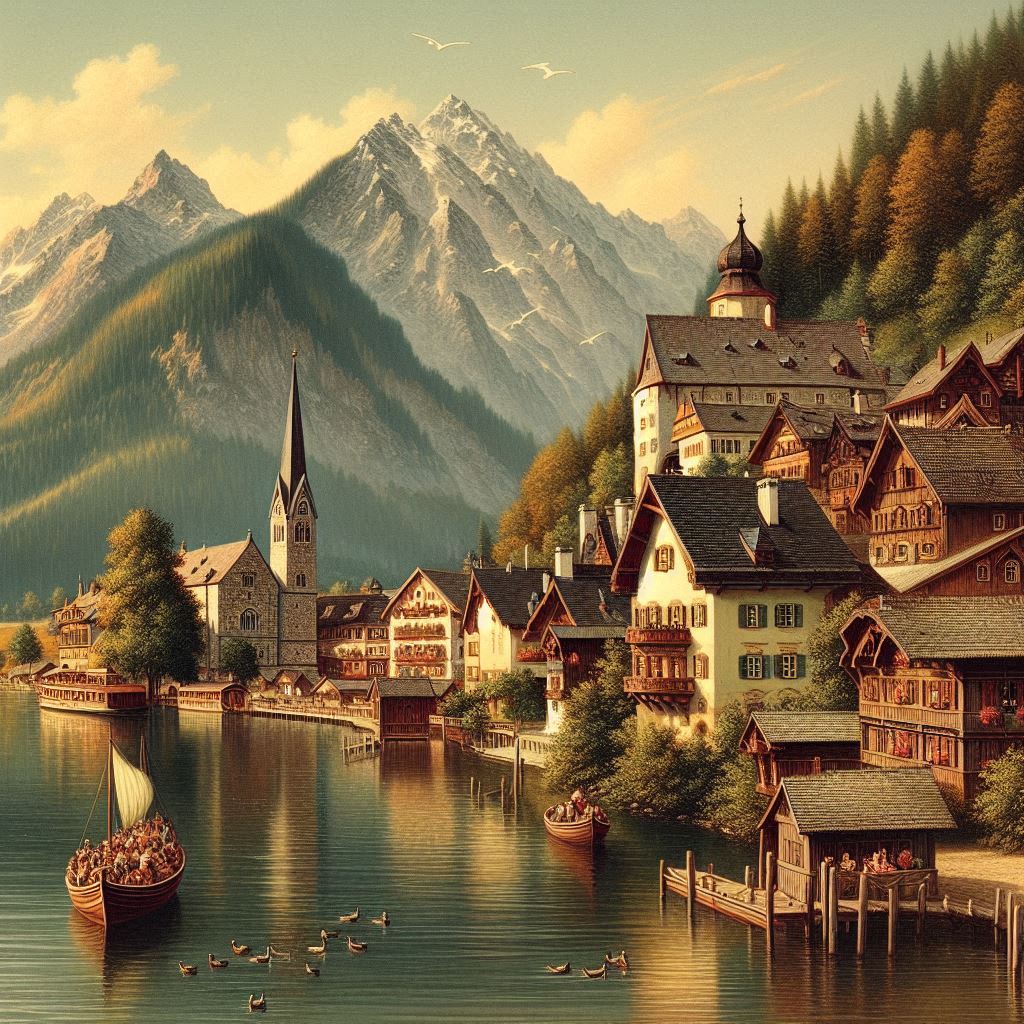
“I want to remain an eternal mystery to myself and others.” — Ludwig II of Bavaria
A Region Steeped in History and Tradition
This enigmatic declaration from Ludwig II, Bavaria’s famed “Fairy Tale King,”1 encapsulates his extraordinary personality—one of introspection, solitude, and boundless creativity. Ludwig’s passion for art and architecture left Bavaria with treasures like Neuschwanstein Castle, a symbol of his visionary spirit and mysterious allure. Just as Ludwig sought to preserve his mystery, Bavaria’s rich history invites exploration, offering secrets waiting to be uncovered. Here are some key elements of Bavaria’s history:
Formation of the Duchy of Bavaria
Following the decline of the Roman Empire, Germanic tribes, including the Alemanni and later the Bavarii, settled in the area. By the mid-6th century, the Duchy of Bavaria emerged as a significant political entity under the rule of the Agilolfing dynasty. This period saw the consolidation of territories and the establishment of a distinct Bavarian identity.
Bavaria within the Holy Roman Empire
Throughout the Middle Ages, Bavaria played a pivotal role within the Holy Roman Empire. The region experienced various territorial divisions and reunifications, leading to the creation of sub-duchies such as Bavaria-Straubing, Bavaria-Landshut, Bavaria-Ingolstadt, and Bavaria-Munich. These divisions were often the result of inheritance disputes among ruling families.
The Electorate and Kingdom of Bavaria
In 1623, during the Thirty Years’ War, Duke Maximilian I of Bavaria was granted the title of Prince-Elector, elevating Bavaria’s status within the empire. This Electorate period lasted until 1806, when Bavaria was proclaimed a kingdom in the wake of the Holy Roman Empire’s dissolution. As a kingdom, Bavaria underwent significant modernization and territorial expansion, aligning itself with major European powers.
Bavaria in the 20th Century
The 20th century was a transformative era for Bavaria. After World War I, the Kingdom of Bavaria transitioned into the People’s State of Bavaria in 1918, a brief socialist experiment marked by political instability. This turmoil led to the establishment of the Free State of Bavaria, which became a federal state within Germany. Throughout the century, Bavaria evolved into a modern, thriving region, balancing its rich cultural heritage with industrial and economic growth.
 OFB index