Maritime Heritage and Economic Power
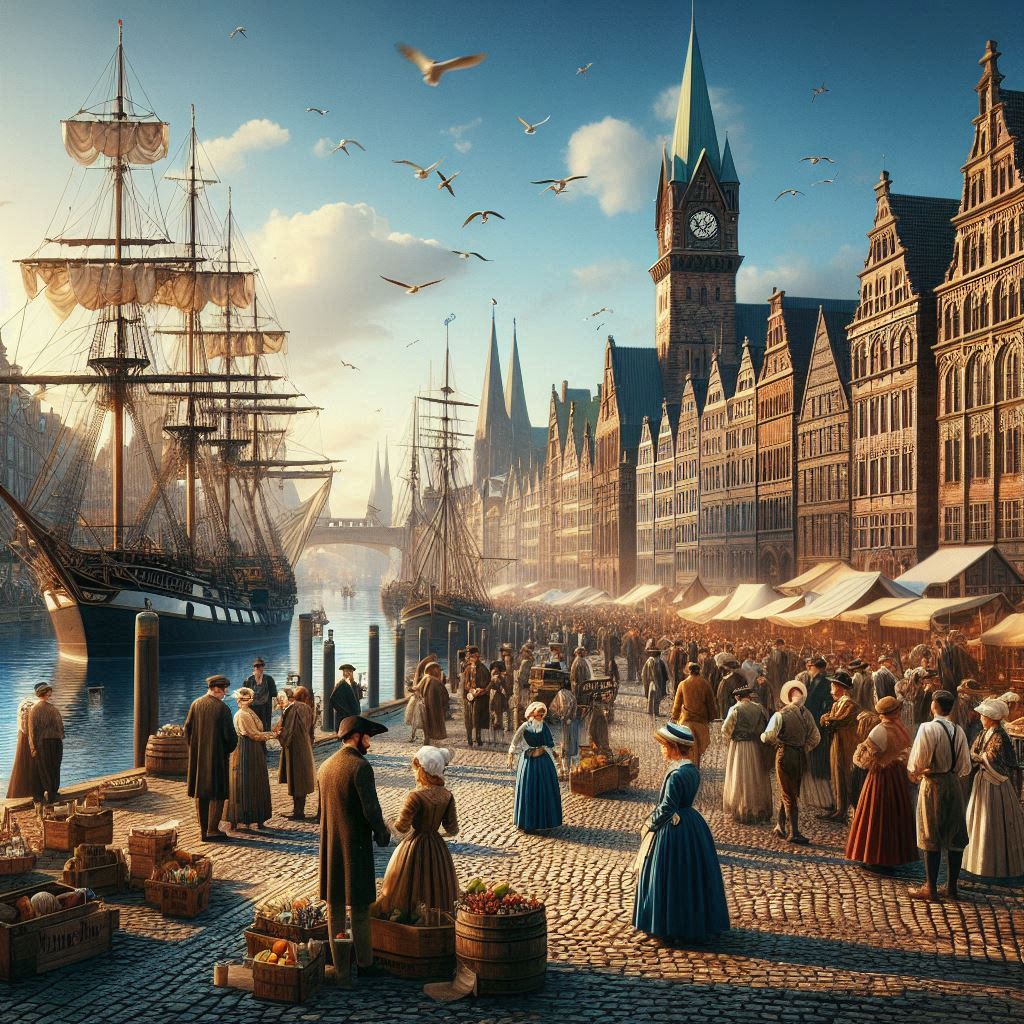
“Happy is the man who has reached the harbor, left behind the sea and storms, and now sits warm and calm in Bremen’s good Ratskeller.” – Heinrich Heine1
These timeless words by Heinrich Heine perfectly capture the essence of Bremen—a place where the heart finds solace after life’s tumultuous seas. From its historic port along the Weser River to its vibrant streets and cultural treasures, Bremen has long been a haven for travelers, a city of respite and warmth. Whether exploring its maritime legacy, the iconic Town Musicians sculpture, or savoring a moment in its renowned Ratskeller, Bremen stands as a beacon of heritage and hospitality in Northern Germany.
Bremen and the Hanseatic League
Bremen’s origins trace back to early settlements along the Weser River. Emerging as a key port in the Middle Ages, Bremen’s role as a Hanseatic city became its defining feature. The Hanseatic League, a powerful commercial alliance, elevated Bremen into a center of trade and cultural exchange, fostering economic growth and resilience.
Bremen as a Free Imperial City
During the Holy Roman Empire, Bremen was recognized as a Free Imperial City, granting it autonomy in governance and trade. This status allowed Bremen to flourish as a hub of commerce, innovation, and cultural development. The city’s maritime spirit became deeply embedded in its identity, with shipbuilding and trade shaping its future.
Bremen in the 19th Century
The 19th century saw Bremen adapt to industrialization, expanding its port facilities and increasing its influence in global trade. The construction of Bremerhaven in 1827 provided direct access to the North Sea, bolstering Bremen’s position as a maritime powerhouse. This era also witnessed Bremen’s embrace of modernity while retaining its rich traditions.
Formation of the State of Bremen
After World War II, the modern federal state (Bundesland) of Bremen was established. Comprising the cities of Bremen and Bremerhaven, it became Germany’s smallest state but one of immense historical and economic significance. The state’s formation marked a new chapter in its illustrious maritime legacy.
Natural Beauty and Heritage Today
Today, Bremen is celebrated for its harmonious blend of natural beauty and urban charm. The serene Weser River winds through the city, while architectural marvels like the Town Hall and Roland Statue (a UNESCO World Heritage Site) stand as testaments to Bremen’s storied past.
 OFB index