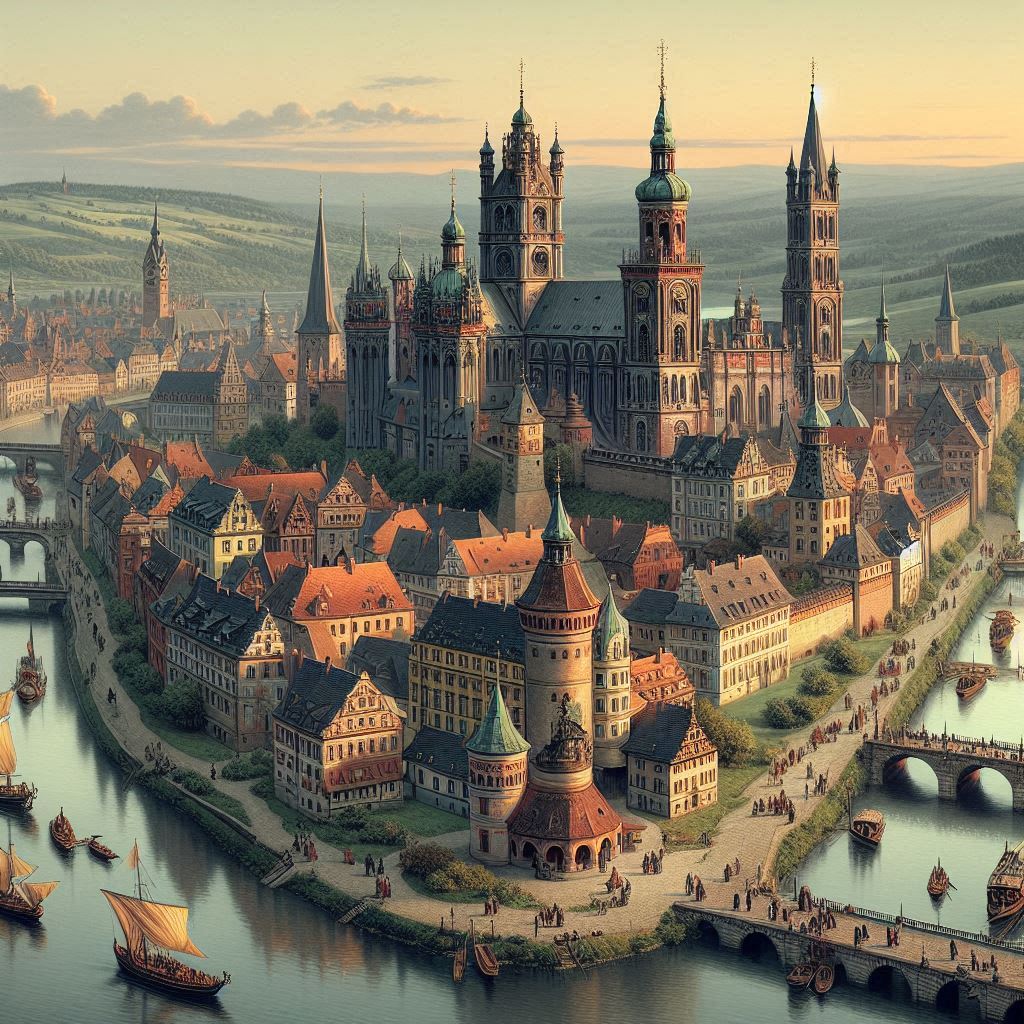
Posen, known today as Poznań, is a historic city in western Poland. It was once part of the Province of Posen, a region within the Kingdom of Prussia from 1848 to 1920. The province was established after the Poznań Uprising of 1848 and later became part of the German Empire in 1871.
This page features links derived from the Online Familienbücher (OFB) website (https://ofb.genealogy.net/). To make these links more navigable and user-friendly, I have taken the liberty of reorganizing and categorizing them. For updated details and additional resources, please visit the original website directly.
| Cities, Towns, Villages, and Hamlets | Historical administrative hierarchy | Locality Descriptions | OFB Links and Additional Resources |
|---|---|---|---|
| Altkloster (Polish: Kaszczor) | Altkloster, now known as Kaszczor, was a historic village in the Bomst district of Posen, Prussia (now Wielkopolskie, Poland). It was home to a Roman Catholic parish, with records dating back to 1601, including births, marriages, and deaths. The village was originally associated with a Cistercian monastery, which later moved to Wieleń in 1296 and then to Przemęt in the 15th century. By the 18th century, Altkloster was known as Kaszczor, and its St. Adalbert Church, built between 1764 and 1775, became a key landmark. | Local heritage book of Altkloster | |
| Bielsko (Polish: Bielsko) | Bielitz, located in Kreis Birnbaum within the Province of Posen, was a Dorf und Rittergut (village and landed estate) under Prussian rule. It was administratively linked to Regierungsbezirk Posen and governed within Kreis Birnbaum, which was part of the German Empire from 1871 until its transfer to Poland in 1920 under the Treaty of Versailles. The town had legal and civil administration centered in Birnbaum, with court cases handled at the Amtsgericht Birnbaum and civil registration at the Standesamt Birnbaum. Military records were overseen by the Bezirkskommando Samter. The region had a mixed German and Polish population, with demographic shifts occurring after World War I. | Local heritage book of Bielsko | |
| Birnbaum (Kreis) | Kreis Birnbaum was a district in Prussia’s Province of Posen from 1815 to 1920. Originally part of Poznań Voivodeship, it was annexed by Prussia in 1793 during the Second Partition of Poland. The district was formally established in 1818, with its administrative seat moving from Zirke to Birnbaum in 1867. In 1871, Kreis Birnbaum became part of the German Empire, and its population was initially predominantly German. However, after the separation of Kreis Schwerin an der Warthe in 1887, the district had a more balanced German-Polish demographic. Following World War I, the Treaty of Versailles awarded Kreis Birnbaum to Poland, with the transition completed between January and February 1920. | OFB Kreise Birnbaum Zirke Neustadt, Provinz Posen | |
| Bucharzewo | Bucharzewo, historically part of Kreis Birnbaum in the Province of Posen, was a Dorf (village) under Prussian rule. It was administratively linked to Birnbaum, with legal matters handled at the Amtsgericht Birnbaum and civil registration at the Standesamt Zirke. During the 19th century, Bucharzewo was part of the German Empire, with a mixed German and Polish population. After World War I, the Treaty of Versailles transferred the region to Poland, leading to demographic shifts. | Local heritage book of Bukowce und Bucharzewo | |
| Bukowce (Polish: Bukowiec) | Bukowce, located in Kreis Birnbaum within the Province of Posen, was a Landgemeinde (rural community) under Prussian rule. It was administratively linked to Birnbaum, which served as the district center for governance, legal matters, and civil registration. During the 19th century, Bukowce was part of the German Empire, with a mixed German and Polish population. After World War I, the Treaty of Versailles transferred the region to Poland. | Local heritage book of Bukowce und Bucharzewo | |
| Grätz (Polish: Grodzisk Wielkopolski) | Grätz, now Grodzisk Wielkopolski, became part of Prussia’s Province of Posen in 1815 following the Congress of Vienna. Under Prussian rule, it developed as an administrative and economic center, benefiting from improved infrastructure and governance. During the 19th century, Grätz saw significant German influence in education, trade, and industry. It was integrated into the German Empire in 1871, further strengthening its ties to Prussian administration. The town had a mixed German and Polish population, with demographic shifts occurring after World War I when it was transferred to Poland under the Treaty of Versailles. | Local heritage book of Grätz | |
| Grünkirch (Polish: Rojewice) | Grünkirch, now known as Rojewice, was a small settlement in the historical Province of Posen. German colonization began in 1663 under the name Rojewo Kaczkowskie, and over time, additional villages like Groß- and Klein Glinno, Jesuiterbruch, and Altendorf developed nearby. The area had a strong German presence, with an evangelical parish established in 1832. During Prussian rule, Grünkirch was part of administrative divisions linked to Bromberg and Thorn. After World War I, it became part of Poland, and following World War II, the German population was displaced. Today, Rojewice is fully integrated into Poland’s Kujawy-Pomerania region. | Local heritage book of Grünkirch | |
| Kempen (Polish: Kępno) | Kempen, once part of Prussia’s Province of Posen, thrived under German rule in the 18th and 19th centuries. It developed economically, with German settlers shaping its architecture and culture. A strong Jewish community coexisted with the German population. After World War I, Kempen became part of Poland, though German influences remained. World War II led to major upheavals, and post-war, the German population was displaced. Today, Kempen—now Kępno— is a modern Polish town. | Local heritage book of Kempen/Posen | |
| Krosno (Altkirch) | Krosno (Altkirch), located in Kreis Schrimm in the historical Province of Posen, has a rich history dKrosno (Altkirch), located in Kreis Schrimm in the historical Province of Posen, was originally a Polish settlement but became part of Prussia in the late 18th century. Under Prussian rule, it developed as an administrative and religious center, with an evangelical parish established in 1776. In 1871, Krosno was integrated into the German Empire, increasing German influence in governance, education, and infrastructure. Church records document baptisms, marriages, and deaths spanning centuries. After World War I, Krosno was transferred to Poland under the Treaty of Versailles. During World War II, it was occupied by Nazi Germany, leading to upheaval. Post-war, the German population was displaced, and Krosno was fully integrated into Poland. | Local heritage book of Krosno | |
| Langenau (Polish: Łęgnowo) | Langenau, now known as Łęgnowo, is a historic district of Bydgoszcz, Poland, located in Kuyavian-Pomeranian Voivodeship. It was originally a German settlement, later incorporated into Bydgoszcz in 1920. Historically, Langenau was part of West Prussia and had a strong Mennonite presence, with settlers arriving in the 18th century. During World War II, the area housed DAG Fabrik Bromberg, a major German explosives factory, which is now preserved as the Exploseum Museum.1 | Local heritage book of Otteraue-Langenau | |
| Milostowo/Liebenwerder (Polish: Miłostowo) | Striche, now known as Miłostowo, is a historic village in Greater Poland Voivodeship, Poland, located in Międzychód County within Gmina Kwilcz. It lies 5 km south of Kwilcz and 60 km west of Poznań. Historically, the village was called Milostowo (1815–1917), Liebenwerder (1918–1919, 1939–1943), and Liebfeld (1943–1945). It was part of the Birnbaum district and had a population of 628 in 1885, decreasing to 543 by 1910. The village had a Lutheran church, a cemetery, and was historically linked to Neustadt bei Pinne. | Local heritage book of Milostowo | |
| Otteraue (Polish: Otorowo) | Otteraue, now known as Otorowo, was a German settlement in the Bomst district of Posen, later part of Brandenburg. First mentioned in 1280, it was granted to Dobeslaus, a nobleman, by Duke Mestwin of Pomerania. The village was settled under German or Polish law, allowing for agricultural expansion. By the 16th century, Otteraue had German settlers, including the Wilde brothers, who operated an ironworks using local ore. In the 17th century, Dutch settlers arrived, contributing to the area’s Holländerei villages. The village remained part of Prussia after the Partitions of Poland. In 1945, the village was transferred to Poland, and the German population was expelled. | Local heritage book of Otteraue-Langenau | |
| Prossekel/Wiesental (Polish: Przesieki) | Prossekel, later known as Wiesental, is a historic village in western Poland, now called Przesieki. It was part of the Netzekreis district in Posen-Westpreußen until 1945. First mentioned as Piotrovo/Petersdorf in 1594, the village was renamed Prossekel at an unknown date. In 1906, it became Wiesental under German administration. The village had a Bethaus (prayer house), a school, and a local inn. After World War II, Wiesental was transferred to Poland, and the German population was expelled. | Local heritage book of Prossekel/Wiesental | |
| Schmiegel (Polish: Śmigiel) | Schmiegel, now known as Śmigiel, is a historic town in Greater Poland Voivodeship, Poland, located in Kościan County. It was granted town rights in 1415 and was historically a private town of Polish nobility. Annexed by Prussia in 1793, Schmiegel briefly returned to Polish control in 1806 during the Greater Poland Uprising, but was re-annexed by Prussia in 1815. It remained part of Germany until 1918, when it was reintegrated into Poland. | Local family database Schmiegel | |
| Schussenze (Polish: Ciosaniec) | Schussenze, now known as Ciosaniec, is a historic village in western Poland, formerly part of Germany’s Province of Posen. First mentioned in 1278, it was originally associated with the Cistercian monastery of Mariensee. The village was later renamed Ostlinde in 1937, before adopting its current Polish name after 19452. Schussenze was home to the Catholic Church of St. Michael, which became an independent parish in 1789. The village had a population of 808 residents in 1939. Historically, it was part of the Bomst district and later the Grünberg district. | Local heritage book of Schussenze | |
| Striche (Polish: Strychy) | Striche, now known as Strychy, is a historic village in western Poland, located in Lubusz Voivodeship within Międzyrzecz County. It lies about 10 km east of Przytoczna and 21 km northeast of Międzyrzecz. First mentioned in 1425, Striche was originally a noble estate, owned by the Ostroróg family in the 15th century. By 1580, it was part of the Poznań Voivodeship in the Polish-Lithuanian Commonwealth. During the Thirty Years’ War, Dutch settlers arrived, followed by German settlers, shaping the village’s cultural landscape. Striche had an Evangelical church and school, and records mention a watermill dating back to 1697. In 1701, a windmill was built, further supporting local agriculture. Today, Strychy remains a quiet rural community.2 | Local heritage book of Striche | |
| Tucholle (Polish: Tuchola) | Tuchola, historically known as Tucholle, is a town in northern Poland, located in the Kuyavian-Pomeranian Voivodeship. It serves as the seat of Tuchola County and lies near the Tuchola Forest, one of Poland’s largest woodland areas. First mentioned in 1287, Tuchola was originally part of medieval Poland before coming under Teutonic Order rule in 1330. It received town rights in 1346 and was fortified with defensive walls, a castle, and a Gothic church. After the Battle of Grunwald in 1410, Polish forces briefly recaptured the town, but it remained under Teutonic control until 1454, when it joined the Prussian Confederation and was reintegrated into Poland. During the Swedish invasion of Poland (1655–1660), Tuchola was besieged multiple times but resisted occupation. Under the First Partition of Poland in 1772, it was annexed by Prussia and renamed Tuchel. The town suffered heavy destruction in World War II, particularly during the Battle of Tuchola Forest in 1939. | Local heritage book of Tucholle | |
| Unruhstadt (Polish: Kargowa) | Unruhstadt, now known as Kargowa, was a German town in the Bomst district of Posen, later part of Brandenburg. It was founded in 1641 by Christoph von Unruh, who established a settlement for Protestant refugees from Silesia. In 1661, it received town rights from the Polish king, and by 1793, it was annexed by Prussia. During the 19th century, Unruhstadt became a center for textile production, particularly cloth-making, and was known for its wine-growing—one of the northernmost vineyards in Germany. The town had a hospital, schools, an Evangelical church, a Catholic church, and a synagogue, reflecting its diverse population. In 1938, Unruhstadt was incorporated into Brandenburg, but in 1945, it was transferred to Poland and renamed Kargowa. The German population was expelled, and the town was repopulated with Polish settlers.3 | Local heritage book of Unruhstadt | |
| Zirke (Polish: Sieraków) | Zirke, now known as Sieraków, is a historic town in Greater Poland Voivodeship, Poland, located in Międzychód County along the Warta River. First mentioned in the 13th century, it received town rights before 1388. During the Second Partition of Poland in 1793, Zirke was annexed by Prussia. It briefly returned to Polish control in 1806 during the Greater Poland Uprising, but was re-annexed by Prussia in 1815. By 1871, it was part of Germany, located in the Birnbaum district of Posen. In 1919, Polish insurgents captured the town during the Greater Poland Uprising, and it was assigned to Poland through the Treaty of Versailles. During World War II, Zirke was occupied by Nazi Germany, and Polish residents were expelled as part of the Lebensraum policy. The town was liberated in 1945 and restored to Poland.4 | OFB Kreise Birnbaum Zirke Neustadt, Provinz Posen | |
 OFB index